94 GA Enterprise Brands
Secured immediate day-one rollout across tier-1 chains; unlocked rapid multi-channel LTO promotions without store migration churn.
Days → Minutes
Collapsed 3–5 day manual vendor XML ticket cycles into instant, validated self-service menu publishing.
Zero Register Downtime
Built-in pre-flight conflict simulation stopped circular modifier loops and tax errors from freezing drive-thru registers across 500+ locations.
Defended Enterprise Base
Modernized Aloha's legacy stack against Toast and Square, reinforcing NCR's reputation as the credible cloud leader for enterprise hospitality.
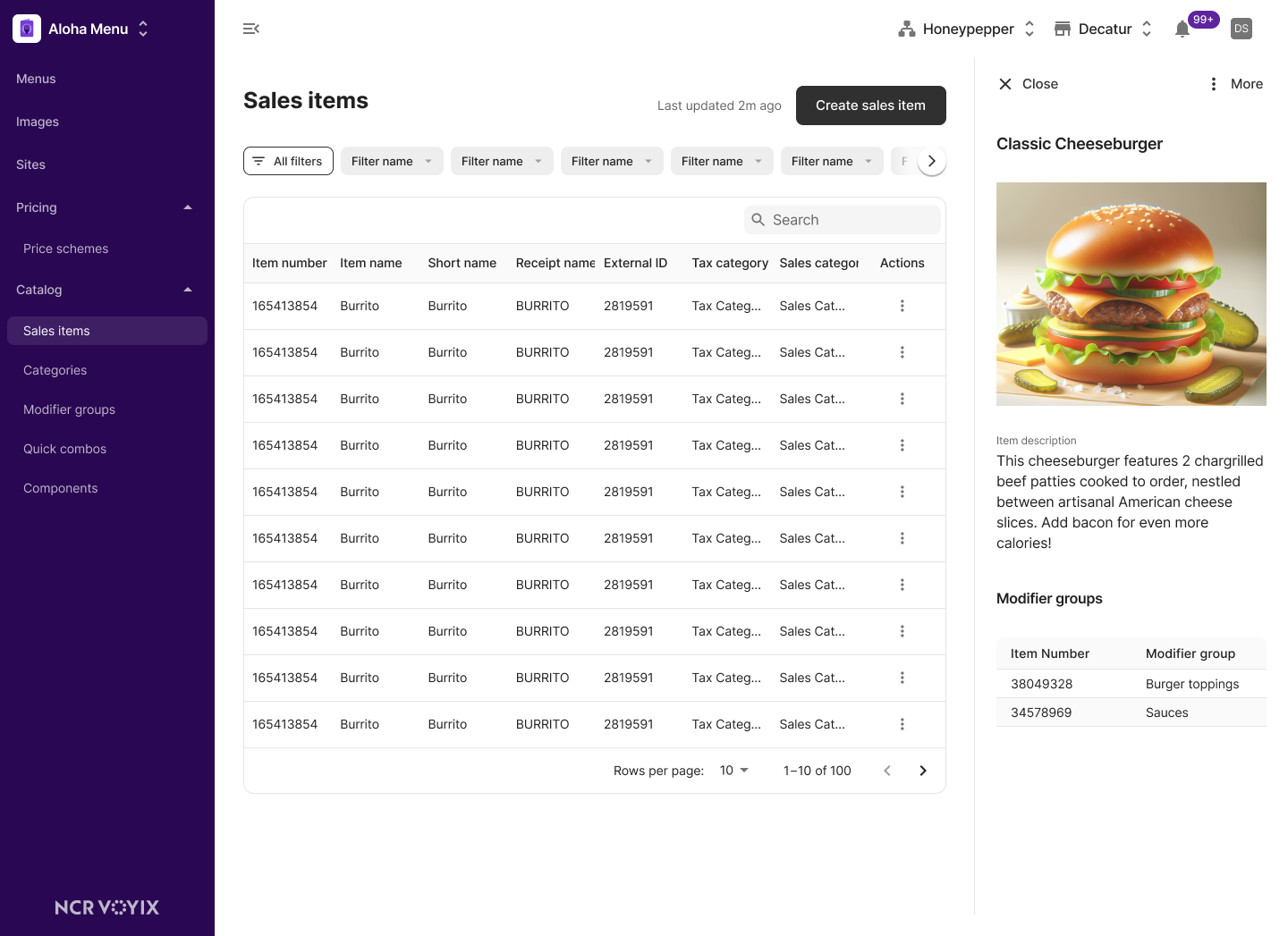
Central sales items matrix: real-time search, category cascades, and localized overrides across 100,000+ item variations.
94 global restaurant brands blocked by an outdated 2009 system with zero self-service.
The Scale
Aloha Menu powers point-of-sale registers for tens of thousands of locations worldwide (Five Guys, Chili's, etc.), managing over 100,000 active item configurations across in-store and delivery channels.
The Bottleneck
Dating back to 2009, the legacy configuration system didn't allow users to input or configure their own sales items. Every new menu item, limited-time combo, or regional price change required submitting support tickets for vendor engineers to manually input each item.
The High Stakes
In high-volume enterprise operations, a single misconfigured tax tag or circular modifier loop freezes drive-thru ordering across 500 locations simultaneously, destroying hundreds of thousands in peak-hour revenue.
Deliver operator self-service without breaking existing on-premise POS hardware.
As modern cloud point-of-sale systems (Toast, Square) entered the enterprise hospitality space, the legacy desktop tool became an existential churn risk. My mandate as Lead UX Architect was clear:
1. Autonomous Multi-Unit Rule Engine
Architect a centralized cloud interface where corporate brand managers can define global menu standards, while regional franchisees independently customize pricing, tax groups, and channel availability.
2. Zero-Failure Pre-Flight Publishing
Engineer automated conflict detection that validates modifier trees, pricing precedence, and delivery integrations before sync commands push to physical restaurant registers.
Four architectural bets engineered for operational density.
Standard consumer e-commerce patterns break under franchise scale. We bypassed flat forms and raw boolean expressions to build structured mental models operators could execute in minutes.
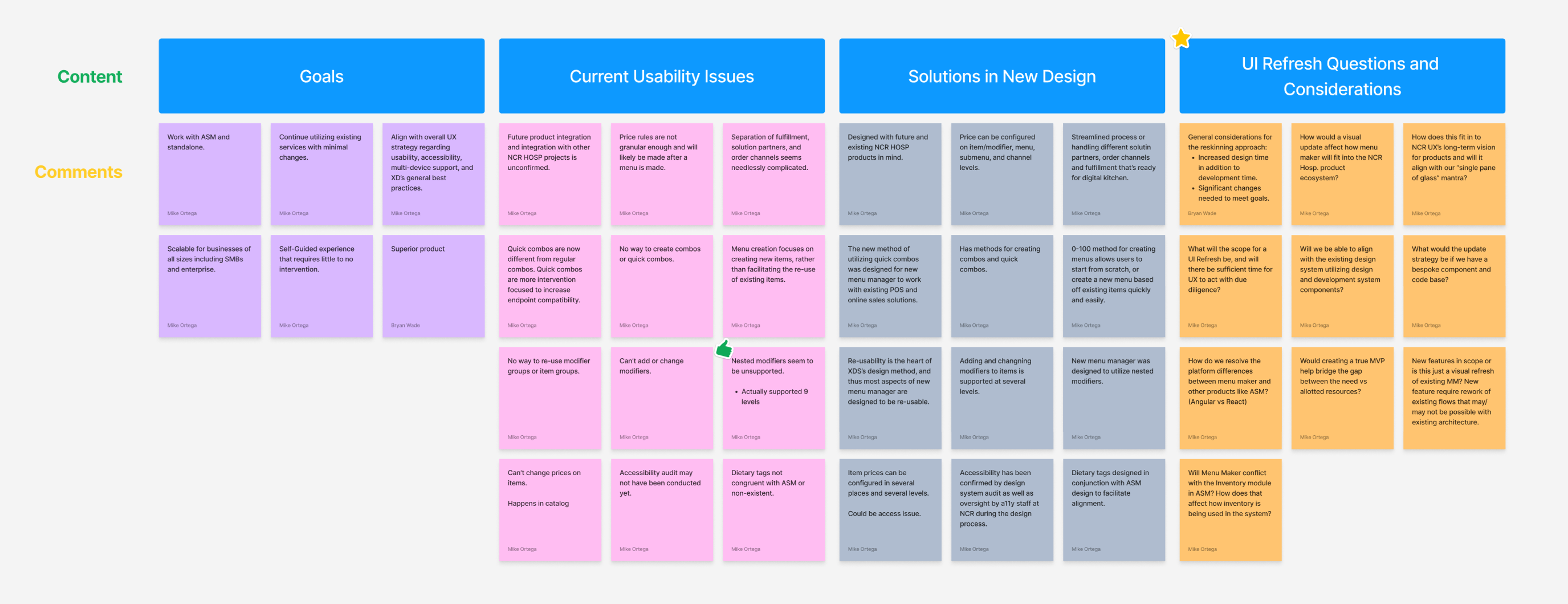
De-Risking Discovery: Mapping 10 years of edge cases and circular dependencies
Led cross-functional alignment sessions to catalog legacy database constraints, edge cases, and circular modifier loops. Mapped the entire enterprise pricing matrix upfront—identifying promotional combos as the critical path where vendor tools consistently failed customers.
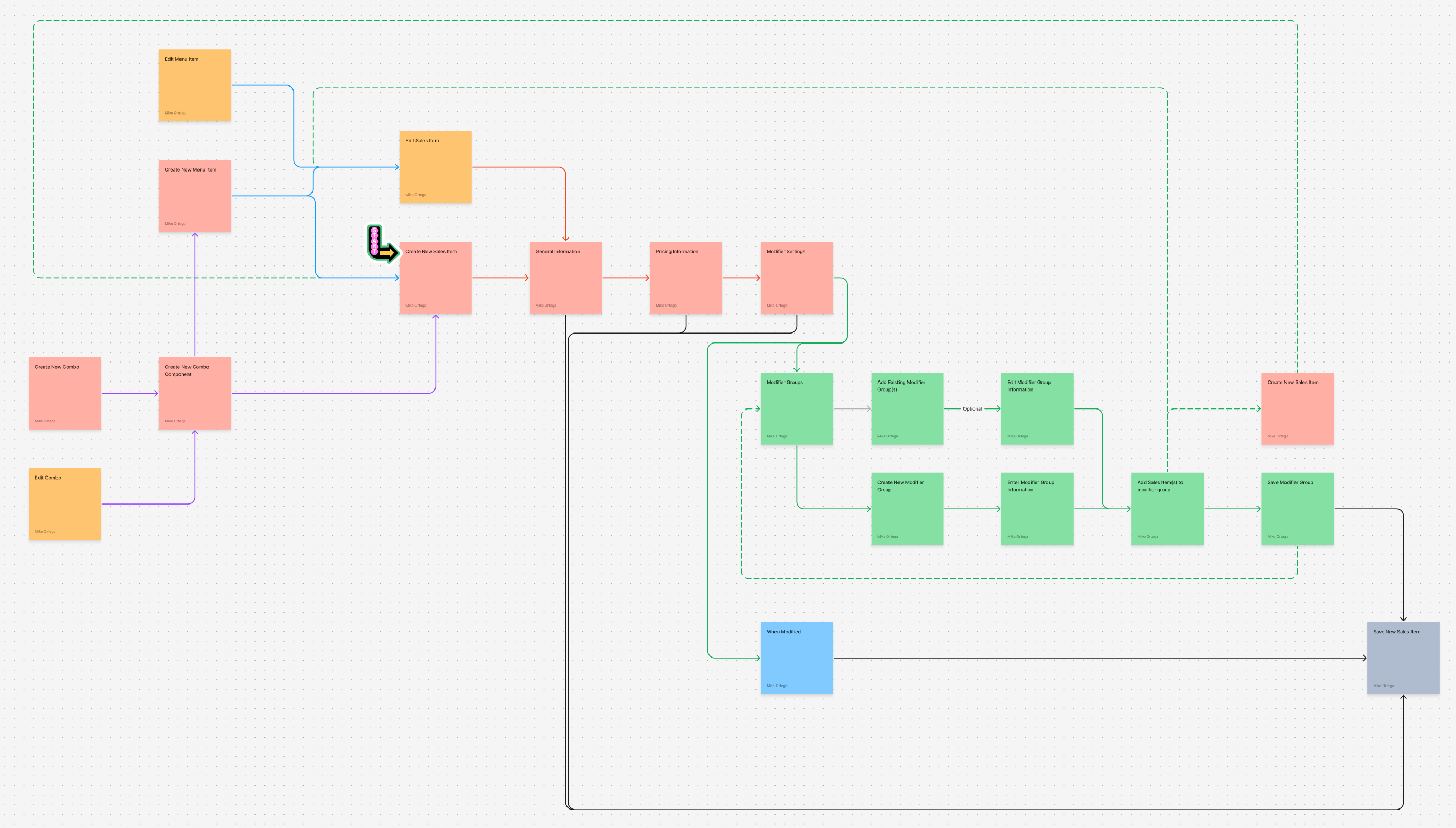
High-Density Configuration: Structuring item creation around restaurant mental models
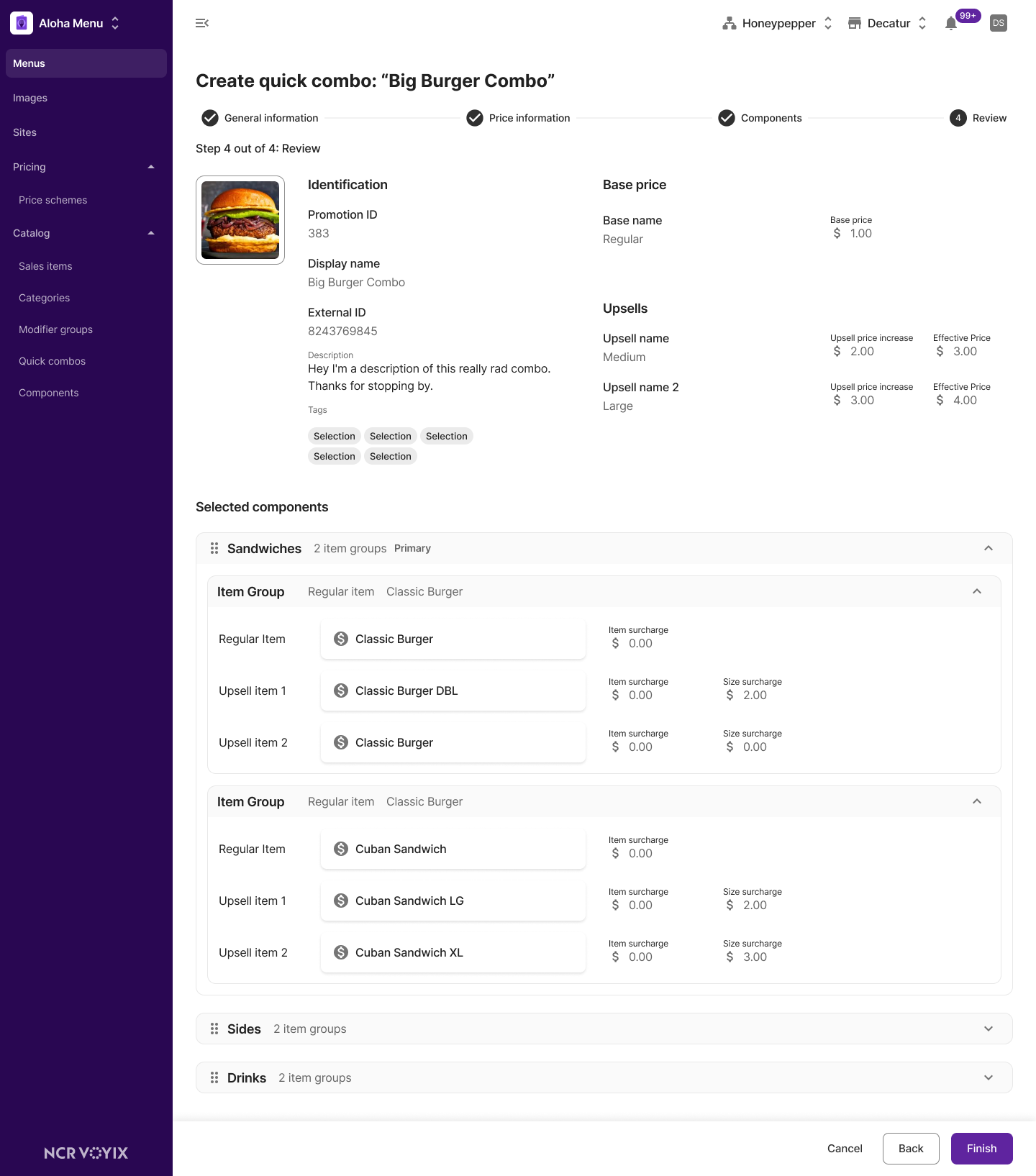
Decomposed a sprawling 80-field database screen into an intuitive, sequential creation flow. Grouped modifiers, tax classes, and channel overrides into modular cards that match how restaurateurs actually conceive recipes and line items.
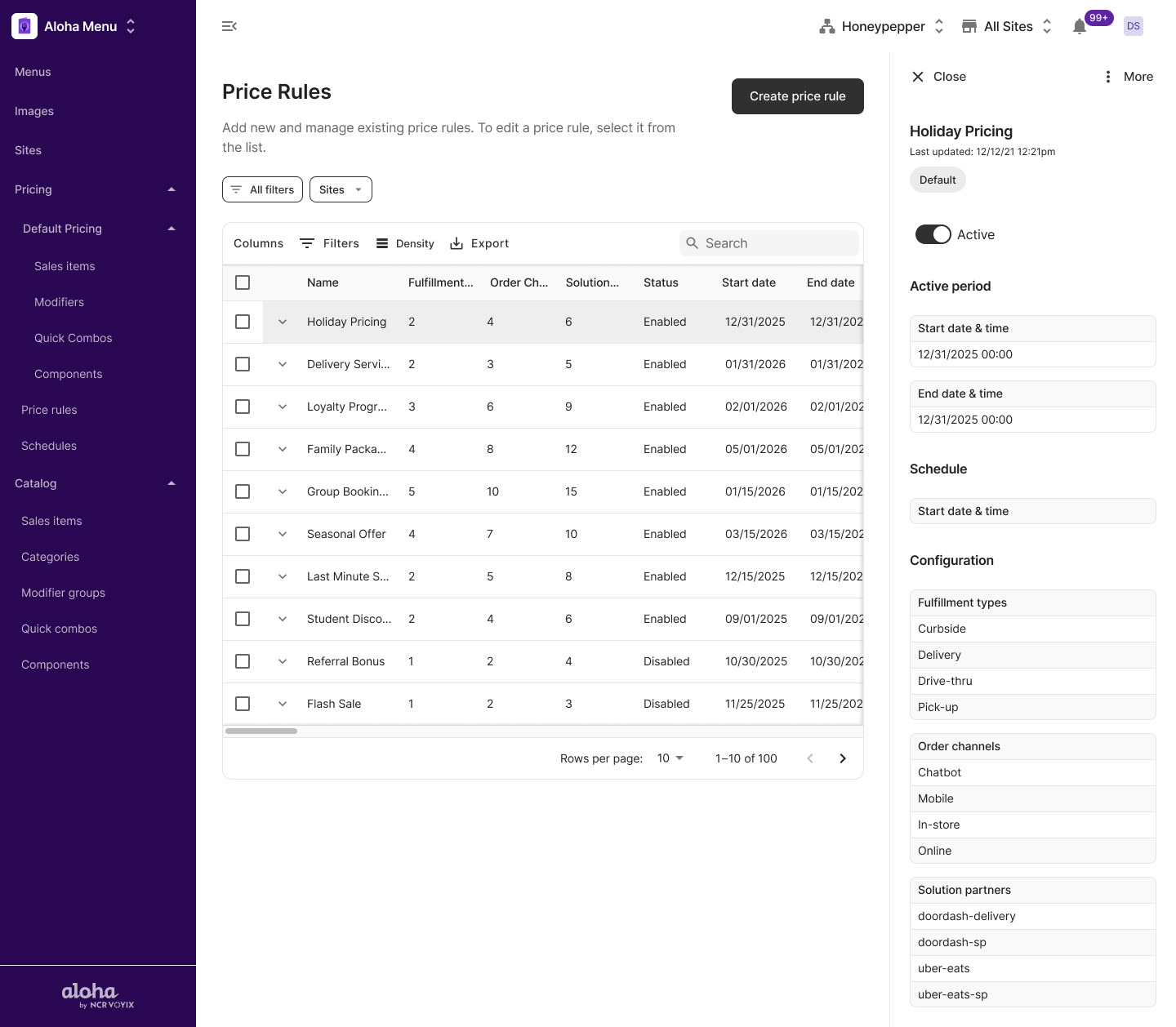
The Pricing & Channel Engine: Autonomous rule priority across POS and third-party delivery
Architected a deterministic rule-priority engine that allows operators to schedule time-based pricing, happy hours, and delivery markups (DoorDash/UberEats) without creating duplicate menu SKUs or overwriting parent-brand base prices.
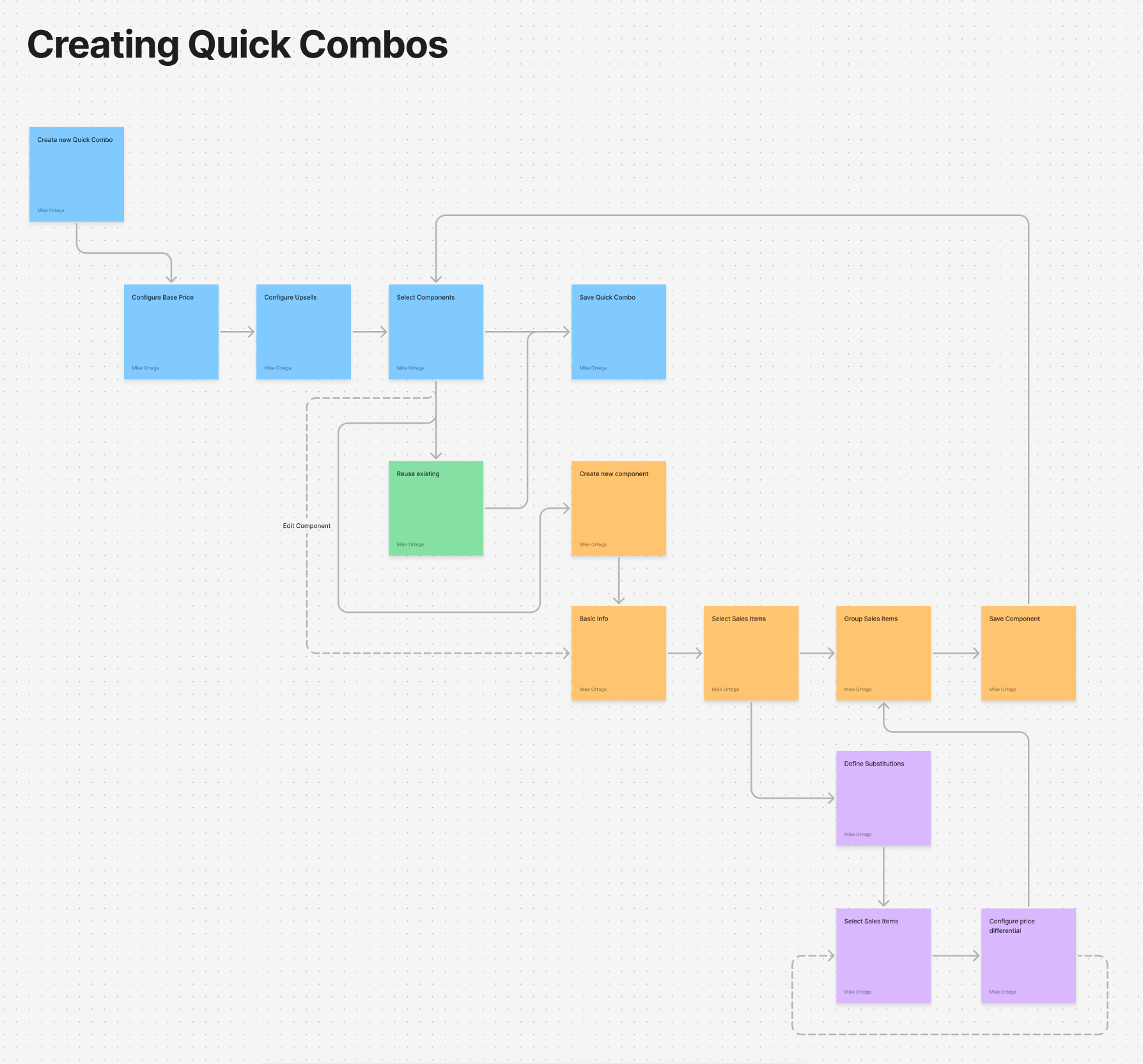
Visualizing Logic: Replacing boolean SQL statements with an interactive Quick Combos canvas
The legacy combo configurator required writing raw boolean expressions—unusable without expert vendor assistance. Replaced it with a visual slot-builder and pre-flight simulation canvas. This became the flagship capability that drove immediate enterprise contract commitments.
94 enterprise brands secured at GA with zero rollback regressions.
Aloha Menu launched to General Availability with 94 enterprise restaurant chains onboarded on day one. By replacing manual vendor tickets with validated self-service architecture, we collapsed operational cycle times from days to minutes while permanently eliminating vendor overhead.
Brands Secured at GA
Tier-1 enterprise accounts retained
Menu Rollout Time
Instant, validated cloud sync
POS Regressions
100% backward-compatible launch
// Architectural Retrospective
Enterprise operators don't need complexity hidden — they need it structured.
Aloha Menu succeeded because we respected true multi-unit operational reality. Instead of flattening restaurant menu management into an oversimplified consumer form, we gave that complexity an intuitive, visual mental model operators could trust under peak lunch rush pressure.