15% Faster Throughput
Faster ticket completion accelerated table turnover and increased peak dinner rush revenue across busy dining rooms.
Sub-Second Tapping
Glanceable modifier hierarchies and persistent breadcrumbs cut server tapping sequences, keeping staff focused on guests.
Eliminates Kitchen Errors
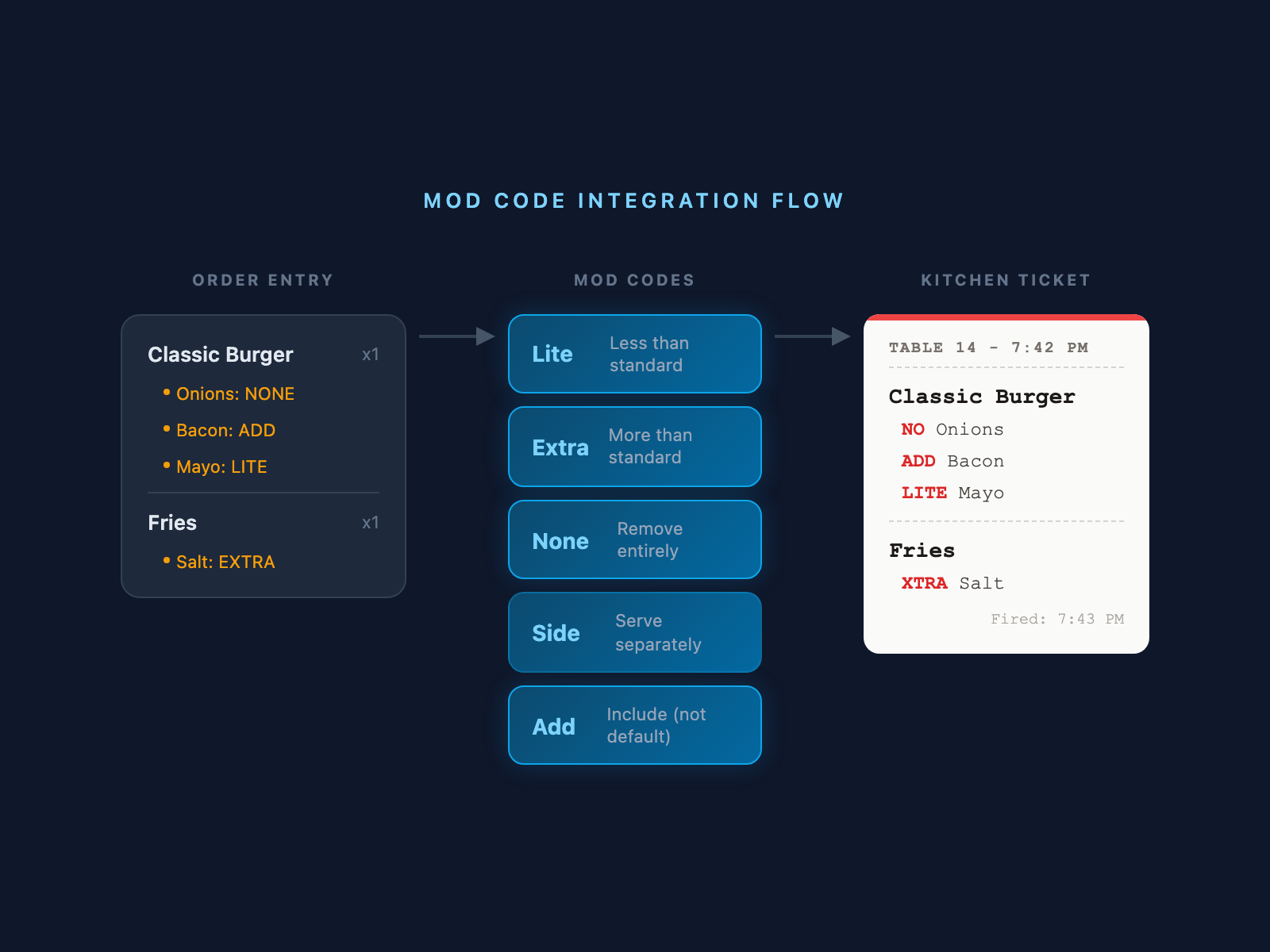
Mod Codes ('Lite', 'Extra', 'Side', 'None') preserved natural kitchen grammar, preventing miscommunication and costly food waste.
Global Cloud Standard
Foundational interaction architecture scaled globally into thousands of restaurants, defending NCR's market leadership.
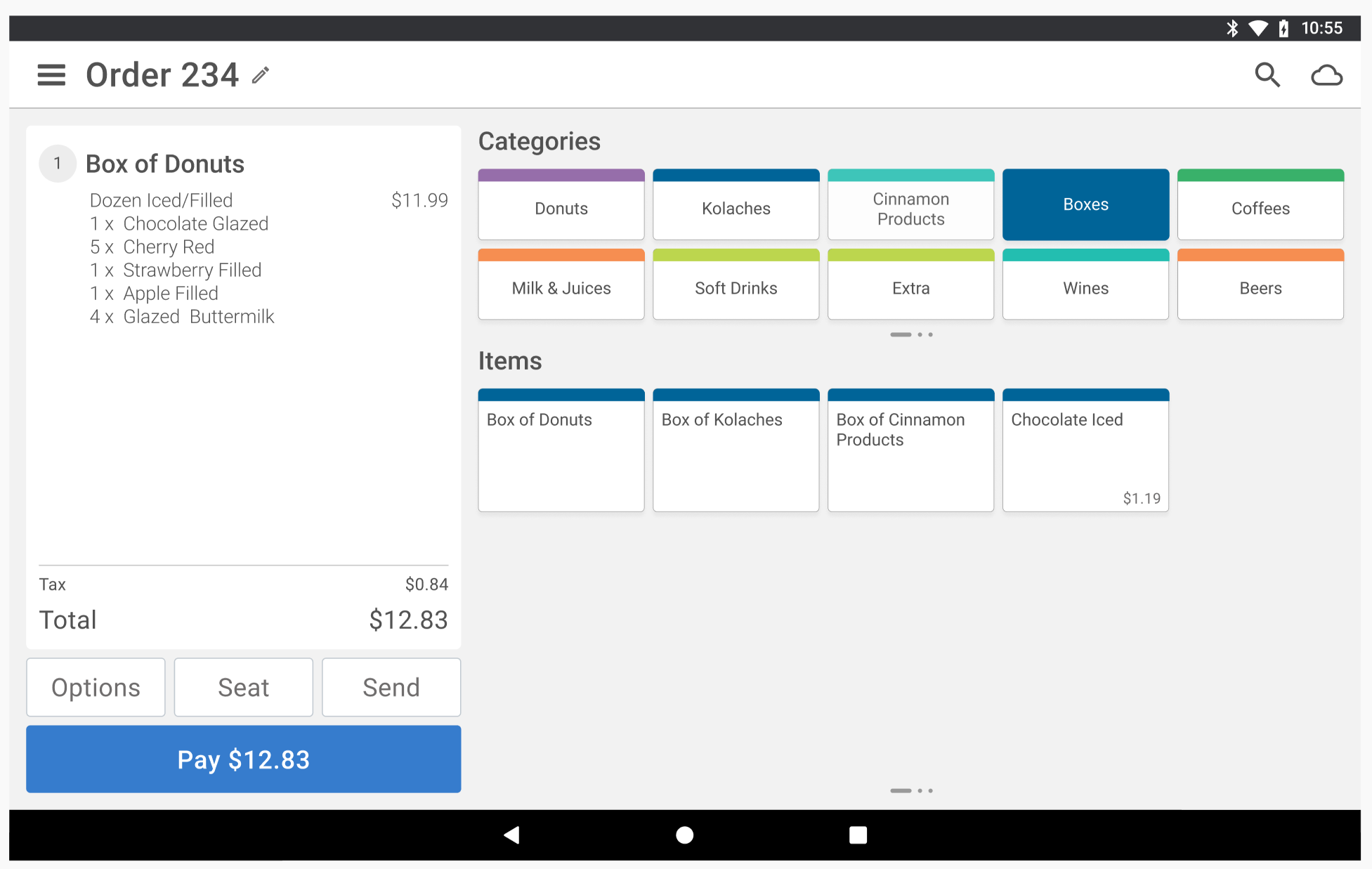
Touch-optimized order entry screen: real-time check building, modifier cascades, and glanceable kitchen routing.
Legacy on-premise POS, a blank cloud canvas, and zero margin for error.
The Operational Stakes
In a packed restaurant at 7:30 PM, servers tap terminals hundreds of times per shift. An ambiguous screen or laggy modifier sequence stalls the server, the table, and the entire kitchen line.
The Legacy Friction
NCR's legacy Windows-based POS had decades of ingrained server muscle memory. Transitioning to a touch-first cloud platform meant inventing new interaction models from scratch without alienating veteran staff.
The Combinatorial Depth
Orders like "medium-rare, no onions, sub sweet potato fries, dressing on the side" require 3–4 levels of nested modifier choices that must be captured in seconds without cognitive overload.
Establish the speed-critical order entry grammar every future feature would inherit.
In a four-month foundational sprint, define the primary interaction models for order taking, nested modifier hierarchies, and quantity input—delivering an ergonomic touch experience optimized for the chaos of a live dining room.
1. Touch Ergonomics Under Pressure
Minimize visual saccades (eye travel between ticket and menu items) and eliminate modal dead-ends through persistent breadcrumbs and responsive disclosure.
2. Natural Kitchen Lexicon
Ensure the digital ordering flow speaks the actual vocabulary of restaurant operators ('Lite', 'Extra', 'Side', 'None'), preserving clarity from the dining room floor straight to the expediter screen.
Four foundational interaction patterns engineered for the dinner rush.
Instead of translating desktop forms into flat web pages, we engineered high-density touch targets and glanceable visual hierarchies designed for speed.
Speed-Optimized Order Flow: Minimizing eye travel under pressure
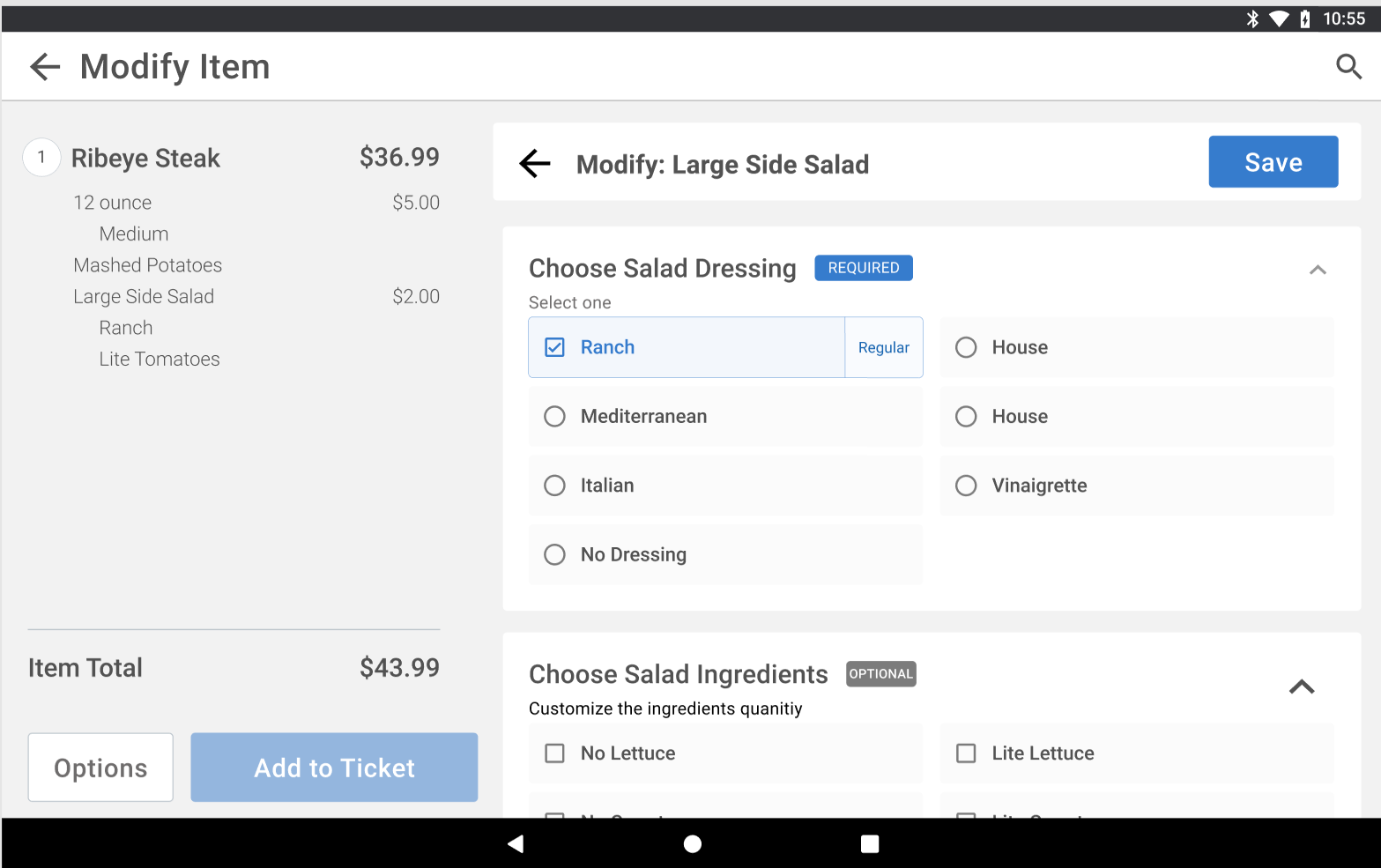
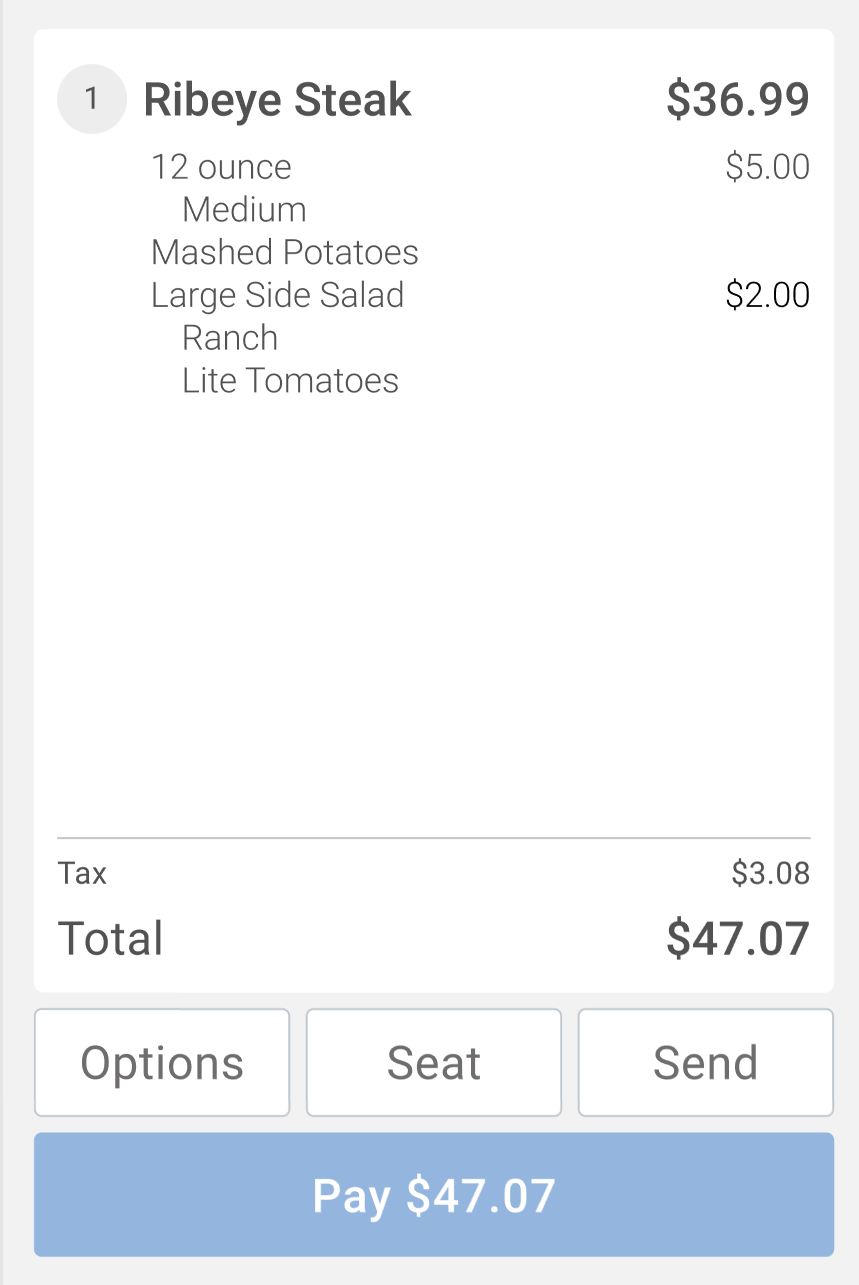
Organized the primary viewport into a three-column ergonomic layout: category navigation, menu item grid, and live card-based guest check. Servers verify orders in their peripheral vision without turning away from guests.
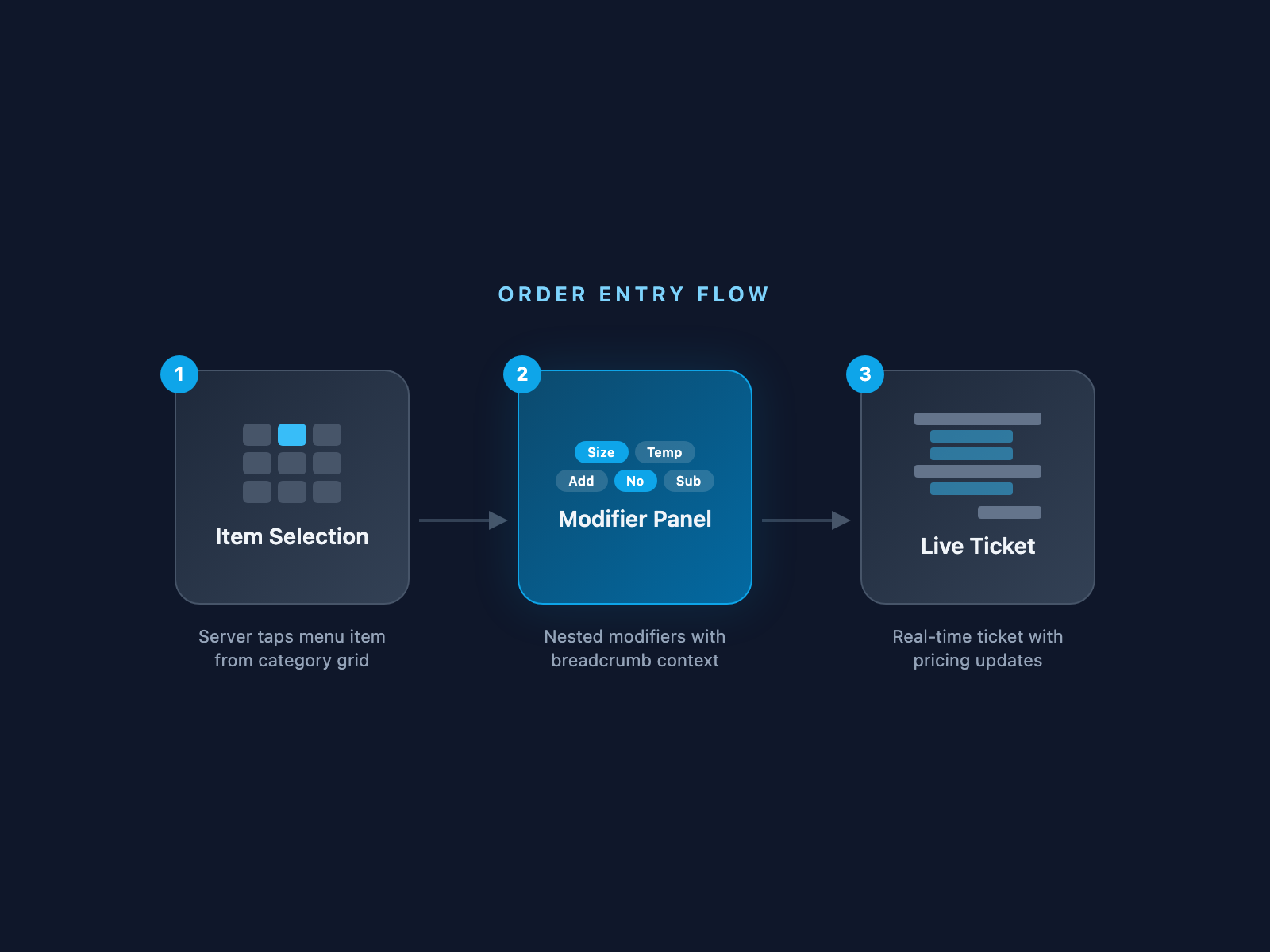
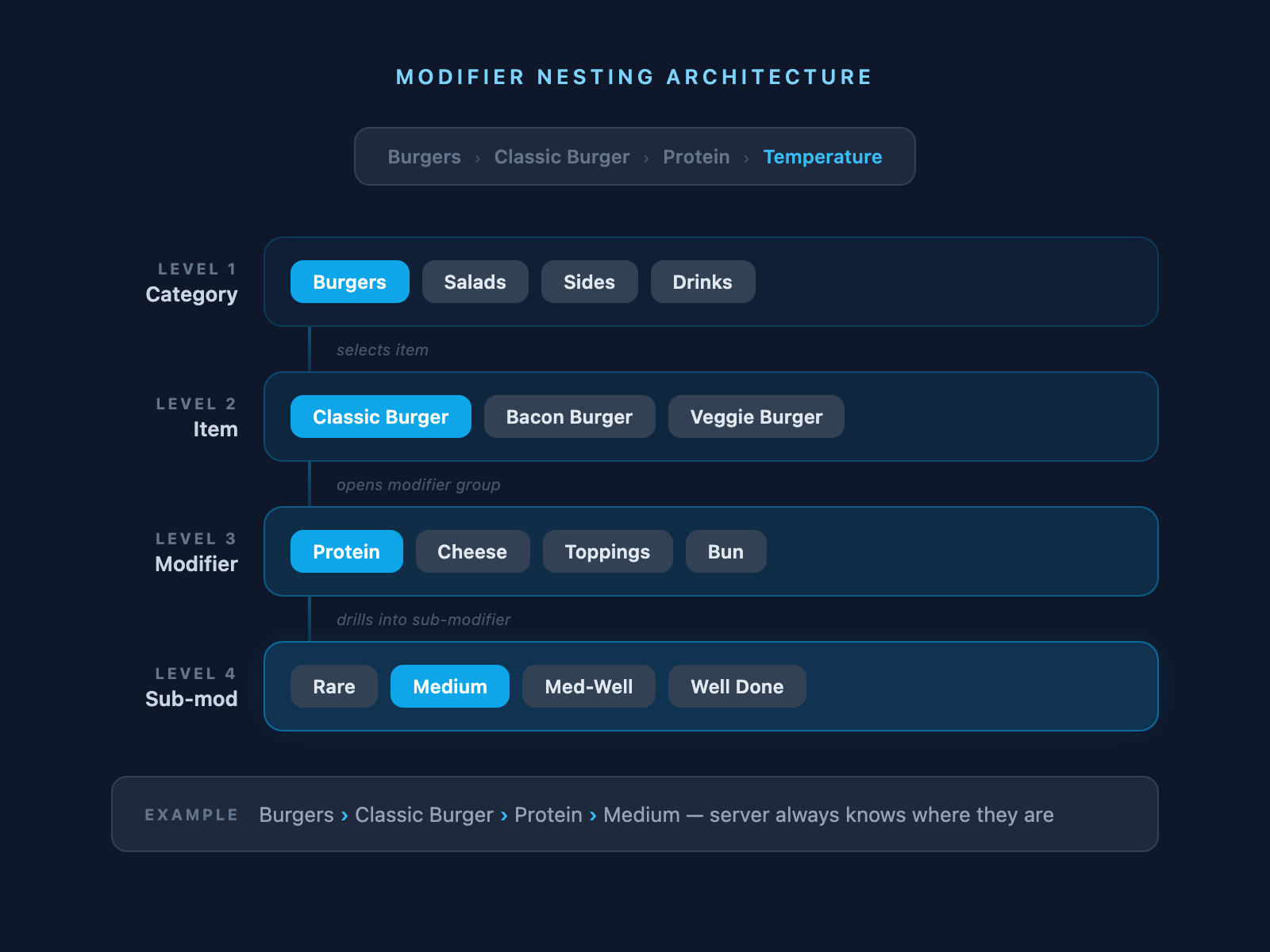
Nested Modifiers & Breadcrumb Context: 4-level depth without lost state
Deep customizations require multi-level choices (Burger → Cheese → Cheddar → Melted). Replaced disorienting popup dialogs with an in-place breadcrumb trail, giving servers a one-tap return path at any depth.
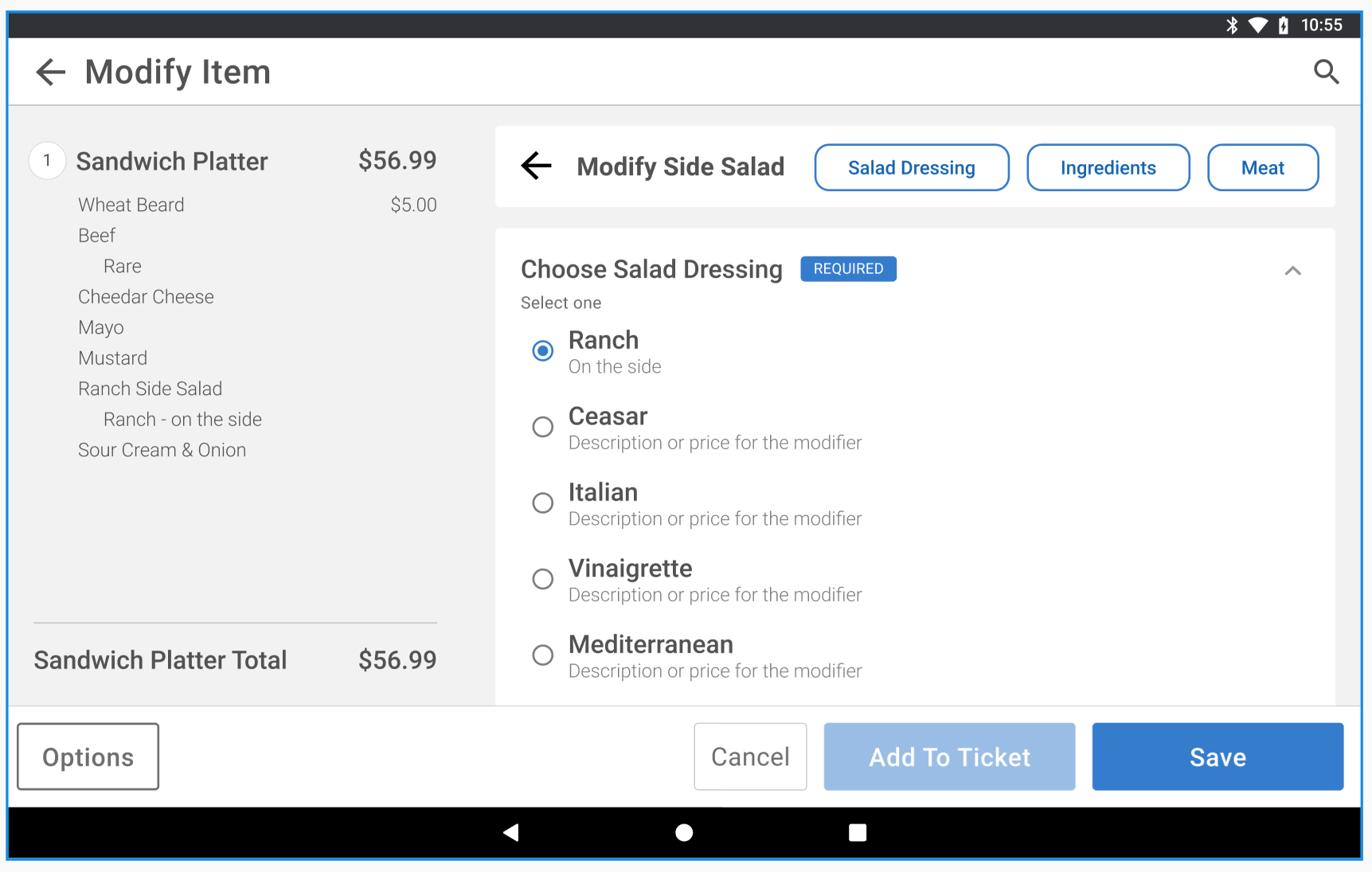
Mod Codes Integration: Natural restaurant grammar from floor to kitchen
Restaurants don't communicate in decimals or numbers; they use modifier prefixes. Integrated Mod Codes directly into item touch states so a server taps "Lite" then "Mayo", immediately printing a recognizable ticket for cooks.
High-Scannability Typography: Glanceable information hierarchy across hardware
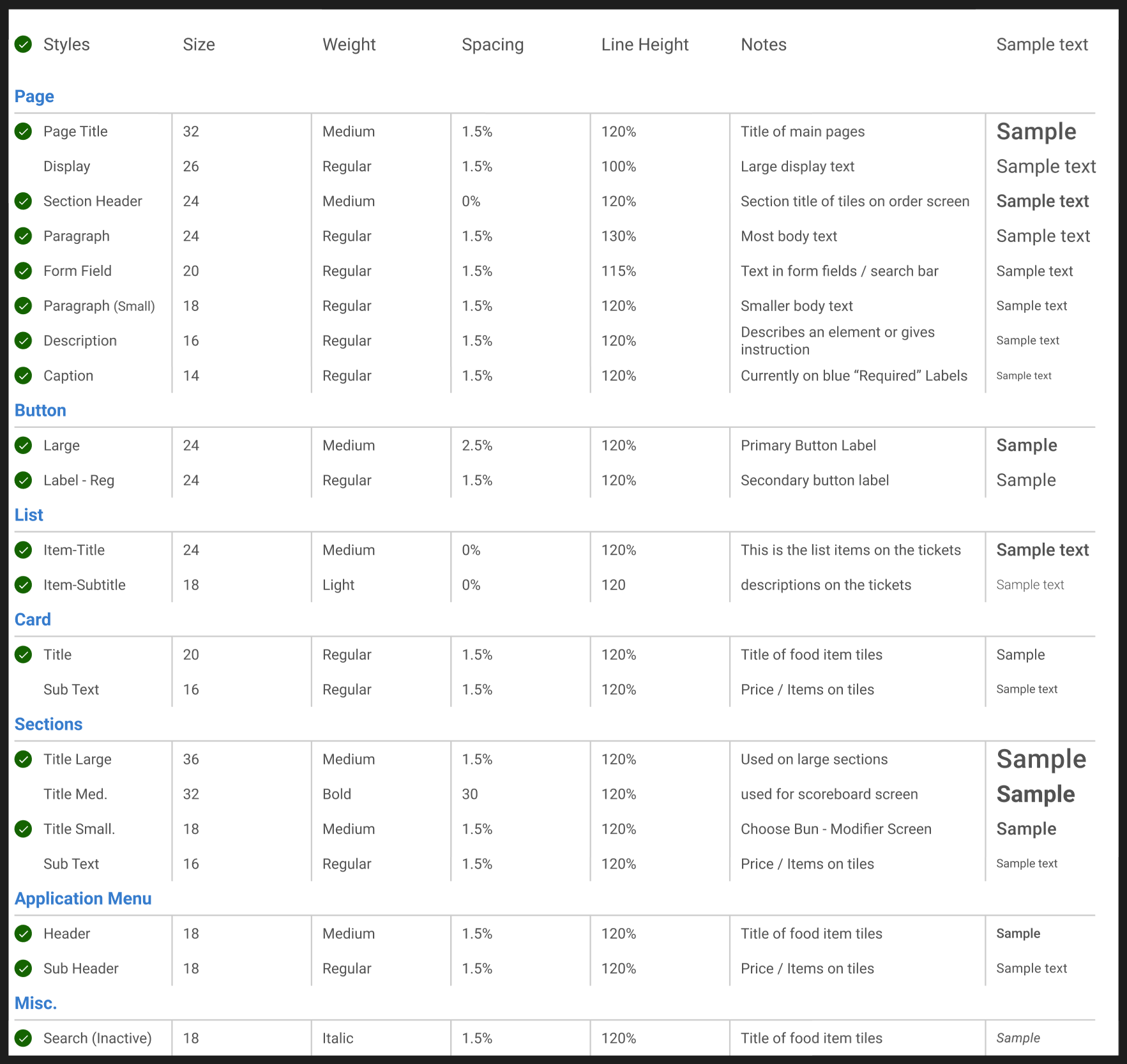
In hot, dimly lit restaurant environments, nobody reads—they scan. Standardized contrast tokens, font weights, and price badges so that checks can be comprehended in a fraction of a second across commercial touchscreens.
Foundational patterns deployed globally in thousands of restaurants.
The interaction grammar codified during this foundational phase became the permanent architecture of Aloha Cloud POS. The product launched globally and is now the daily order-taking operating system for thousands of restaurant hospitality venues worldwide.
Restaurants Deployed
Live in global production
Faster Order Entry
Validated during peak rush
Interaction Grammar
Adopted across all future modules
// Interaction Design Retrospective
In speed-critical tools, the interaction model is the product.
On high-frequency operational software used hundreds of times per shift, the interaction grammar codified during the first sprint dictates everything that can be built on top of it. Getting the foundational patterns right—nested modifier breadcrumbs, glanceable typography, and natural language kitchen descriptors—meant subsequent engineering squads could build new features without ever fighting the restaurant floor.