The Setup
A cloud-first POS built for the chaos of a live dinner rush.
Early-stage design on NCR's Aloha Cloud POS — defining the interaction patterns servers would use to enter complex, high-pressure orders. The product later launched globally and is now deployed in thousands of restaurants worldwide.
Kept servers fast when the tickets start stacking up.
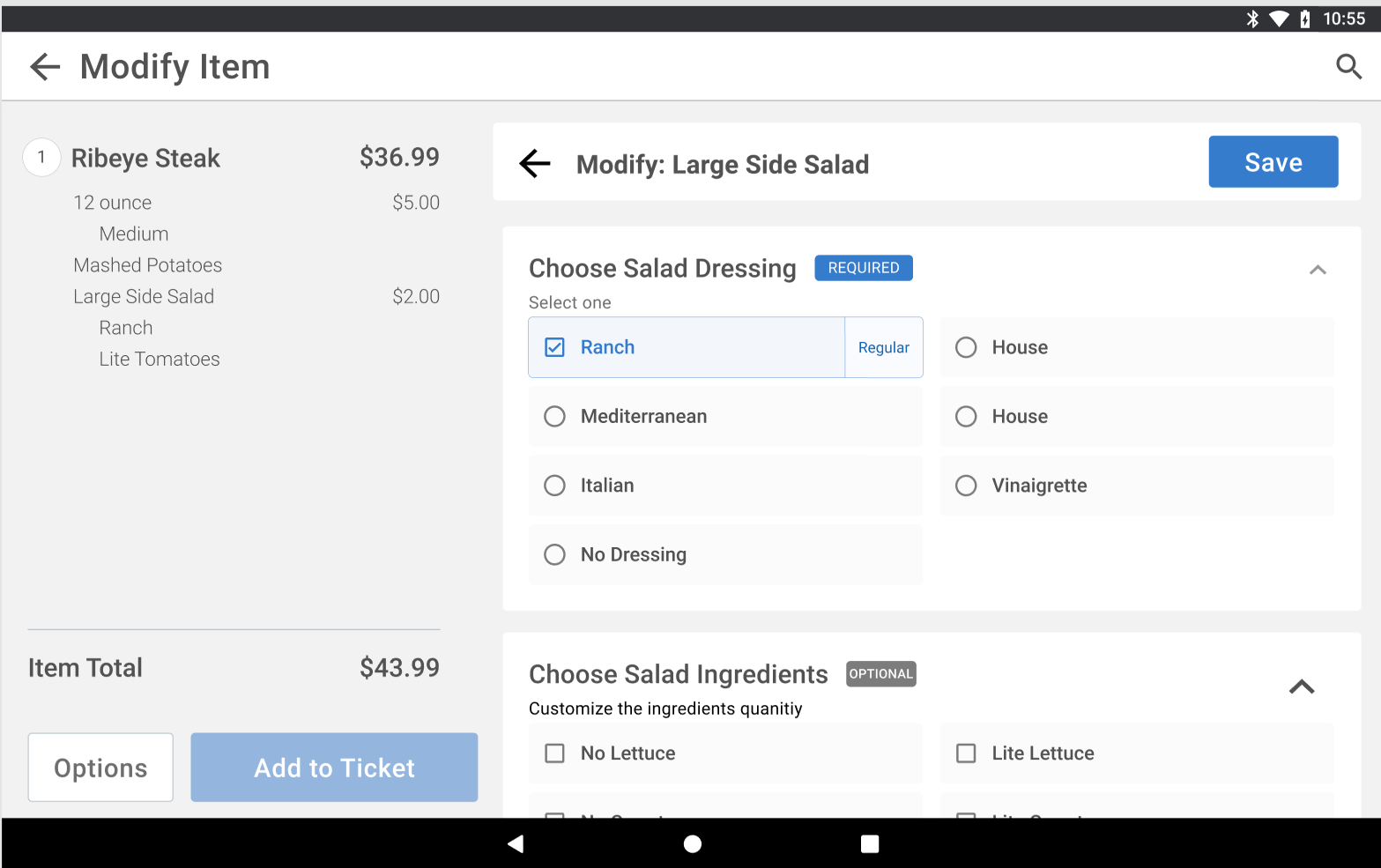
A dinner-rush order like "medium-rare, no onions, add bacon, sub sweet potato fries, side of ranch" can't be fought with menus. Progressive disclosure and breadcrumb context meant servers could drill into four levels of modifiers without losing their place — or the customer's patience.
Made the software speak the kitchen's language.
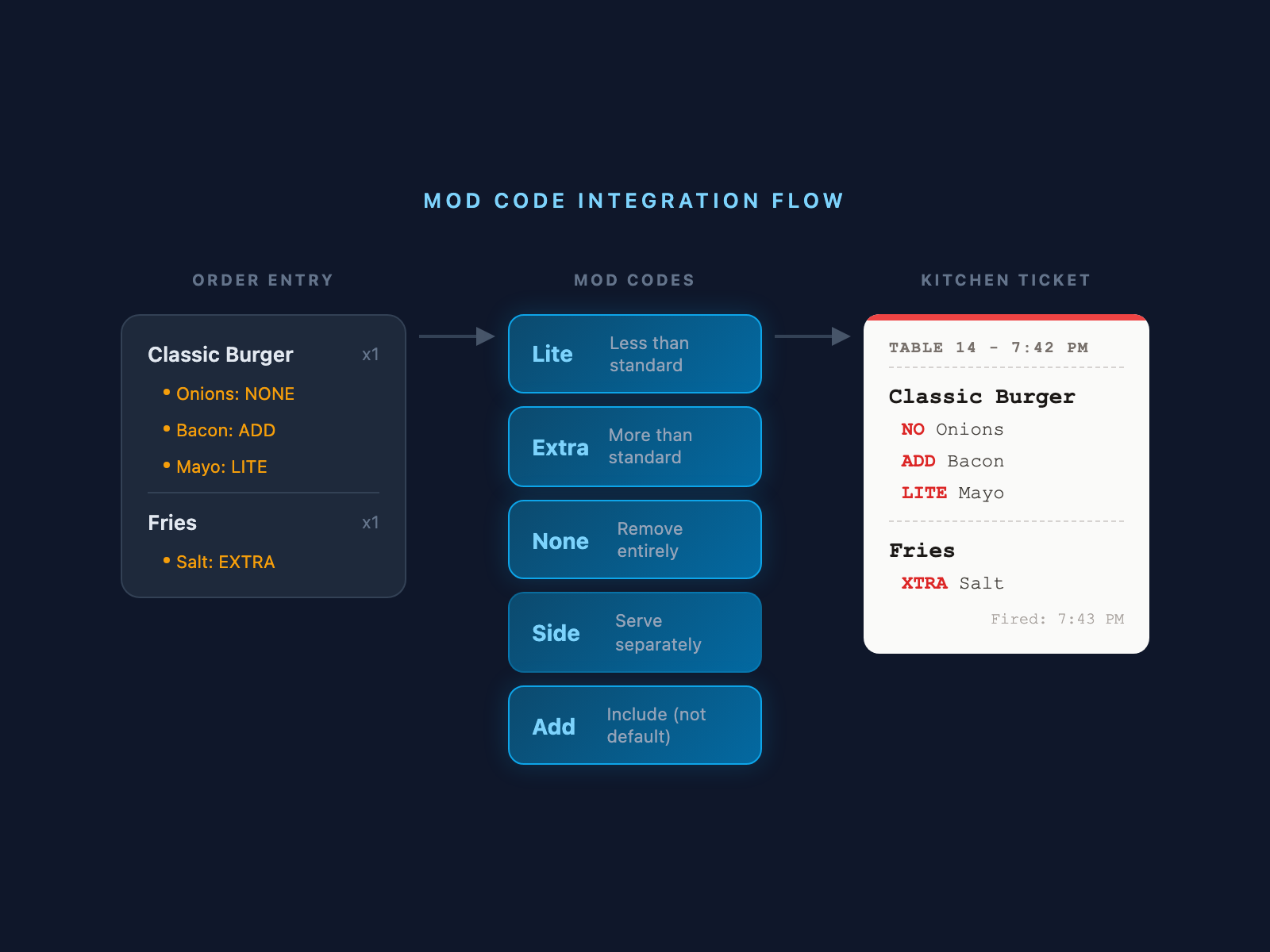
Restaurants don't talk in quantities, they talk in "Lite," "Extra," "Side," "None." Building Mod Codes into the flow preserved that natural vocabulary end-to-end, so the ticket in the kitchen read the way the server and customer actually said it.
The Landscape
Legacy on-prem POS, a blank cloud canvas, and zero margin for error.
NCR was building Aloha Cloud POS to modernize its legacy on-premise systems — but the interaction patterns for order entry, modifier flows, and quantity input weren't yet defined. A brand-new cloud platform meant every pattern had to be invented from scratch, and every one of them would be touched hundreds of times a shift by a server in the weeds.
The constraint was brutal: the product had to handle the full combinatorial complexity of restaurant orders while feeling immediate and forgiving. A slow screen or a confusing modifier tree doesn't just annoy a server — it stalls the ticket, the table, and the whole floor.
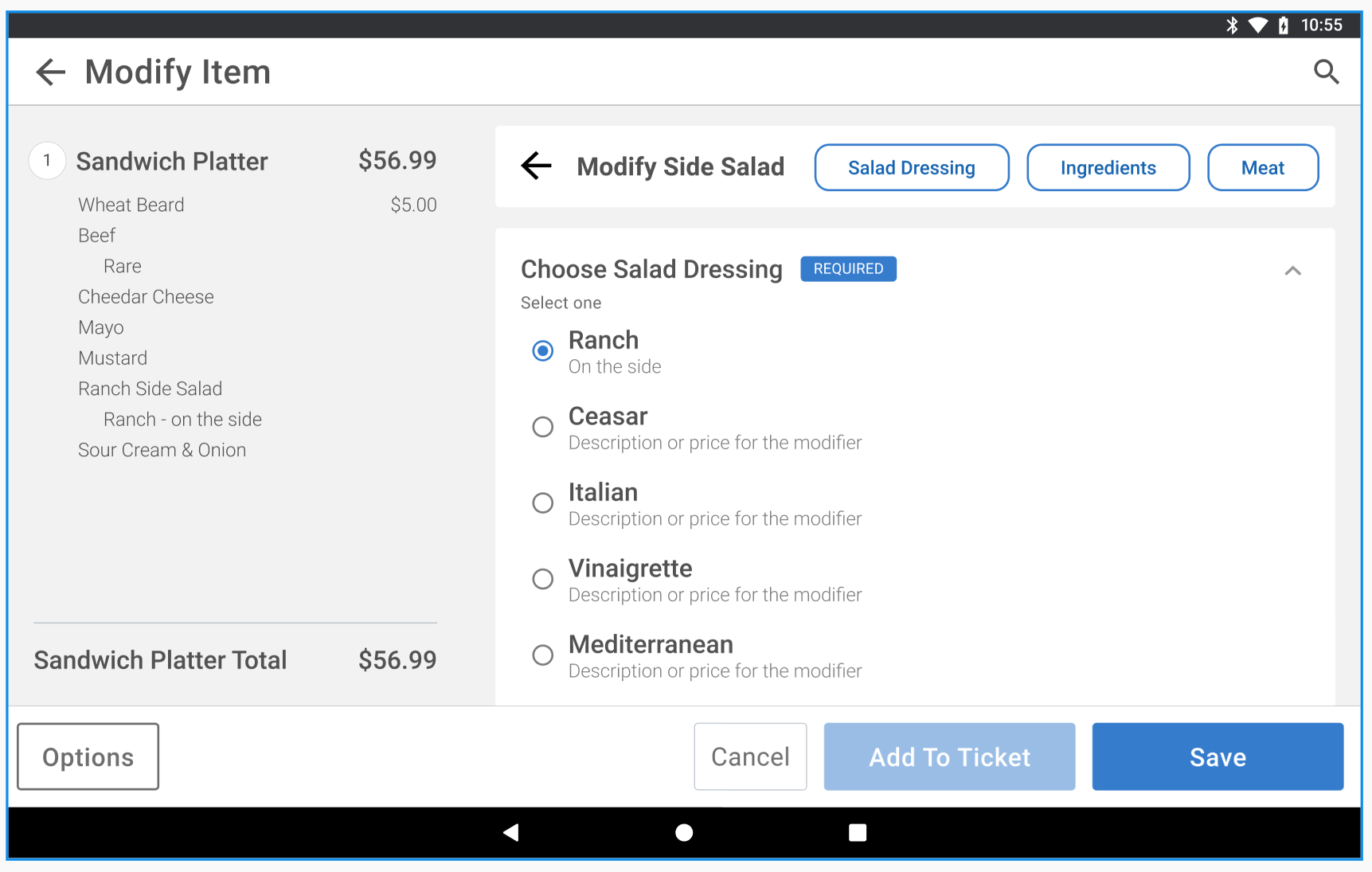
Nested modifier interface with breadcrumb navigation for tracking position in deep modifier hierarchies.
The Mission
Define the order-entry patterns the rest of the product would be built around.
In four months of early-stage work, establish the foundational interaction models for order taking, nested modifier architecture, and quantity input — the patterns every future feature would inherit.
The Moves
Four bets on how servers actually work.
An order-entry flow tuned for speed
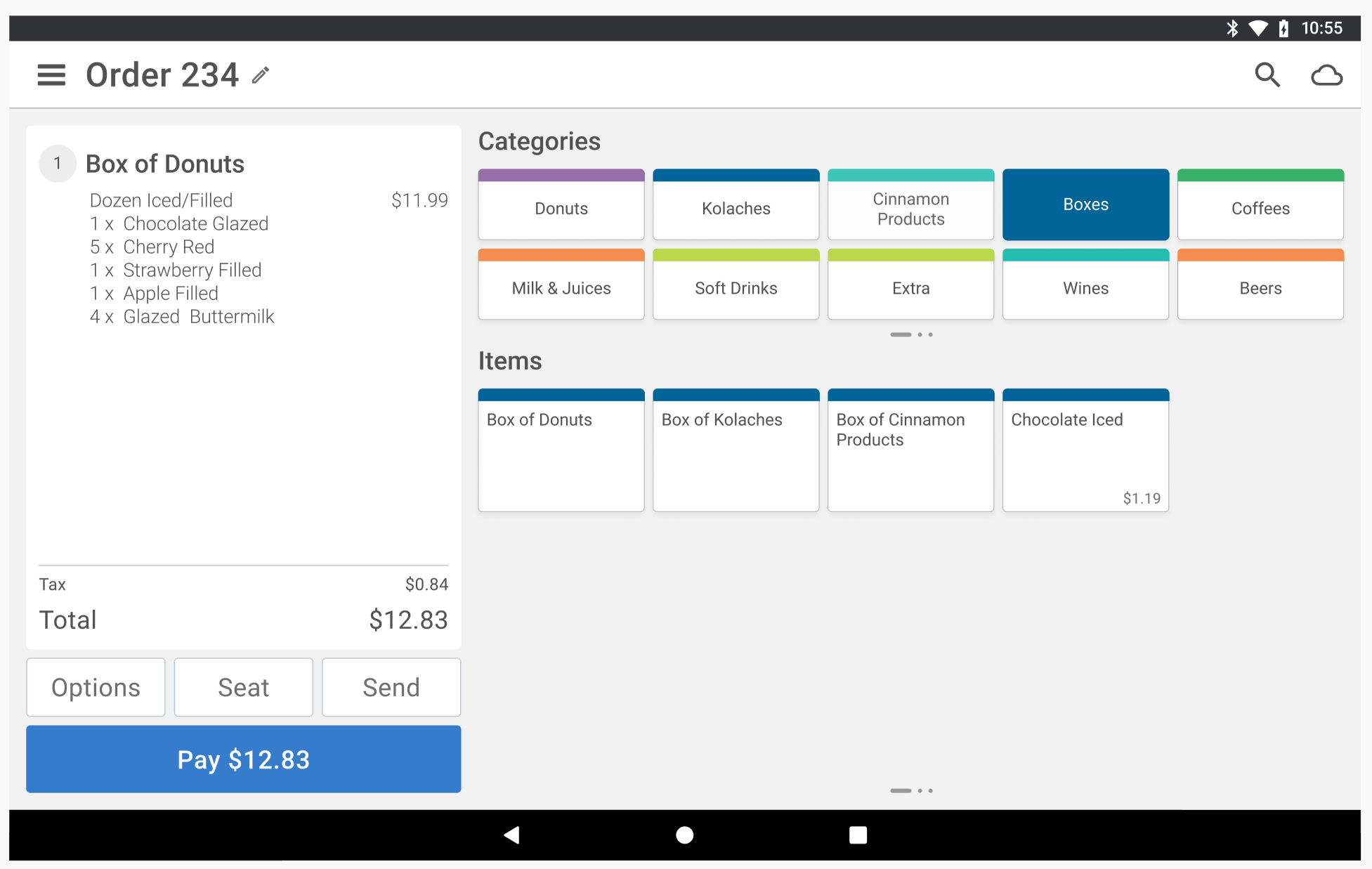
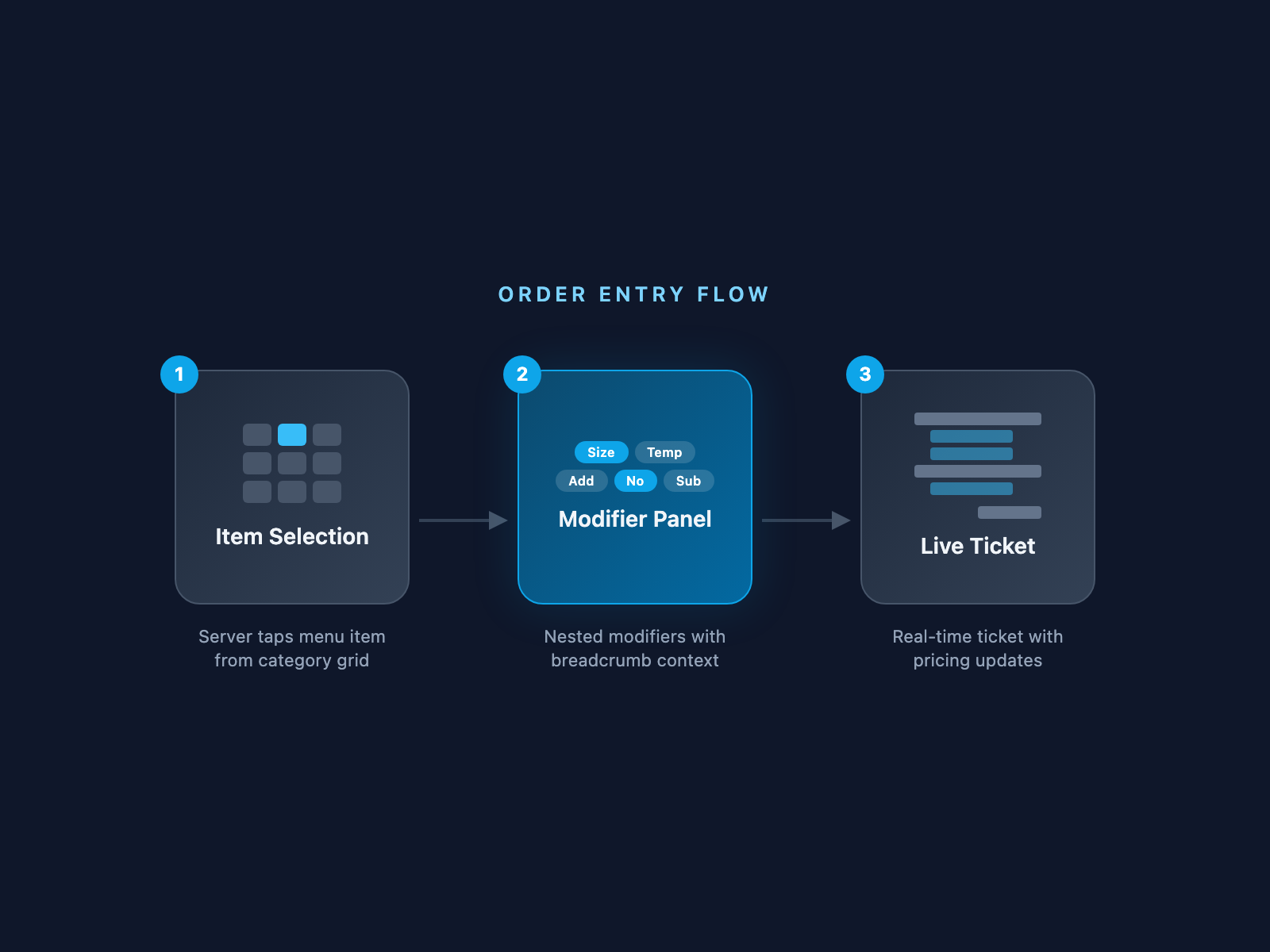
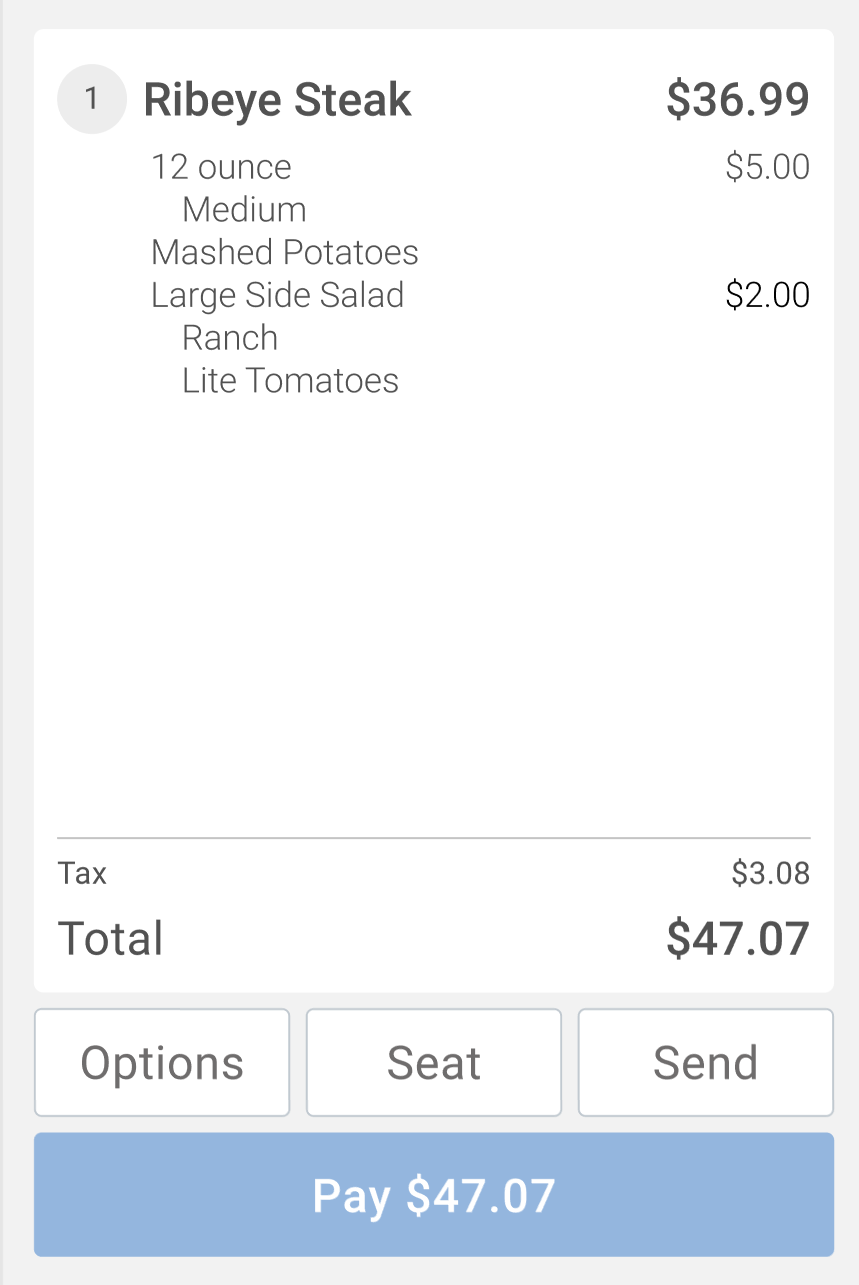
Designed the core order screen around a menu item grid, modifier architecture, and a card-based live ticket with real-time pricing — so a server's eyes could move between "what did they order" and "what's on the ticket" without ever leaving the screen.
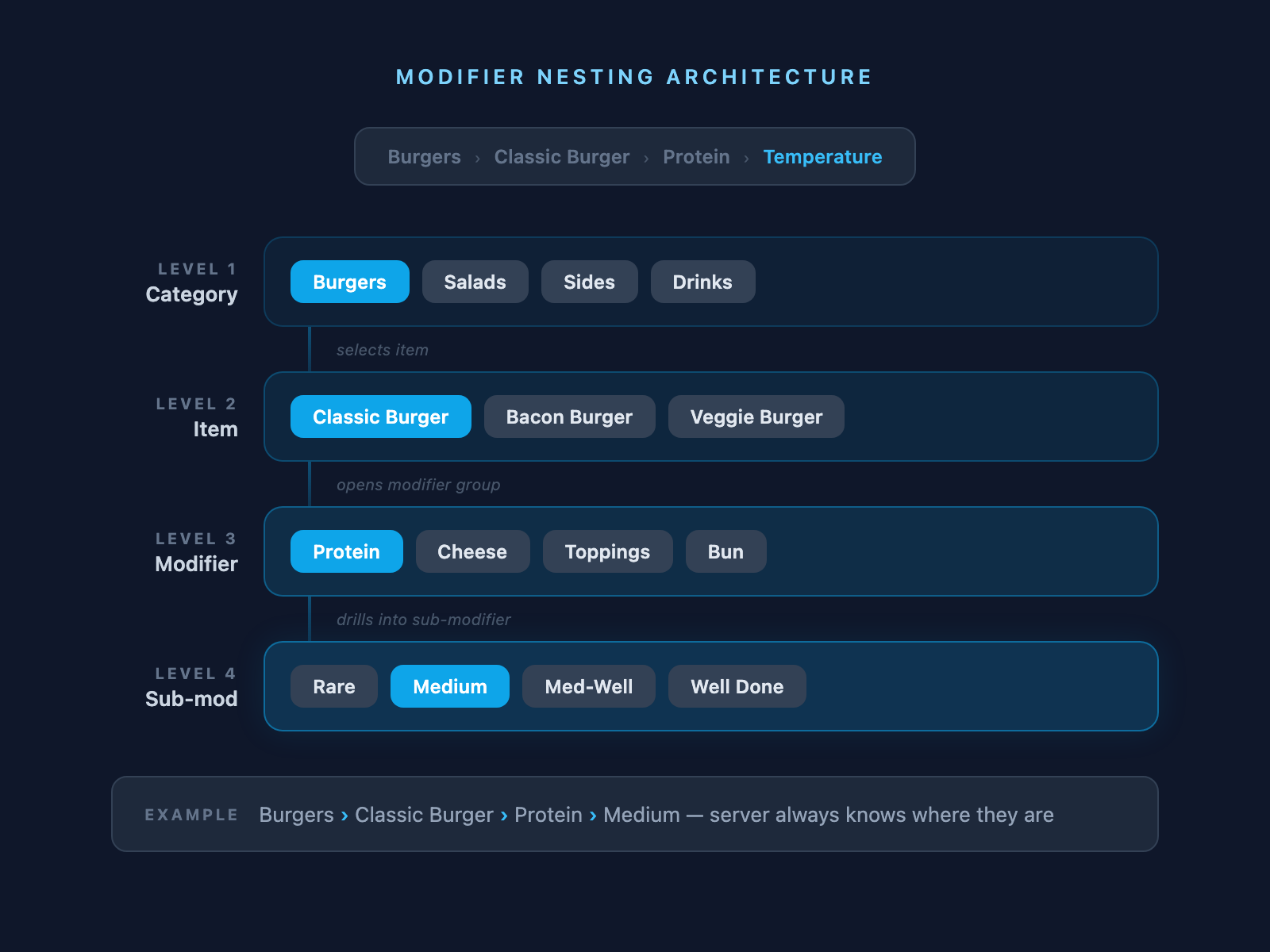
Nested modifiers with breadcrumbs that never lost you
Complex orders need 3–4 levels of modifier depth. Rather than stacking modals or drowning servers in a mega-form, I used progressive disclosure with a persistent breadcrumb trail — so drilling into "Add bacon → style → doneness" always had a clear way back.
Mod Codes: software that talks like a server does
Restaurants don't say "0.5 onions," they say "Lite onions." I architected how verbose descriptors — Lite, Extra, None, Side, Add — would flow from the order screen all the way to the kitchen ticket, keeping natural language intact through every handoff.
A typography system tuned for a glance, not a read
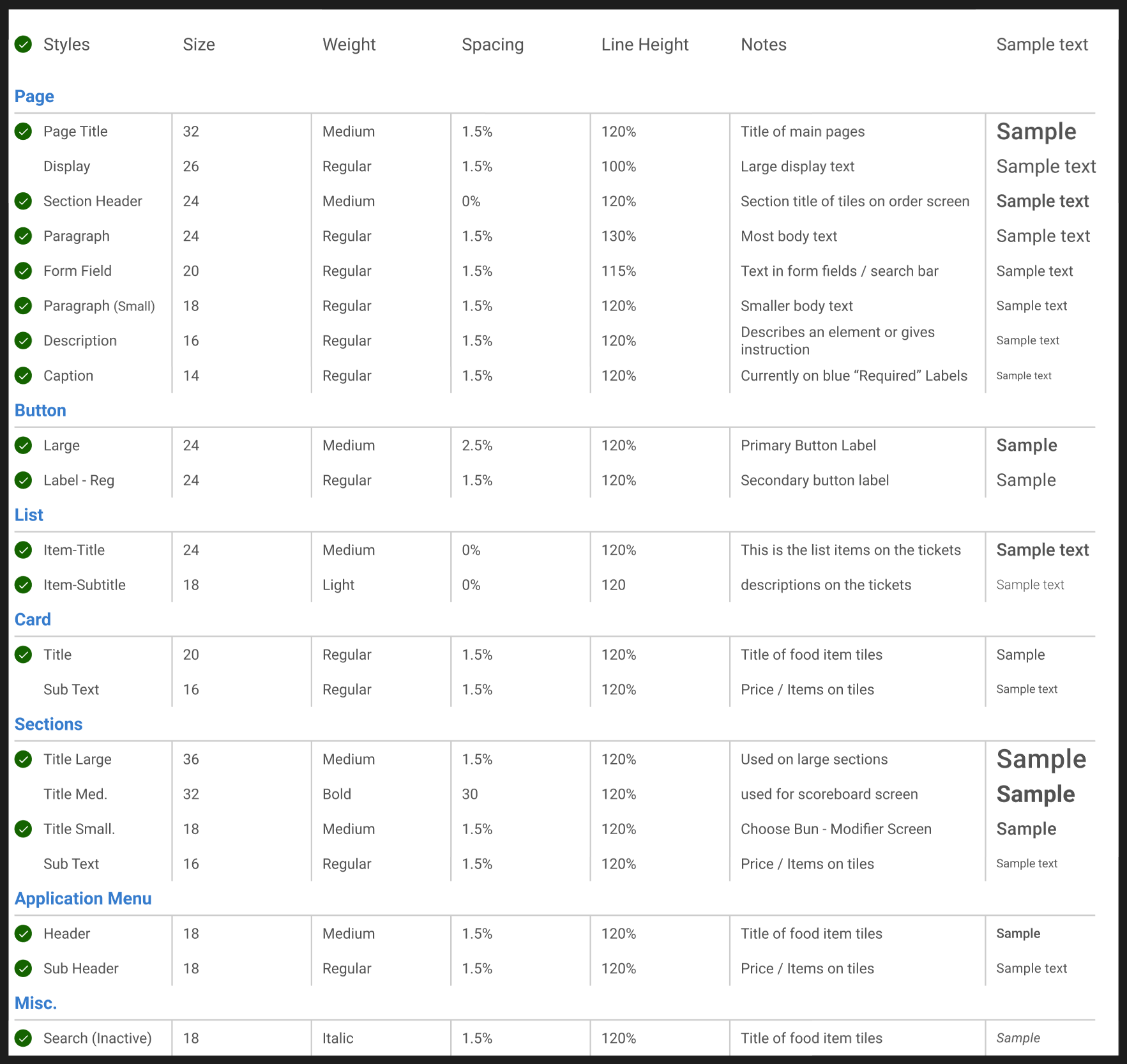
On a POS, nobody reads — they scan. I standardized font sizes, weights, and hierarchy across the app so servers and line cooks could parse a ticket in a glance during high-volume service, and so every screen that came after had a consistent visual backbone.
The Payoff
Foundational patterns that scaled to thousands of restaurants.
I was rotated to another project before Cloud POS reached GA, but the interaction patterns established in those early months became the foundation the product was built on. Aloha Cloud POS later launched globally and is now deployed in thousands of restaurants worldwide.
Restaurants deployed globally
Early-stage foundation laid
Order-entry patterns established
Looking Back
The interaction model is the product.
Four months of early-stage design ended up outlasting my time on the project by years. The lesson stuck: on a product this operational, the patterns you pick in the first weeks decide what everything built on top of them can become. Get the grammar right and the rest of the product can speak; get it wrong and every later feature is fighting the floor.