The Setup
A purpose-built booking app for a members-only golf facility.
Agency engagement for Golfinity, a members-only practice facility that had outgrown MindBody. Designed an iOS booking experience members could actually enjoy using — from login through confirmation — across three rounds of wireframes and in-person user testing with real members at the facility.
Replaced an off-the-shelf tool members were working around.
MindBody was generic wellness software bent into a golf use case — buggy, unfamiliar, and a constant support drag. A dedicated app gave Golfinity a product their members recognized as theirs, instead of one they tolerated.
De-risked the build with real members before a line of code.
Three rounds of wireframes and in-person sessions at the facility caught the decisions that matter — instructor filtering, calendar vs. date-scroller, session selection — while they were still cheap to change.
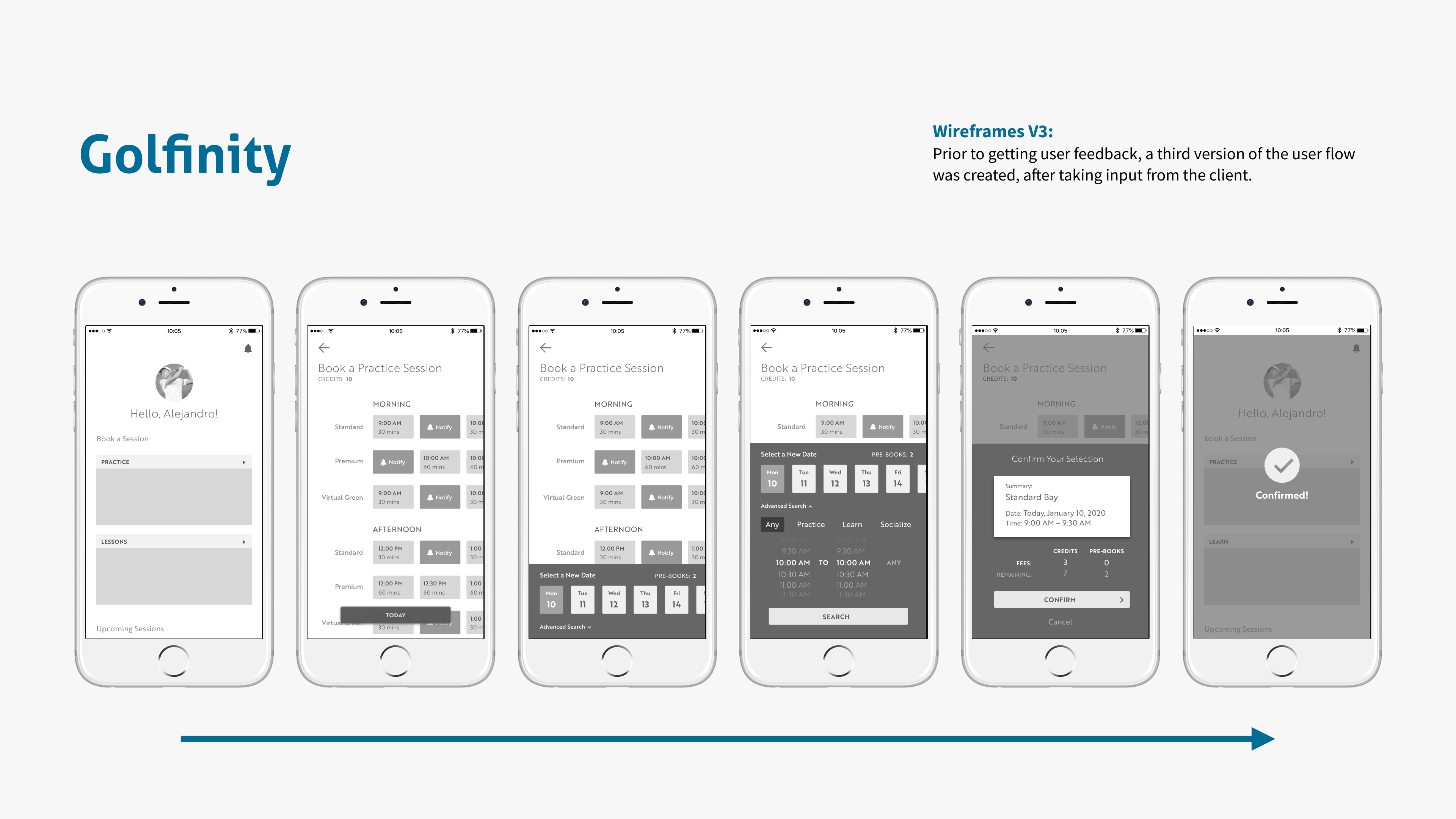
Refined booking flow after three rounds of iteration with client and user feedback.
The Landscape
Wellness software doing a golf facility's job.
Golfinity had been using MindBody — a generic booking platform built for yoga studios and spas — to let members schedule practice bays and lessons. It was prone to technical issues, didn't speak the language members or staff used, and didn't match the premium experience Golfinity wanted to be known for.
As a members-only facility, the booking tool wasn't a peripheral utility — it was the primary touchpoint between a member and the business. Every friction point was a small erosion of the product itself.
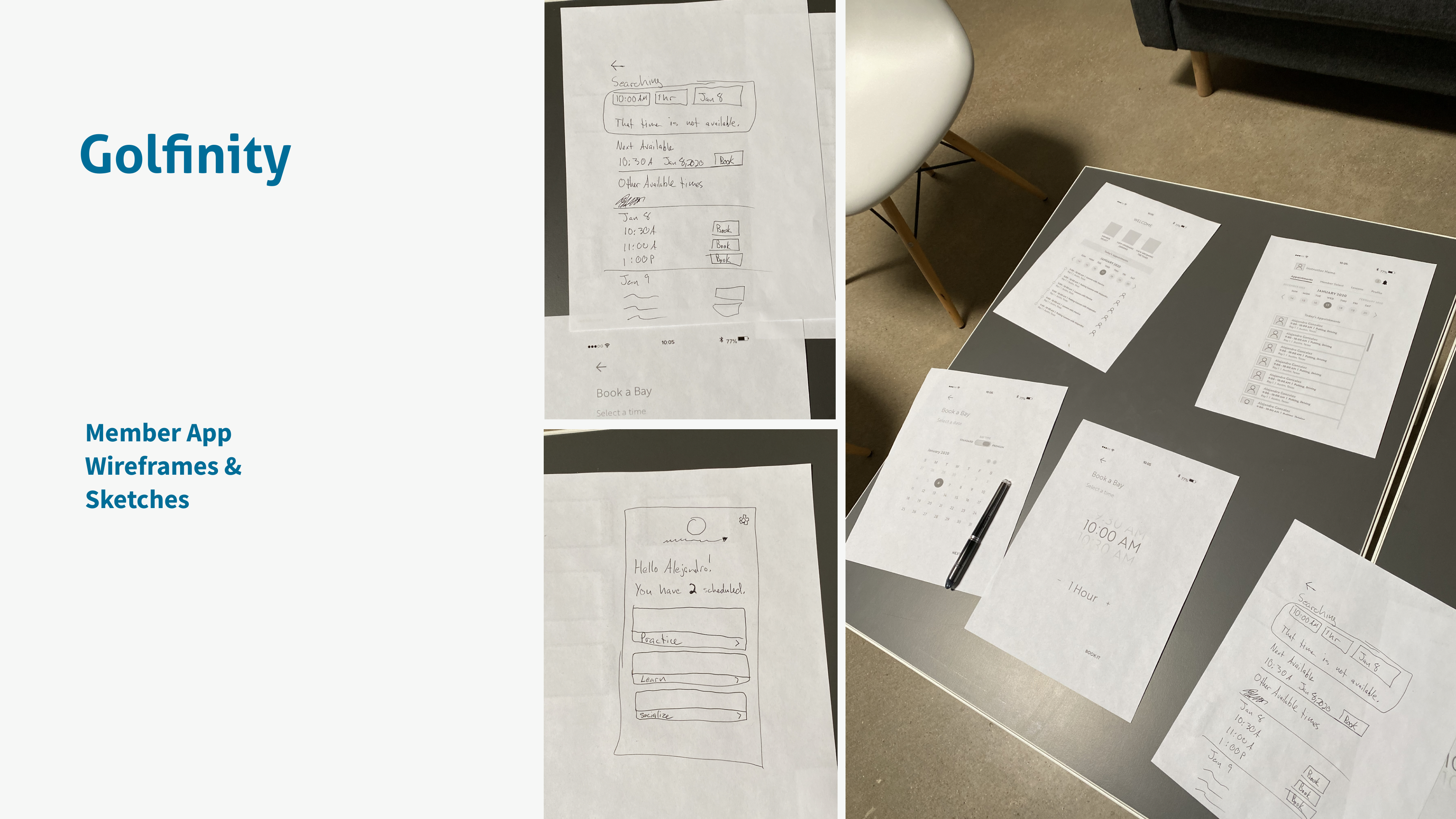
Early sketches exploring booking flow and screen hierarchy.
The Mission
Design an iOS booking app Golfinity could hand to members with pride.
Replace MindBody with a purpose-built experience covering practice-bay and lesson booking end-to-end, validate the flow with real members before engineering started, and deliver a complete, testable prototype the client could take straight into build.
The Moves
Four bets, ordered from architecture to validation.
Map every screen before drawing any of them
Started with competitor research and information architecture, then mapped the full app flow from login through booking confirmation. The goal was to see every path — practice bay, lesson, cancellation — as a single system before committing pixels to any one screen.
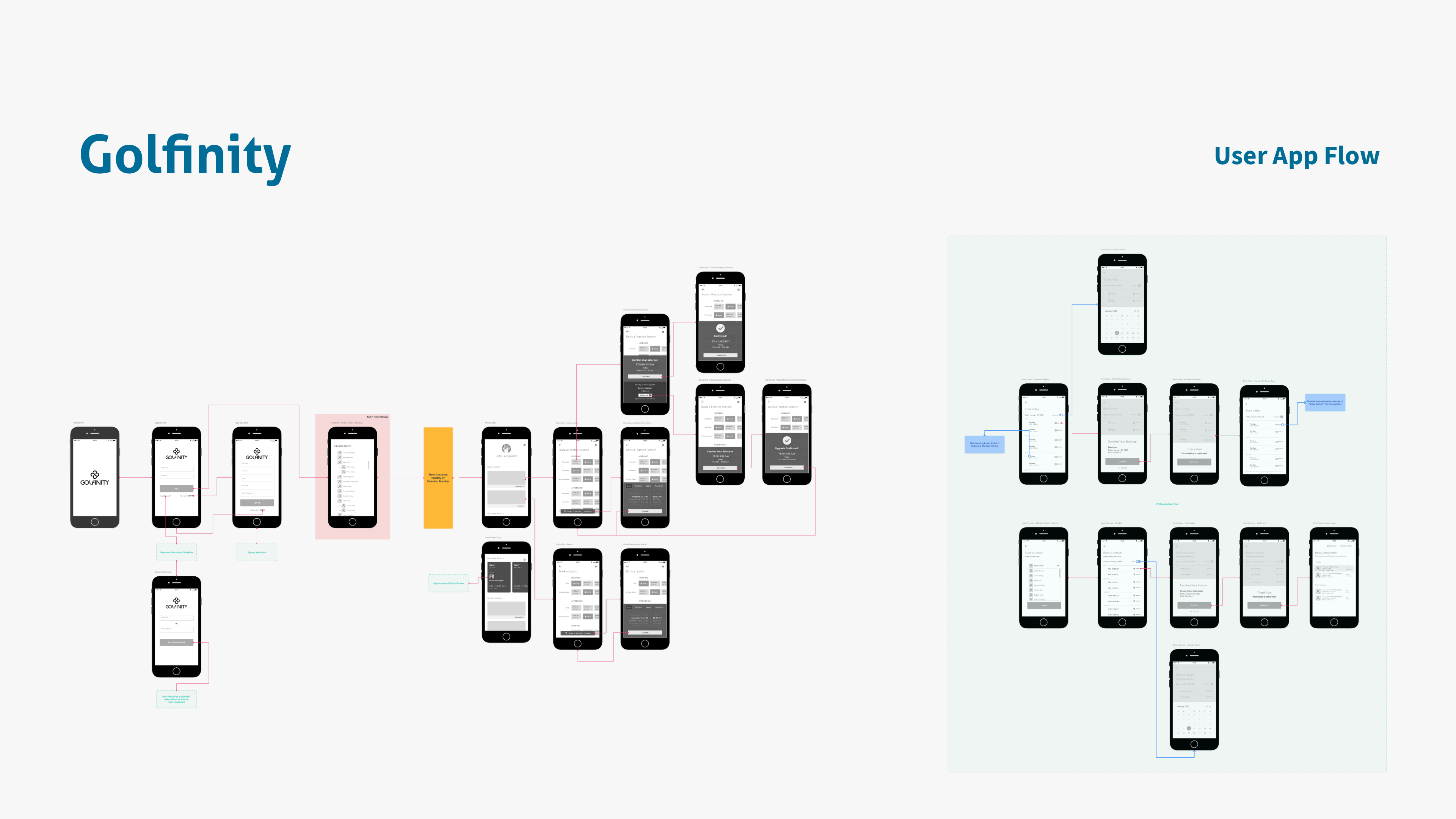
Split practice and lessons into distinct paths
Practice-bay booking and lesson booking look similar on the surface but behave differently — different cadence, different decisions, different mental models. Detailed flows made those differences explicit so the UI could honor both without forcing either into a generic template.
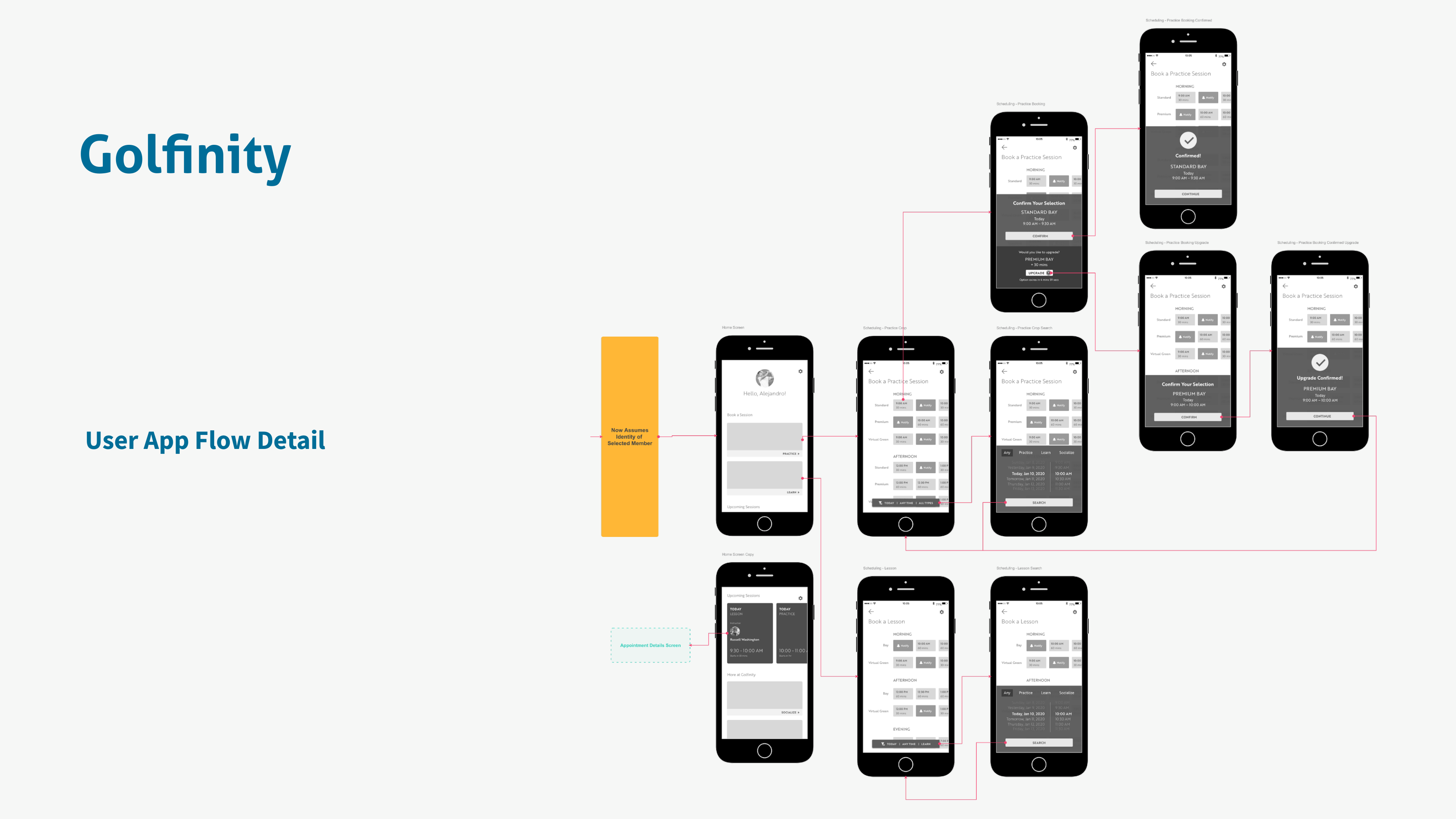
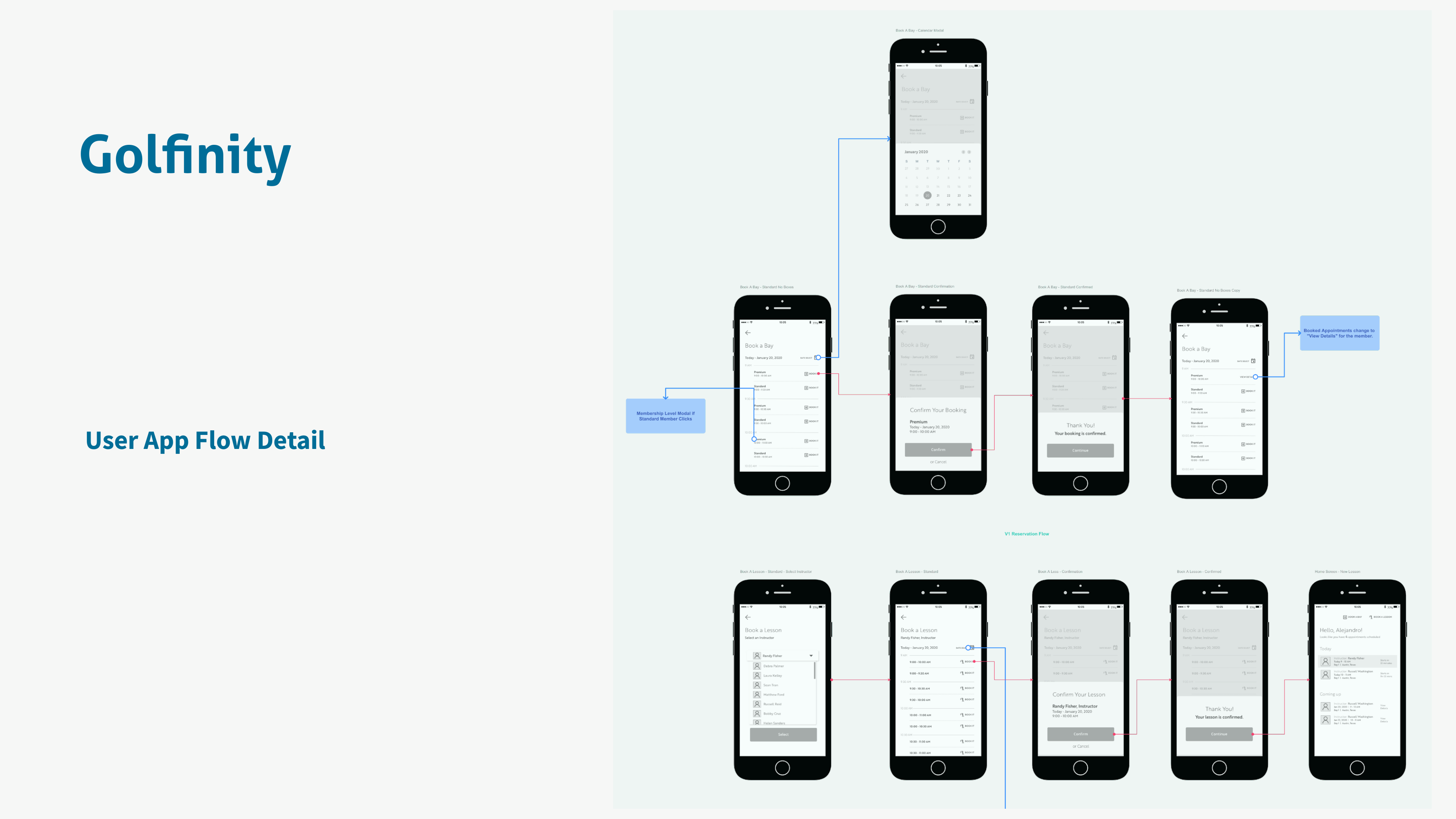
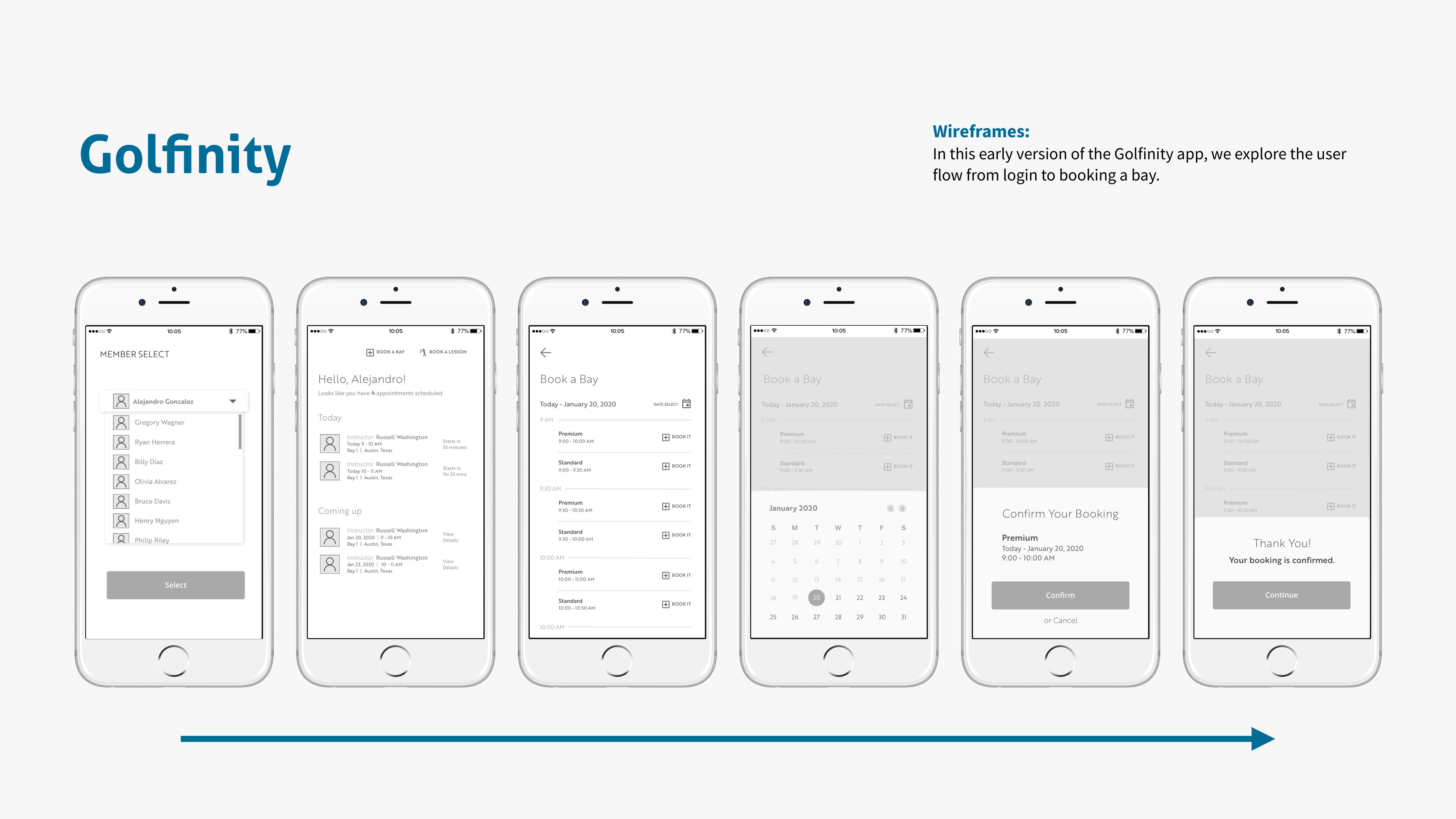
Three wireframe rounds, each answering a different question
V1 pressure-tested the core booking flow. V2 absorbed client feedback on session selection. V3 addressed what surfaced in usability testing. Each round had a single focus, which kept critique specific and iteration fast.
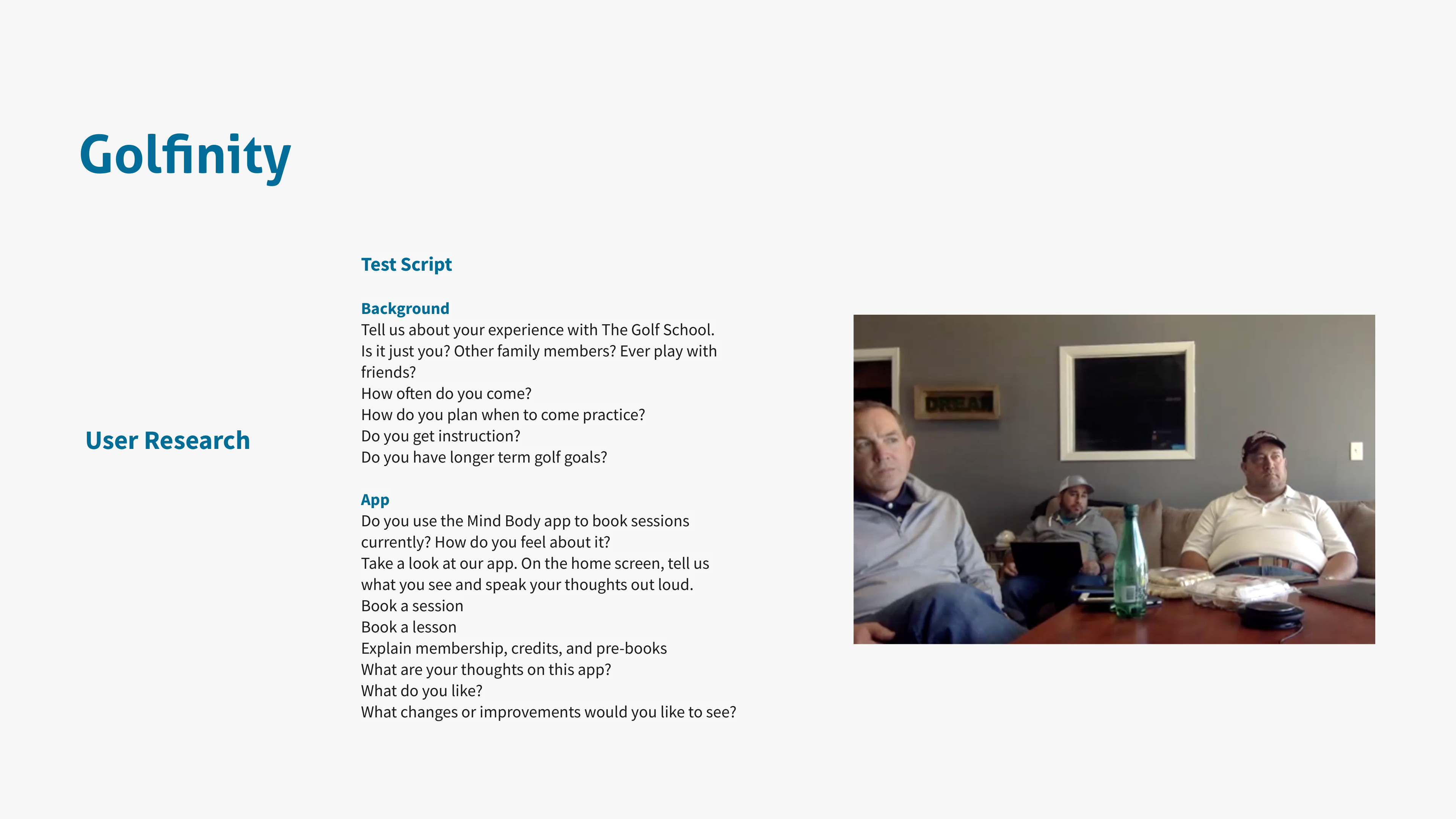
On-site testing with actual members
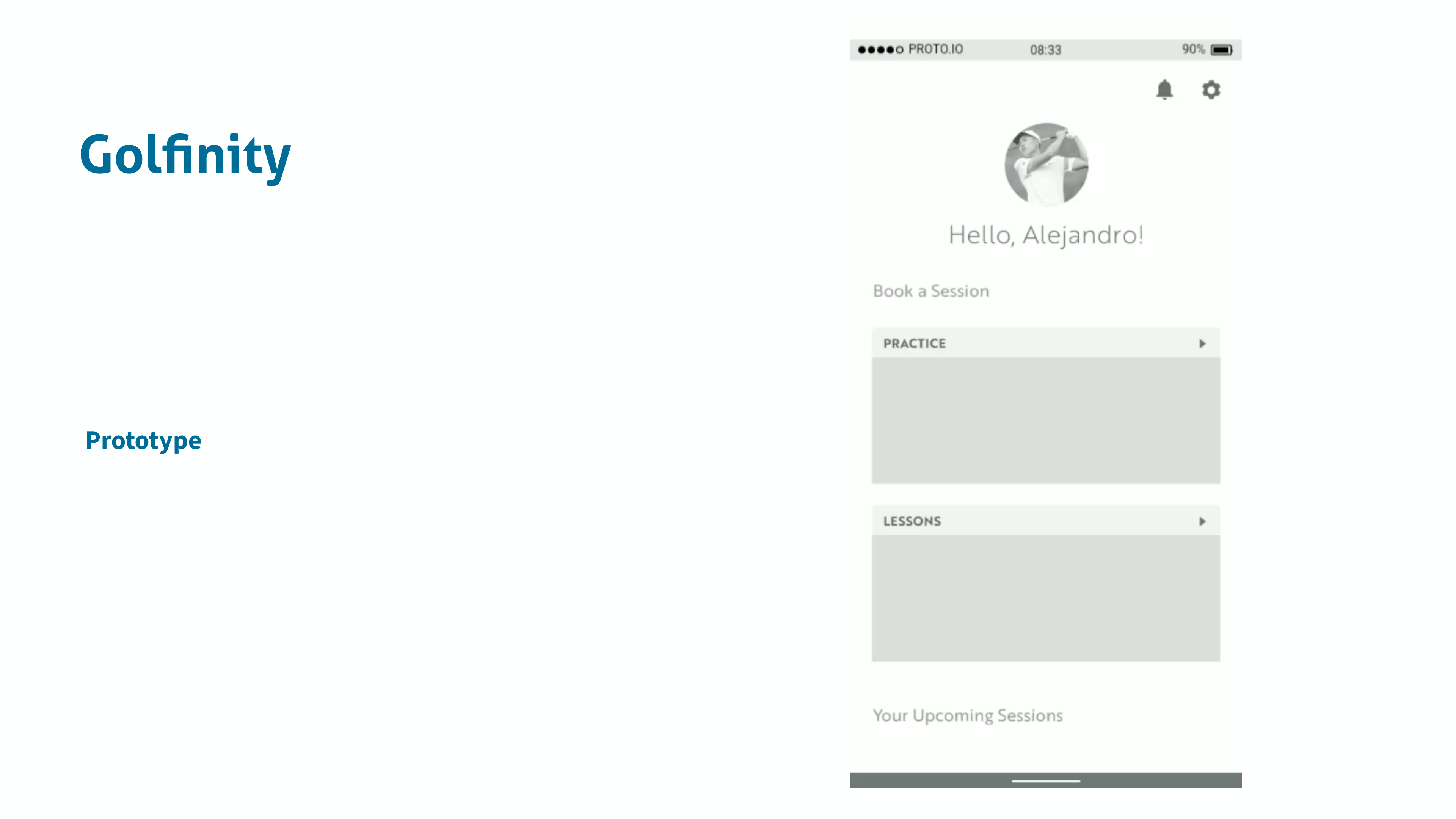
Ran in-person sessions at the facility with a Proto.io prototype and a structured script covering existing MindBody habits, the new home screen, the booking flow, and filtering and date navigation. Members asked for instructor filtering, preferred a full calendar view over a horizontal date scroller, and responded well to the streamlined confirmation — each finding landed directly in V3.
The Payoff
A validated, build-ready booking experience.
Golfinity walked away with a complete app flow, three rounds of tested wireframes, and qualitative validation from the members who would actually use it. The biggest usability risks — filtering, date navigation, session selection — were resolved while changes were still cheap, leaving engineering a clear target instead of a guessing game.
Wireframe rounds, client + user validated
Testing with real Golfinity members
App flow delivered build-ready
Looking Back
Testing at the facility was worth more than any lab.
The sharpest insights came from members reacting to the prototype in the space they actually book in — the calendar preference, the instructor filter, the muscle memory from MindBody they wanted to keep. No amount of remote testing would have surfaced those the same way. For a members-only product, the environment is part of the user.