HydroMate – Simplifying Hydroponic Tracking
A mobile app for Android and iOS that makes nutrient tracking, pH monitoring, and harvest management approachable—built in 3 days using reusable component architecture.
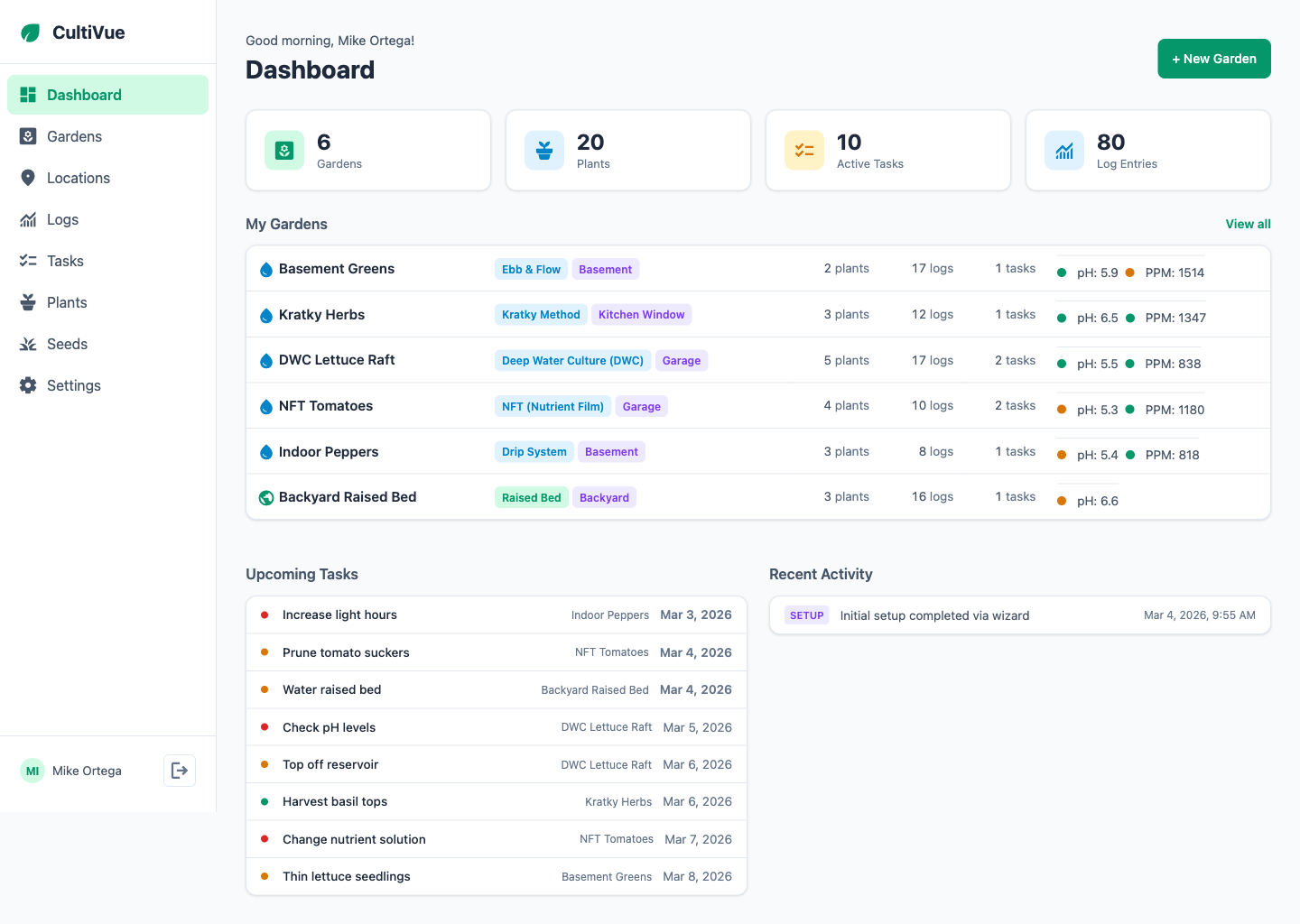
HydroMate dashboard featuring garden overview, plant count, task tracking, and live monitoring of pH, PPM, and temperature.
Challenge
Hydroponic gardeners needed a tracking app that was neither too complex for hobbyists nor too simplistic for serious growers—while validating if reusable component architectures could scale across different product domains.
Solution
Adapted Printory's component library to create a hydroponic-specific mobile app—enabling rapid prototyping, real-device testing, and cross-domain architecture reuse.
Key Result
Launched alpha version in 3 days with 6 active testers—proving reusable design systems can successfully scale across product categories.
My Role
Product Designer & Developer
Duration
3 Days
Platform
Android & iOS
Tools
Dart, Claude Code, Gemini, Visual Studio
Key Skills Demonstrated
HydroMate proves that reusable design system architecture can accelerate execution—validating cross-domain patterns that inform enterprise platform thinking.
Deep Expertise
-
→
Design System Scalability
Validated component architecture across domains—Printory's inventory patterns adapted to hydroponic tracking
-
→
Domain Adaptation
Reused data models, UI components, and state management—proving abstraction investment compounds
-
→
Information Architecture
Multi-system management, historical trend visualization, predictive alerts for optimal grow conditions
Broad Capabilities
-
→
Data Visualization
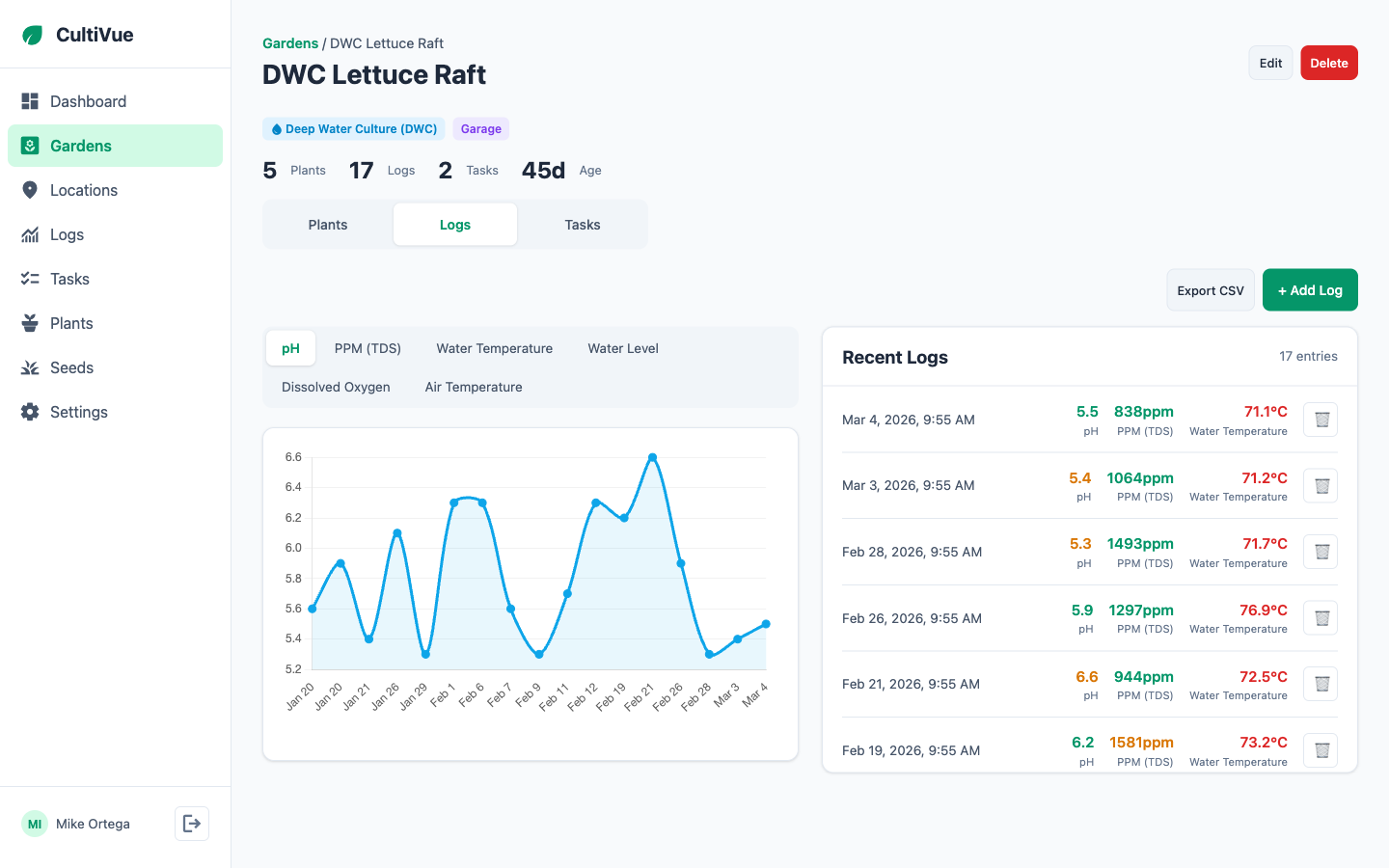
pH, PPM, temperature trend charts enabling pattern recognition for optimal growing
-
→
Scheduling Logic
Task reminders for nutrient changes, pH adjustments, harvest windows based on grow schedules
-
→
Cross-Platform Deployment
Single Flutter codebase deployed to iOS & Android, tested with 6 alpha users on real devices
AI-Native Workflow
-
→
3-Day Build Cycle
Claude Code + Gemini enabled concept-to-deployment in 72 hours by adapting Printory's architecture
-
→
Rapid Validation
Real-device testing proved cross-domain architecture reuse—validating design system investment thesis
-
→
Pattern Replication
Same approach later used for Verdant Lab (3 days) and MycoLog—proving repeatable methodology
Cross-Pollination: Validating Enterprise Design System Thinking
Building HydroMate in 3 days validated that component architecture investment compounds returns across products. This principle directly applies to enterprise design systems: invest in reusable patterns once, scale across multiple product teams. Trend visualization patterns from HydroMate informed enterprise dashboard design for multi-location analytics.
Understanding Hydroponic Complexity
Hydroponic gardening is deceptively complex. Hobbyists tracking nutrients, pH levels, water schedules, and plant health across multiple systems were overwhelmed by existing tools—either bloated enterprise software or oversimplified consumer apps that couldn't scale beyond one system.
From my own hydroponic growing experience and observing the community, the recurring theme was clear: growers needed precision without complexity. They wanted to log data quickly, spot trends visually, and receive timely reminders—all without navigating nested menus or manual spreadsheets.
Beyond solving user needs, I saw an opportunity to validate whether Printory's component architecture could be adapted to a completely different product domain—testing the hypothesis that well-abstracted design systems could dramatically accelerate development timelines.
Key Research Findings
- → Users needed quick data entry during grow room walks
- → Trend visualization was more valuable than raw numbers
- → Multi-system management was poorly supported in existing tools
- → Mobile-first design was critical for on-site usage
The Hydroponic Tracking Challenge
Existing solutions were either too complex for hobbyists or too simplistic for serious growers—growers needed the right balance of precision and simplicity.
Enterprise Software
Commercial grow operations
- ❌ Overwhelming complexity
- ❌ Steep learning curve
- ❌ Expensive licensing
- ❌ Overkill for hobbyists
Manual Spreadsheets
DIY tracking approach
- ❌ Quickly abandoned
- ❌ No mobile access
- ❌ Manual data entry
- ❌ No trend visualization
Consumer Apps
Simplified tracking
- ❌ Too simplistic
- ❌ Single-system only
- ❌ Limited tracking
- ❌ No customization
HydroMate's Solution
Precision tracking without overwhelming complexity—mobile-first design optimized for quick data entry during grow room walks, comprehensive enough for serious growers, approachable enough for hobbyists.
Architecture Reuse & Adaptation
Rather than building from scratch, I ported Printory's component library and adapted it for hydroponic tracking. The underlying architecture—modular components, consistent state management, and data visualization patterns—translated surprisingly well across domains.
I mapped Printory's "filament tracking" patterns to "nutrient tracking," "spool inventory" to "plant library," and "printer management" to "hydroponic system management." The core component structure remained intact while the domain-specific logic and UI adapted to hydroponics.
This reuse strategy dramatically accelerated development. Instead of designing and building foundational components, I focused on domain-specific features: pH trend charts, nutrient dosing calculators, and harvest cycle reminders. The result was significantly faster development time compared to greenfield projects.
What We Reused from Printory
- ✓ Component architecture and state management patterns
- ✓ Data visualization and charting infrastructure
- ✓ Mobile app setup, offline support, and mobile optimization
- ✓ Form validation, input patterns, and responsive layouts
From Printory to HydroMate: Component Adaptation
By mapping Printory's 3D printing domain to hydroponic growing, the reusable architecture enabled rapid development while maintaining code quality.
Printory
Filament Tracking
Spool inventory, color management, usage logging
Printer Management
Multiple 3D printers, print jobs, maintenance
Material Library
PLA, PETG, TPU types with properties
QR Scanning
Instant spool identification and checkout
HydroMate
Nutrient Tracking
pH/EC/TDS monitoring, fertilizer logging
System Management
Multiple gardens, grow cycles, maintenance
Plant Library
Strains, growth stages, harvest tracking
QR Scanning
Garden identification and task logging
Reusable Core Components
Data Models
State Management
UI Components
Camera Workflows
3-Day Development Enabled by Reuse
Instead of building foundational architecture from scratch, component reuse allowed focus on domain-specific features—nutrient tracking, pH monitoring, and grow cycle management—accelerating development from months to days.
Rapid Prototyping
I built a functional mobile app in just 3 days. The streamlined workflow allowed me to focus on product decisions—feature prioritization, user flows, and interaction patterns—while leveraging reusable components from Printory accelerated technical implementation.
The core features came together rapidly: system management (tracking multiple hydroponic setups), nutrient logging with pH/EC/TDS inputs, plant library with growth stages, and automated reminders for water changes and maintenance. Each feature leveraged reused components, adapted with domain-specific logic.
I deployed the alpha version to real devices immediately and onboarded 6 early testers from hydroponic communities. This rapid iteration cycle—build, deploy, test, refine—was enabled by component reuse and focused development.
Core Features Delivered
System Management
Track multiple hydroponic systems with custom configurations, reservoir volumes, and grow lights
Nutrient Tracking
Log pH, EC/TDS, and nutrient additions with historical charts to identify trends
Plant Library
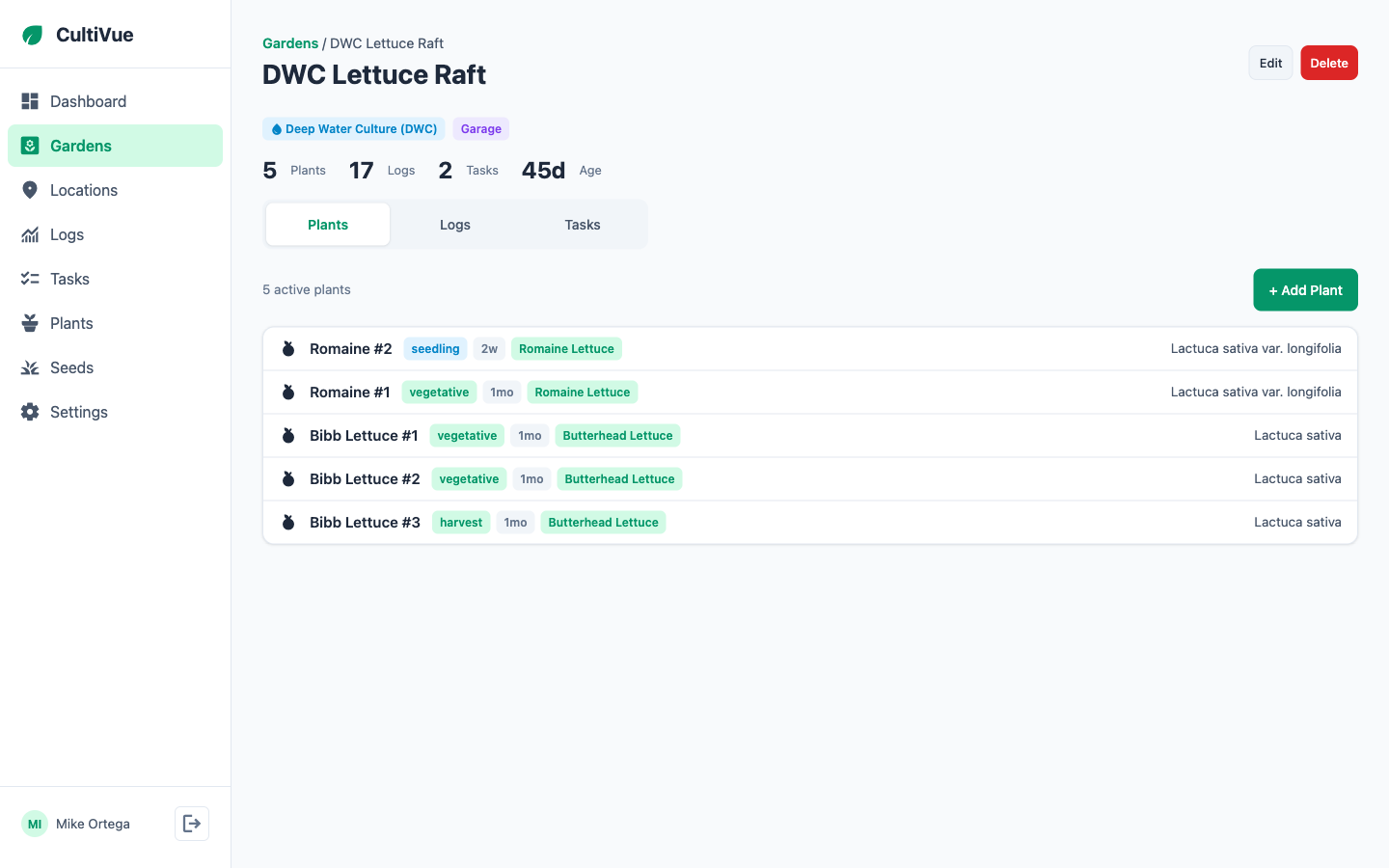
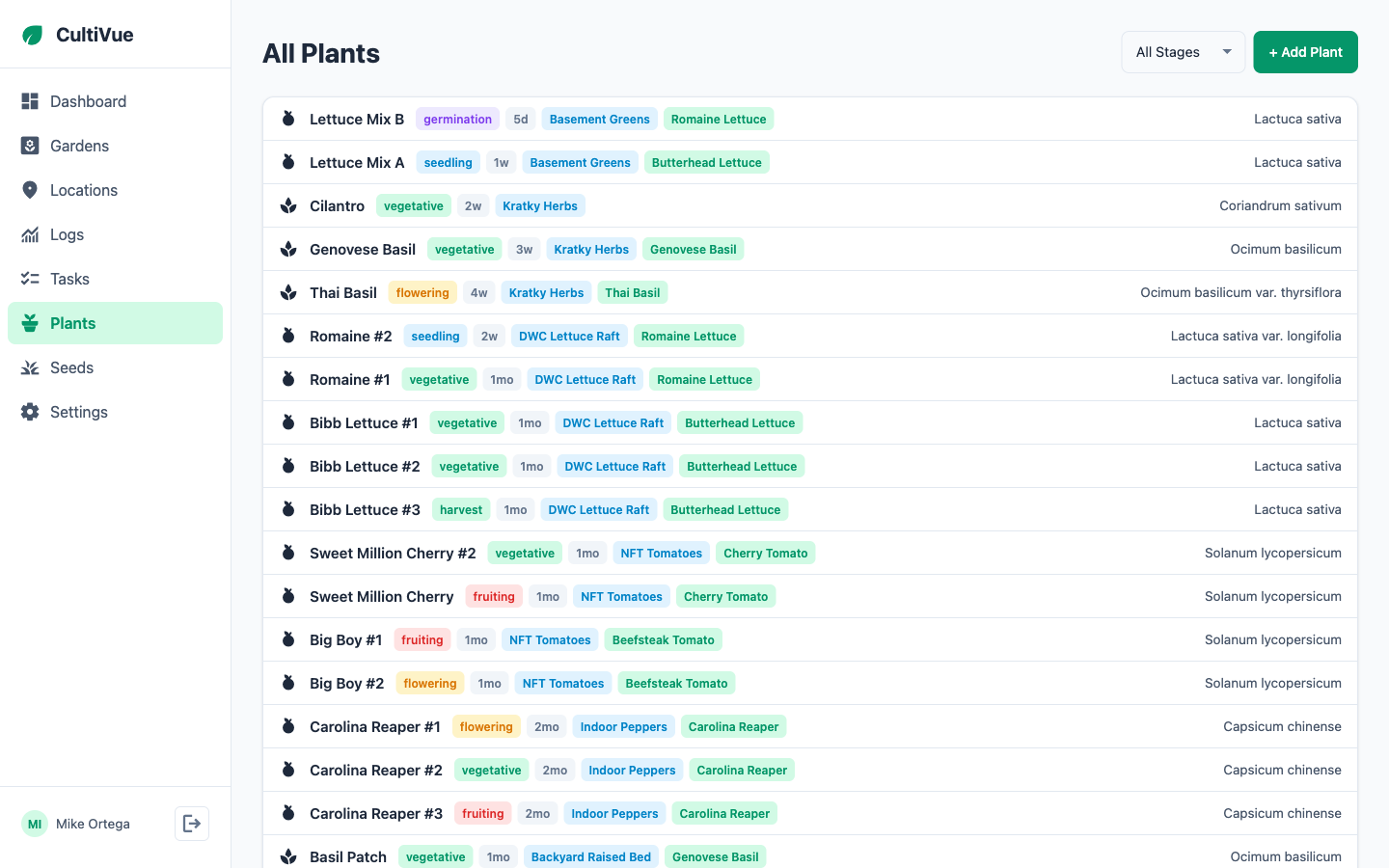
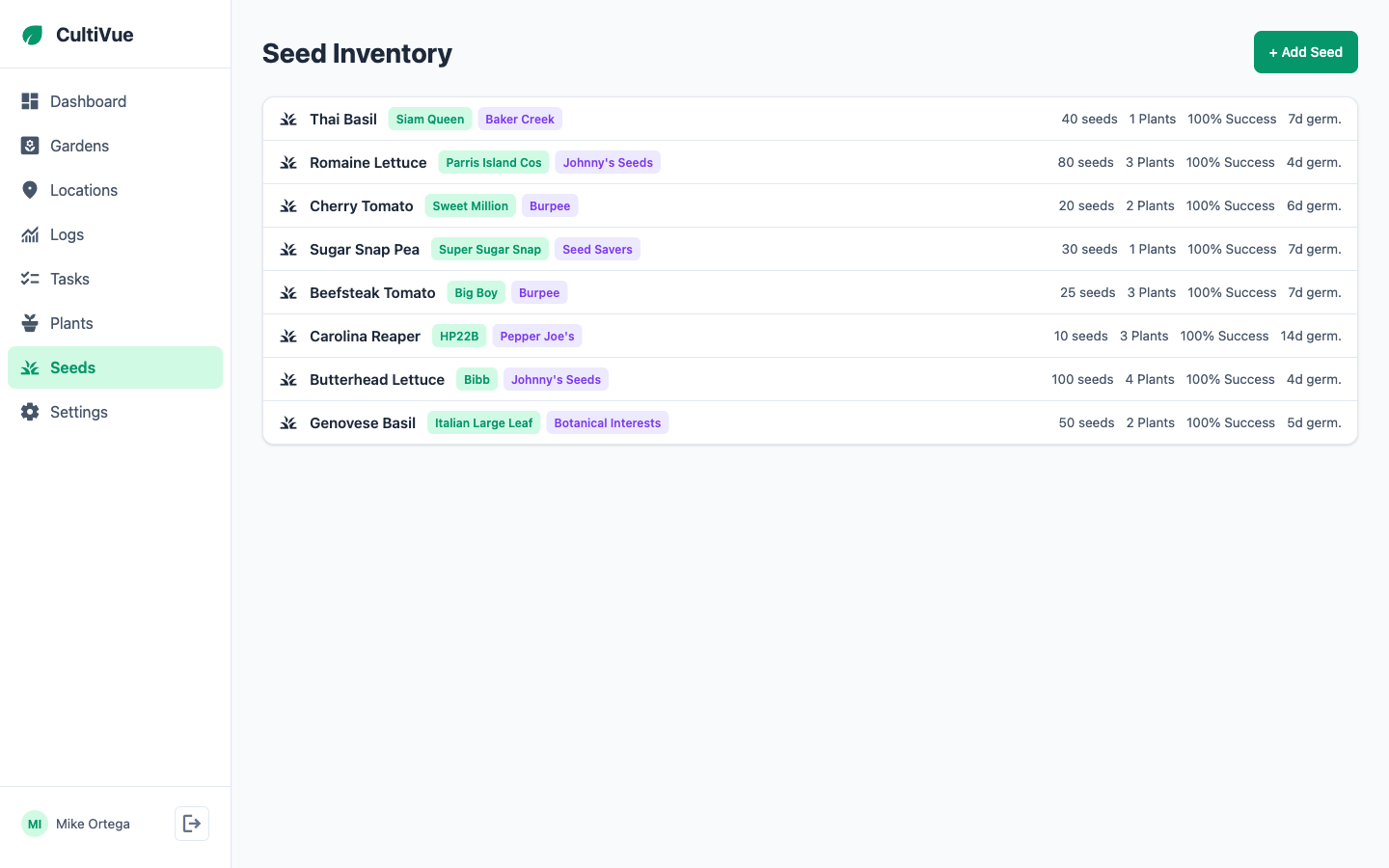
Catalog plants with growth stages, harvest dates, and strain-specific notes
Smart Reminders
Automated alerts for water changes, nutrient additions, and system maintenance
Mobile-First Interface
Optimized for quick data entry during grow room walks—one-handed operation, instant feedback, and visual tracking
Multi-System Dashboard
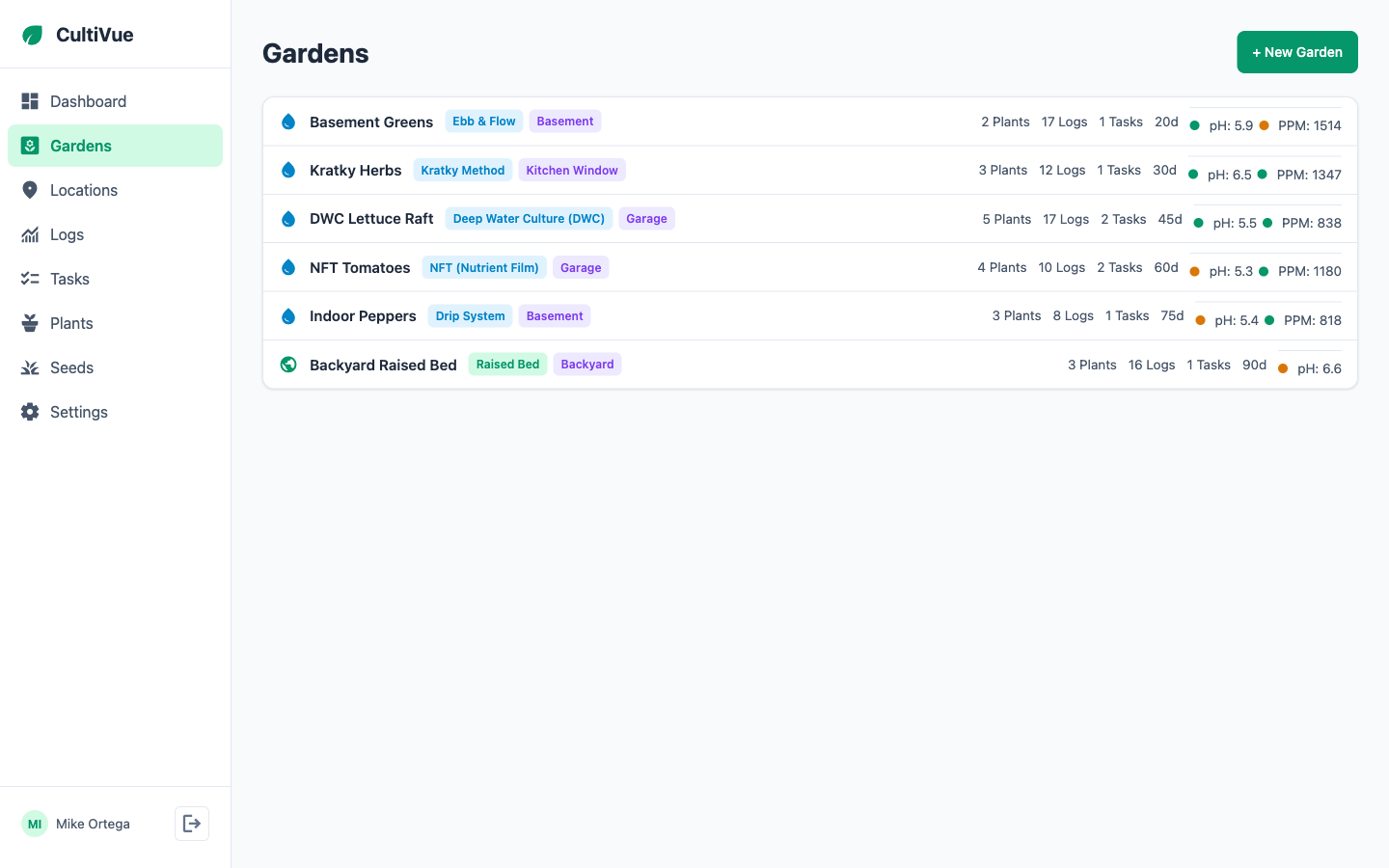
Track multiple hydroponic gardens with at-a-glance status—plant count, active tasks, and recent logs all visible from home screen.
Live Monitoring
Real-time display of critical parameters—pH levels, PPM readings, and temperature at a glance with color-coded status indicators.
Quick Task Entry
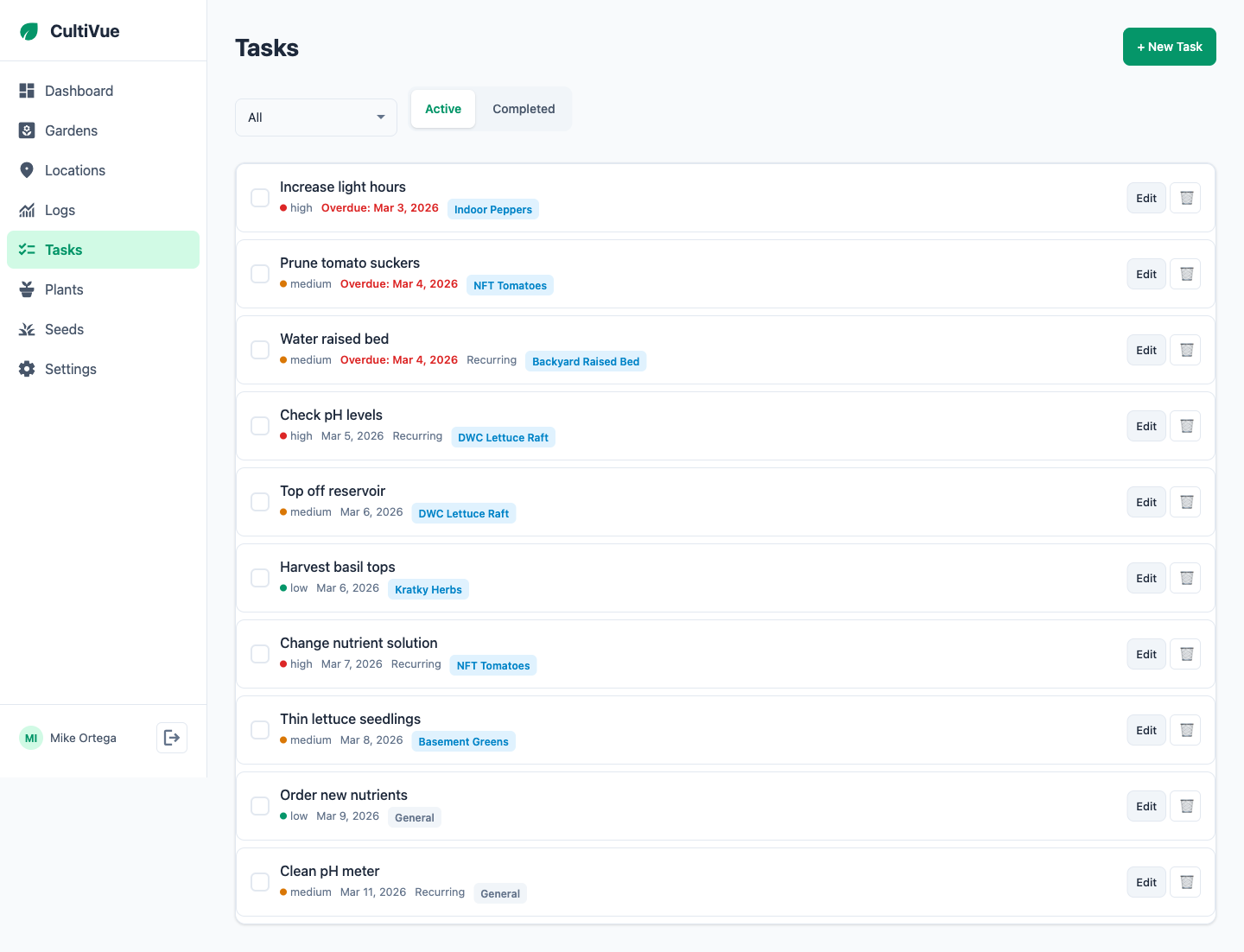
One-tap logging for water changes, nutrient additions, and maintenance tasks—optimized for mobile use in grow environments.
Alpha Testing & Validation
Real-device testing revealed insights that desktop prototypes couldn't capture. Alpha testers appreciated the clean interface and comprehensive tracking capabilities, but highlighted mobile-specific UX friction—particularly around nutrient input workflows during grow room walks.
I refined input patterns to support one-handed operation, added quick-entry shortcuts for common tasks, and optimized chart interactions for smaller screens. These mobile-first improvements significantly improved the on-site experience, validating the mobile app approach.
More importantly, the project successfully proved that reusable component architectures can scale across product categories. The development time savings and rapid iteration cycles demonstrated the viability of reusable design systems—setting the foundation for future functional prototypes.
Critical Lesson
"Well-abstracted component architectures aren't just about code reuse—they're about accelerating the entire product development cycle. Investing in reusable systems pays exponential dividends when launching new products."
3-Day Development Timeline
Component reuse enabled rapid development by eliminating foundational work—allowing focus on hydroponic-specific features.
Architecture Adaptation
- → Mapped Printory components to hydroponic domain
- → Adapted data models (filament → nutrients, spools → gardens)
- → Configured state management for grow tracking
- → Set up pH/EC/TDS input validation
Feature Implementation
- → Built nutrient tracking interface with trend charts
- → Created plant library with growth stage tracking
- → Implemented multi-garden management dashboard
- → Added automated reminders for water changes
Polish & Alpha Launch
- → Mobile UX refinements for one-handed operation
- → Added visual feedback for pH/EC thresholds
- → Deployed to test devices and onboarded 6 alpha testers
- → Collected initial feedback from hydroponic community
From Months to Days
Traditional greenfield development would take 2-3 months for a fully-featured app. Reusable architecture compressed this to 3 days—validating that component reuse dramatically accelerates product development without sacrificing quality.
Project Impact Summary
Concept to Alpha Launch
Component Architecture
Alpha Users Onboarded