Labor Cost Optimization
Aligned real-time shift scheduling against hourly sales curves, protecting razor-thin restaurant margins against costly overtime.
Hours → Minutes
Reduced general managers' weekly admin and scheduling desk time by hours, keeping leadership on the dining room floor.
Stopped Platform Drift
Deterministic decision trees prevented 5 autonomous squads from shipping fragmented, competing navigation that disoriented 10,000+ operators.
Adopted Org-Wide
Executive platform alignment transformed 5 siloed engineering squads into a scalable, autonomous delivery machine praised by leadership.
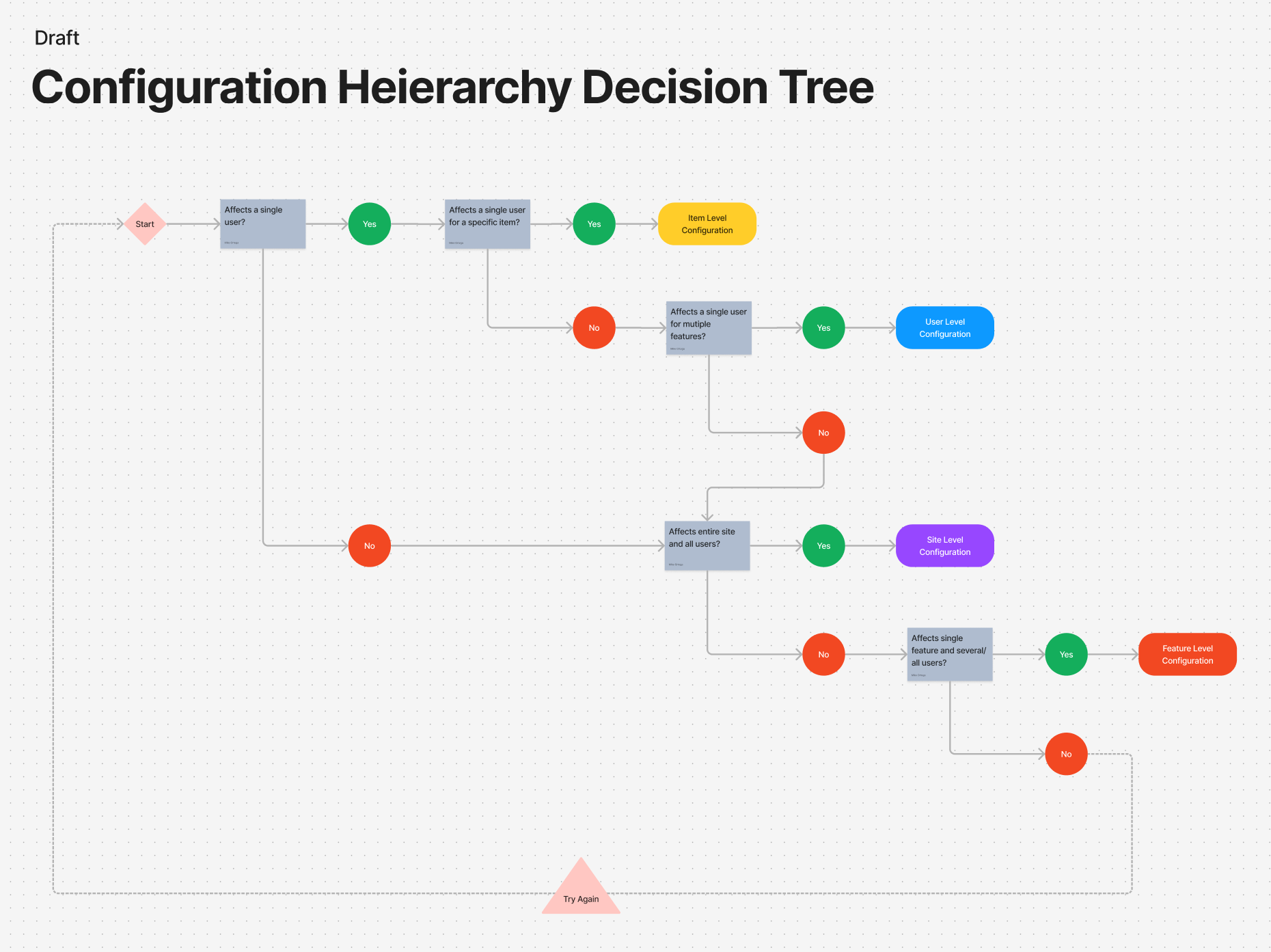
Configuration hierarchy decision tree: the definitive schema used by all 5 squads to place settings without committee meetings.
Five autonomous engineering pods shipping five disconnected experiences.
The Architecture
Smart Manager powers enterprise restaurant operations through five primary capability domains: Labor, Reporting, Inventory, Sales, and Admin—each staffed by an autonomous engineering squad with its own PM.
The Organizational Drift
Each pod built localized optimizations. Settings lived at four different menu depths. Reporting pulled data using incompatible schemas. What looked like rapid squad velocity was quietly fracturing the user experience.
The Customer Cost
Restaurant general managers juggle shift rosters, stock shortages, and lunch rushes simultaneously. Forcing them to learn five different mental models caused operational errors and high customer support escalation.
Scale platform coherence across five squads without becoming a delivery bottleneck.
When leading UX architecture across 5 autonomous product teams, you cannot manage through wireframe approval meetings. The charter was to establish systemic, codified frameworks that gave engineering teams total autonomy while guaranteeing architectural harmony.
1. Codified Decision Frameworks
Author deterministic schemas for settings, communications, and reporting so engineers and PMs could determine the correct architectural placement in minutes without waiting for design reviews.
2. Load-Bearing Seam Architecture
Take direct architectural ownership of high-risk seams—specifically unifying Smart Manager's Recipe inventory depletion with Aloha Menu's customer-facing sales items.
Four operational frameworks that transformed squad friction into velocity.
Instead of acting as a design gatekeeper, I built foundational artifacts that did the coordinating across squads automatically.
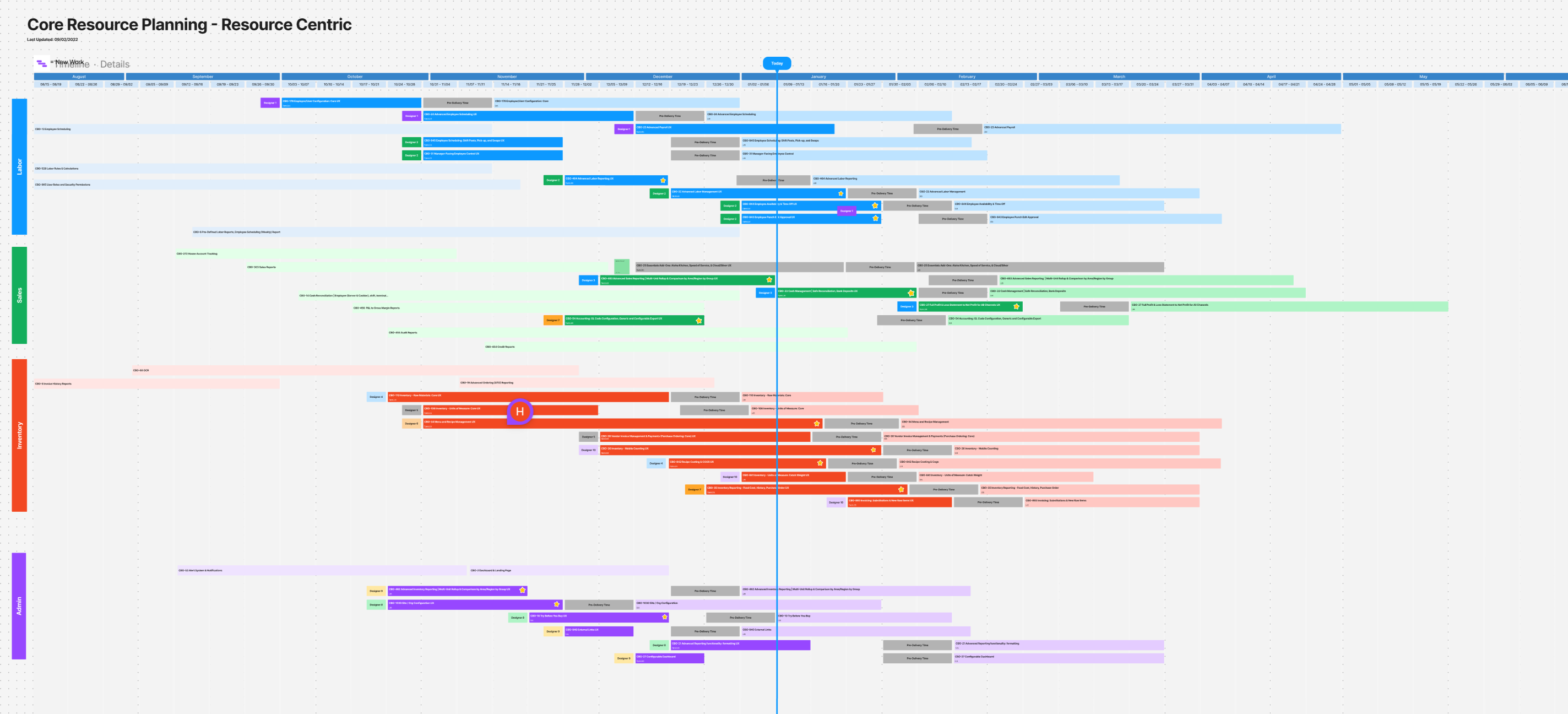
Cross-Pod Capacity: Visualizing designer allocation before sprint planning
Coordinating 5 pods required transparency into design capacity. Built a quarterly resource allocation model that mapped designer bandwidth across every epic and squad, resolving competing priorities before sprint planning began.
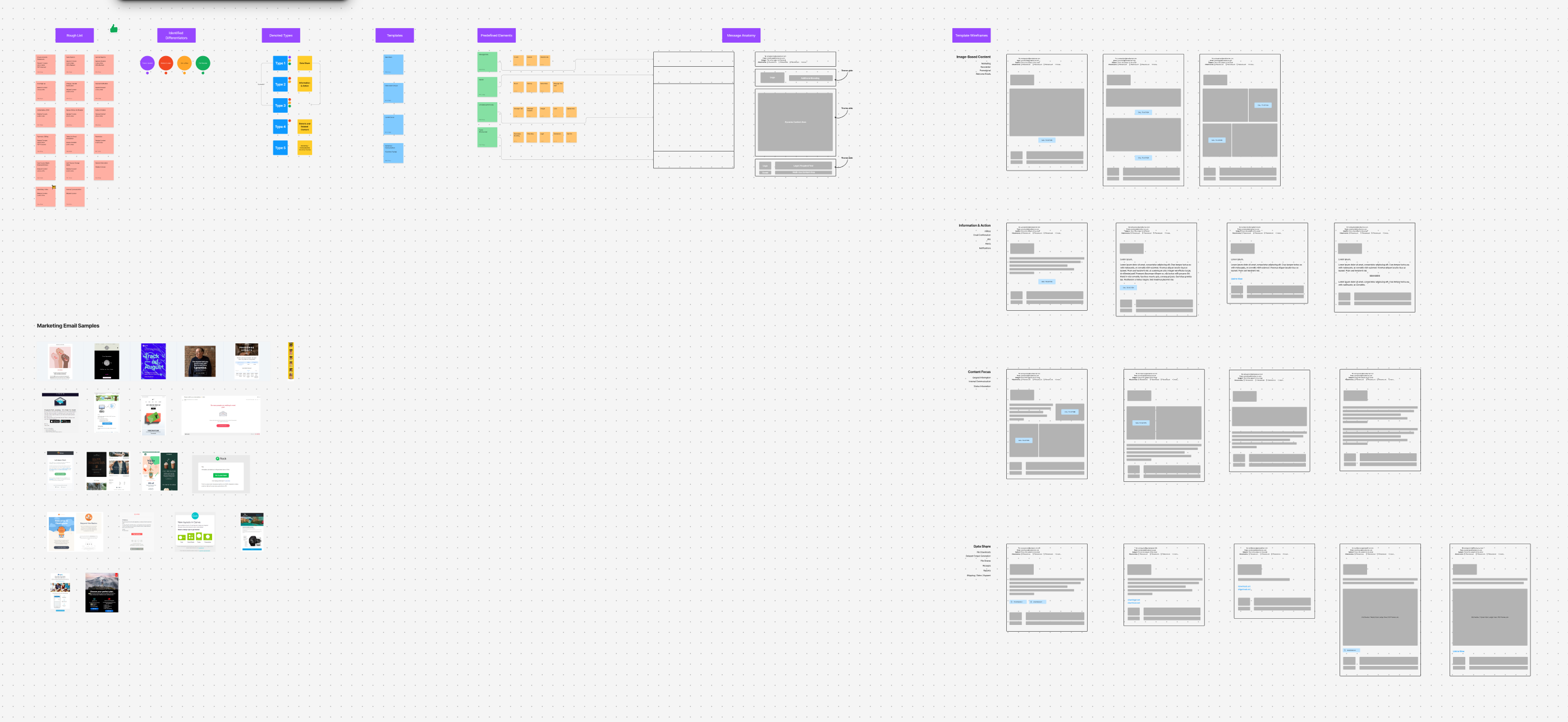
Inter-Pod Communications: A unified message architecture all squads share
Defined how pod-to-pod data exchange and automated customer communications operate. Standardized email and push templates, event triggers, and data schemas so any pod could trigger notifications without engineering a custom stack.
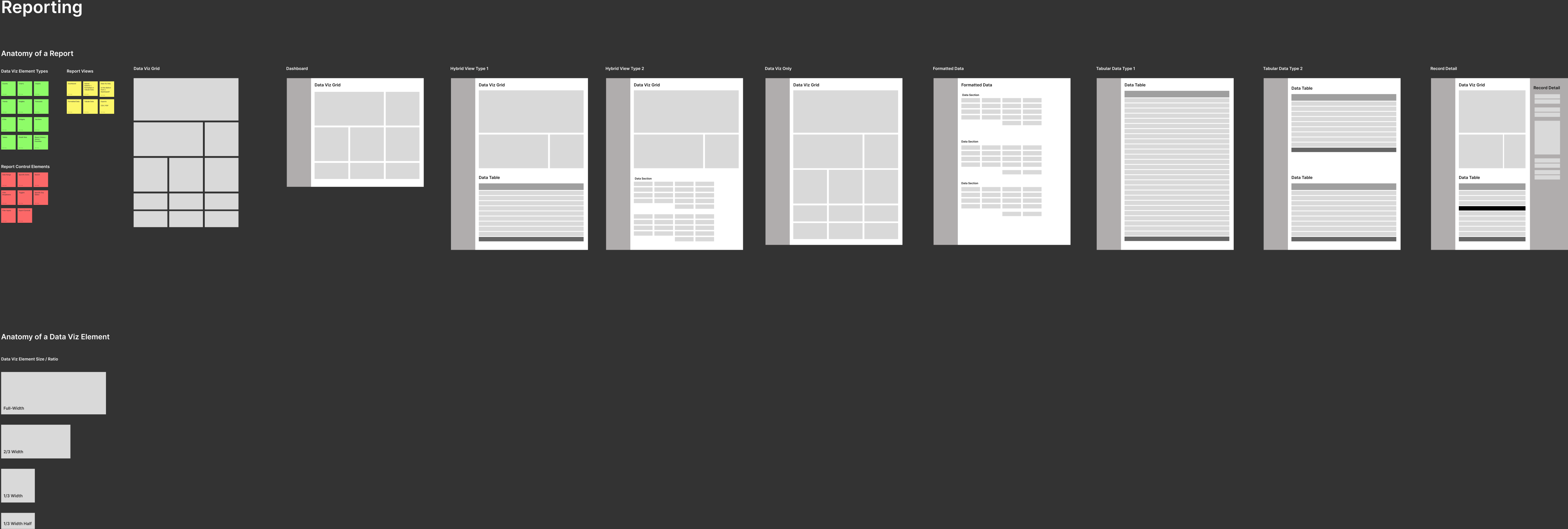
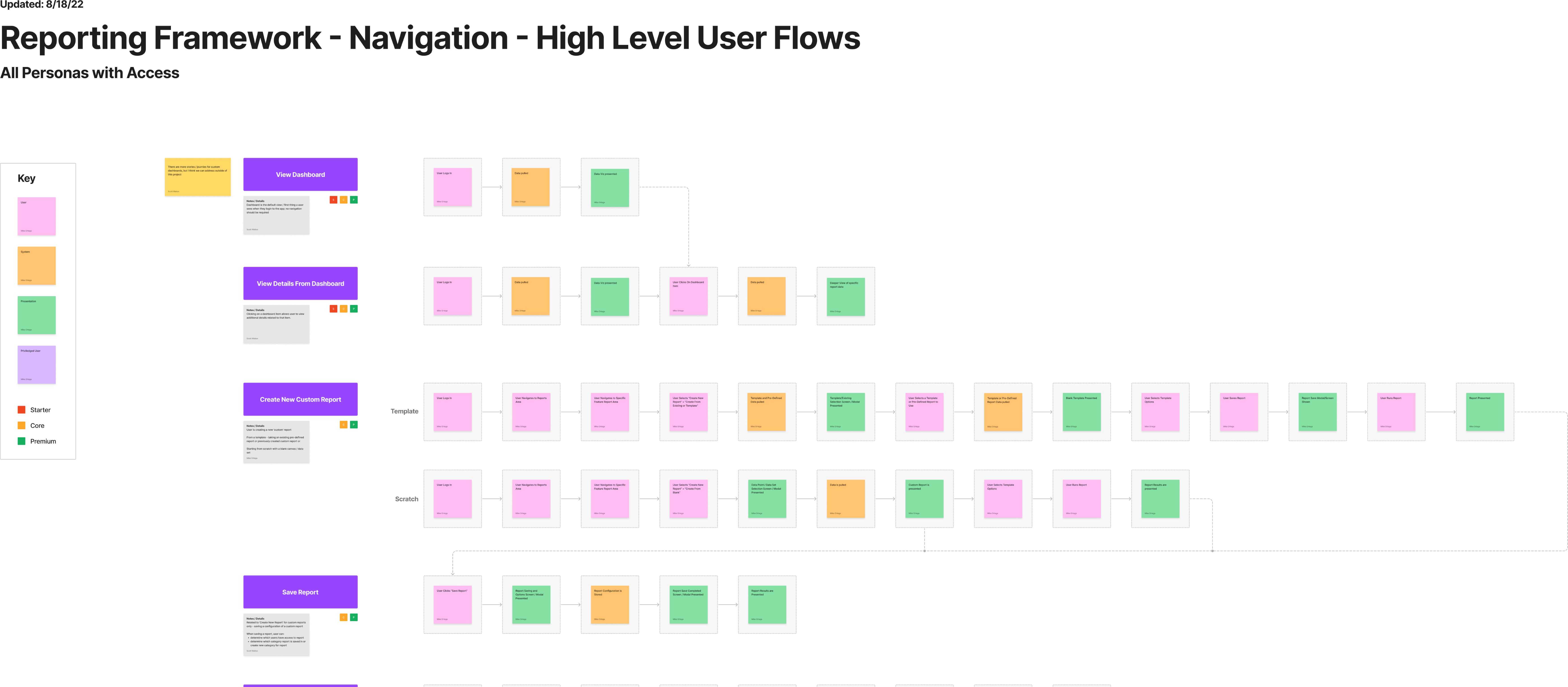
Universal Reporting Grid: Normalizing metrics across disparate squad models
Reports pulled metrics from Labor, Inventory, and Sales, each formatted inconsistently. Established a universal report anatomy (dashboard, hybrid, tabular) paired with persona-based navigation to preserve context across deep drill-downs.
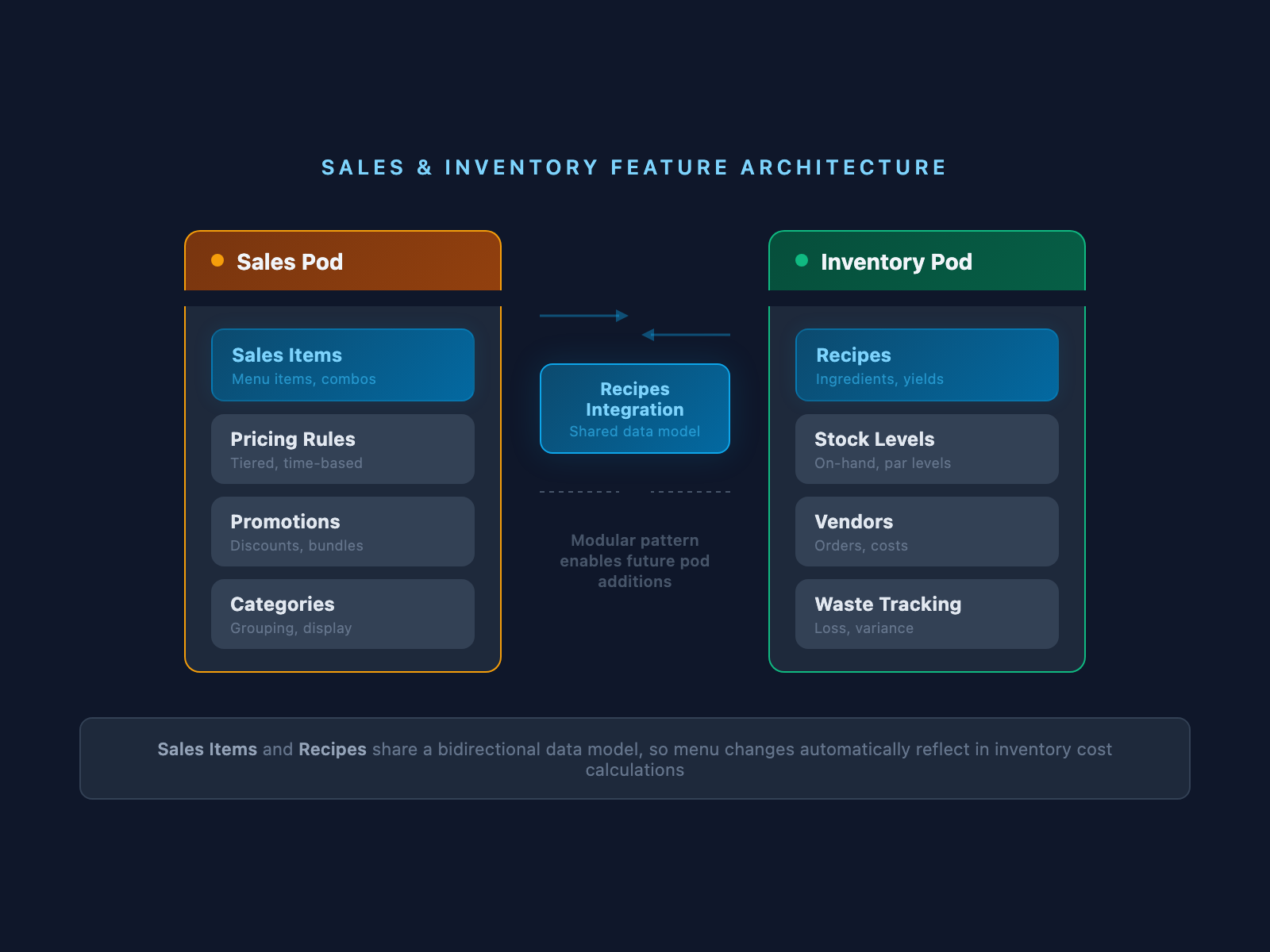
Cross-Seam Engineering: Dissolving boundaries between Sales items and Inventory recipes
Personally designed the high-risk integration between Smart Manager's recipe inventory depletion and Aloha Menu's customer sales items. Engineered modular data patterns that let new capabilities plug in seamlessly without architectural refactoring.
From multi-sprint negotiation to automated platform coherence.
The governance frameworks became the foundation for every subsequent cross-pod release. Labor, Reporting, Inventory, Sales, and Admin maintained their independent roadmaps while shipping against a unified configuration model, communications pattern, and reporting anatomy.
Unified Platform
Autonomous roadmaps aligned
Adopted Org-Wide
Comms, reporting, navigation
Delivery Blockers
Decisions codified in schemas
// Platform Leadership Retrospective
When leading across autonomous squads, the frameworks become the deliverable.
Leading UX architecture across five independent pods cannot be managed by attending more meetings or running centralized approval queues. True organizational leverage comes from creating authoritative, self-service artifacts—configuration decision trees, reporting grids, and message schemas—that do the coordinating asynchronously so engineering teams can ship with velocity.