Bioinformatics & Mobile Architecture
Tissue culture tracking for researchers priced out of enterprise LIMS.
Verdant Lab is a mobile-first app for tracking tissue culture propagation — hierarchical lineages, medium formulations, and contamination patterns — built in three days on top of a reusable architecture proven across two prior apps.
Replaces lab notebooks that quietly lose lineage history.
Propagation spans mother plants, explants, subcultures, and further divisions across different media. Verdant Lab captures the recursive parent-child structure researchers were trying to draw in the margins of paper notebooks, keeping the full lineage queryable instead of buried.
Surfaces contamination patterns that paper can't see.
By logging medium, species, and source alongside outcomes, the app exposes correlations between specific formulations and contamination rates — the kind of analysis that previously required a LIMS license out of reach for independent researchers.
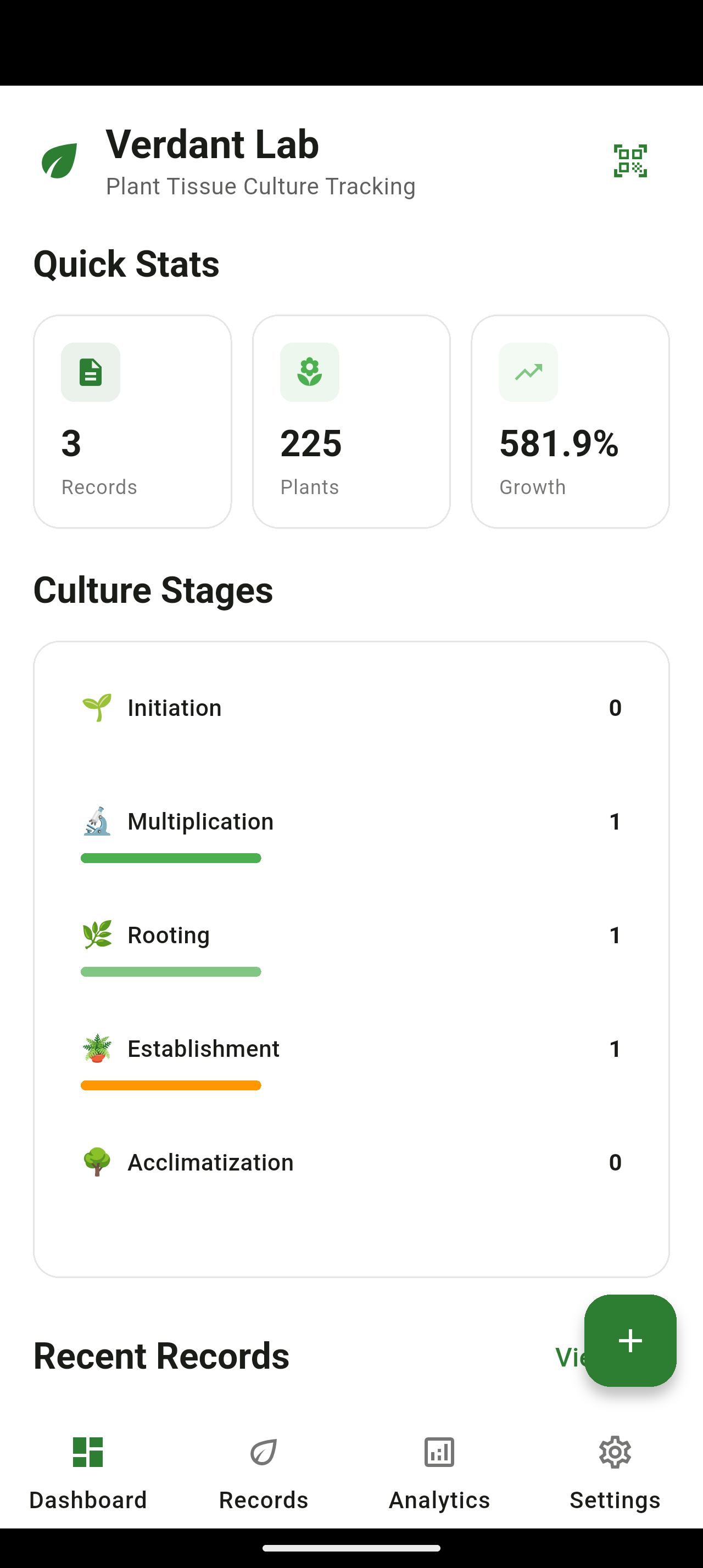
High-Density Recursive Biological Data
Deeply hierarchical data, trapped in paper notebooks.
Tissue culture propagation is multi-stage and recursive. A mother plant produces explants, which produce subcultures, which produce further divisions across different growth media. Researchers tracking this in lab notebooks lose visibility into contamination patterns and lineage history as soon as a project scales past a handful of cultures.
Enterprise LIMS solutions start at $10k+, putting them out of reach for independent researchers, hobbyists, and small labs. The gap between "lab notebook" and "enterprise LIMS" had no middle option — and the shape of the data demanded more than a spreadsheet could provide.
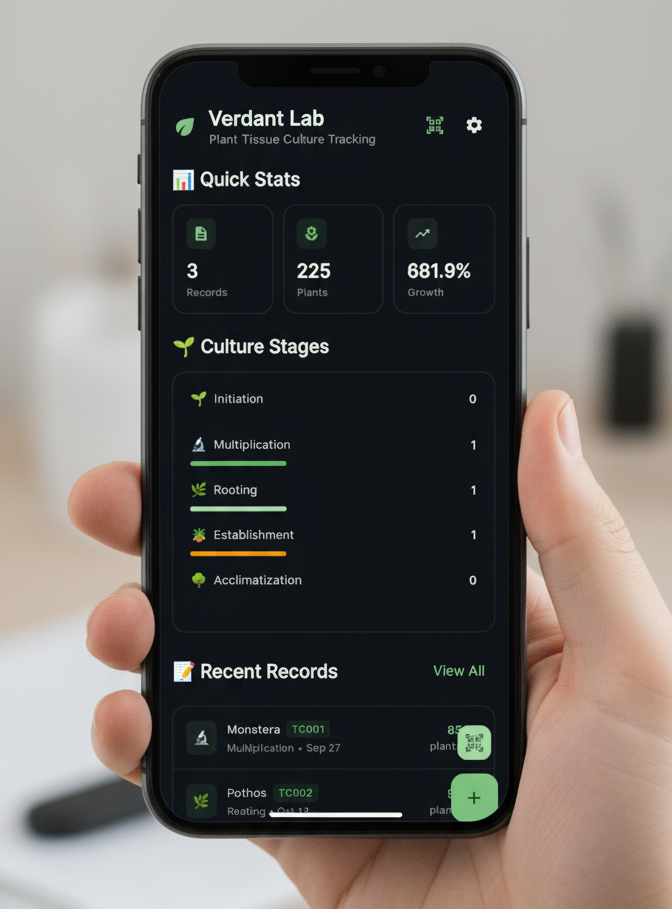
Mobile-first design for the lab and greenhouse.
Rapid Systems Prototyping Mandate
Ship a functional alpha in days, not months.
Build a mobile app that handles five levels of recursive lineage, precise medium formulations, and contamination analytics — without rebuilding the core architecture from scratch. The goal was to validate whether the PRD-first, AI-assisted workflow proven on Printory and HydroMate could adapt to a new domain on a three-day timeline.
Rapid Architecture Adaptation
Four iterative milestones from spec to research alpha.
Recursive Data Modeling: Five-generation biological lineage trees
Wrote a product requirements doc that defined the recursive data model (five-plus levels of lineage), medium formulation tracking, and contamination analytics before writing any code. Getting the domain shape correct upfront was the difference between a three-day build and a three-week one.
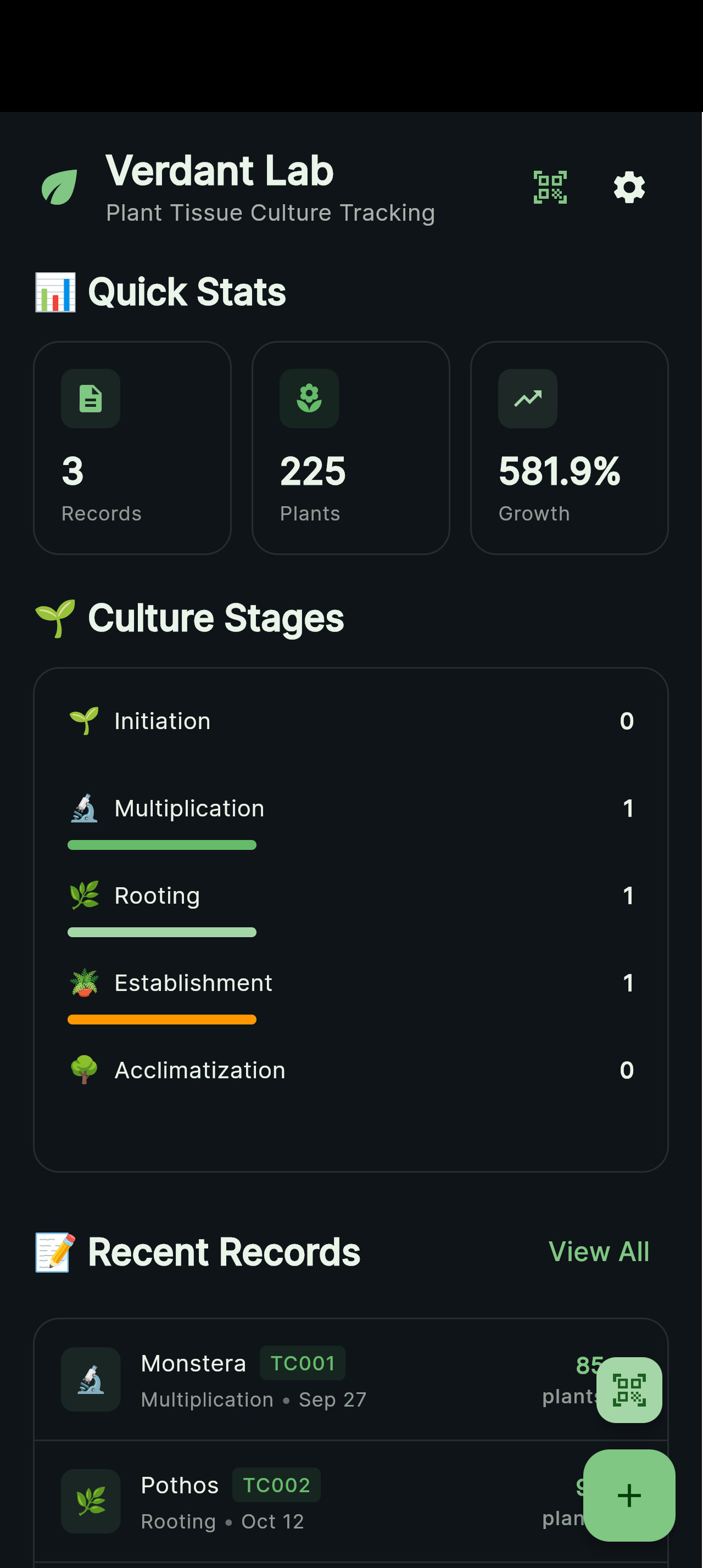
Architectural Scaffolding: Adapting component foundations via Claude Code
Fed the PRD to Claude Code and generated the initial app from HydroMate's existing component architecture. A working app shell with the hierarchical data structures and navigation was in place within a single session — the reusable foundation from prior apps did most of the heavy lifting.
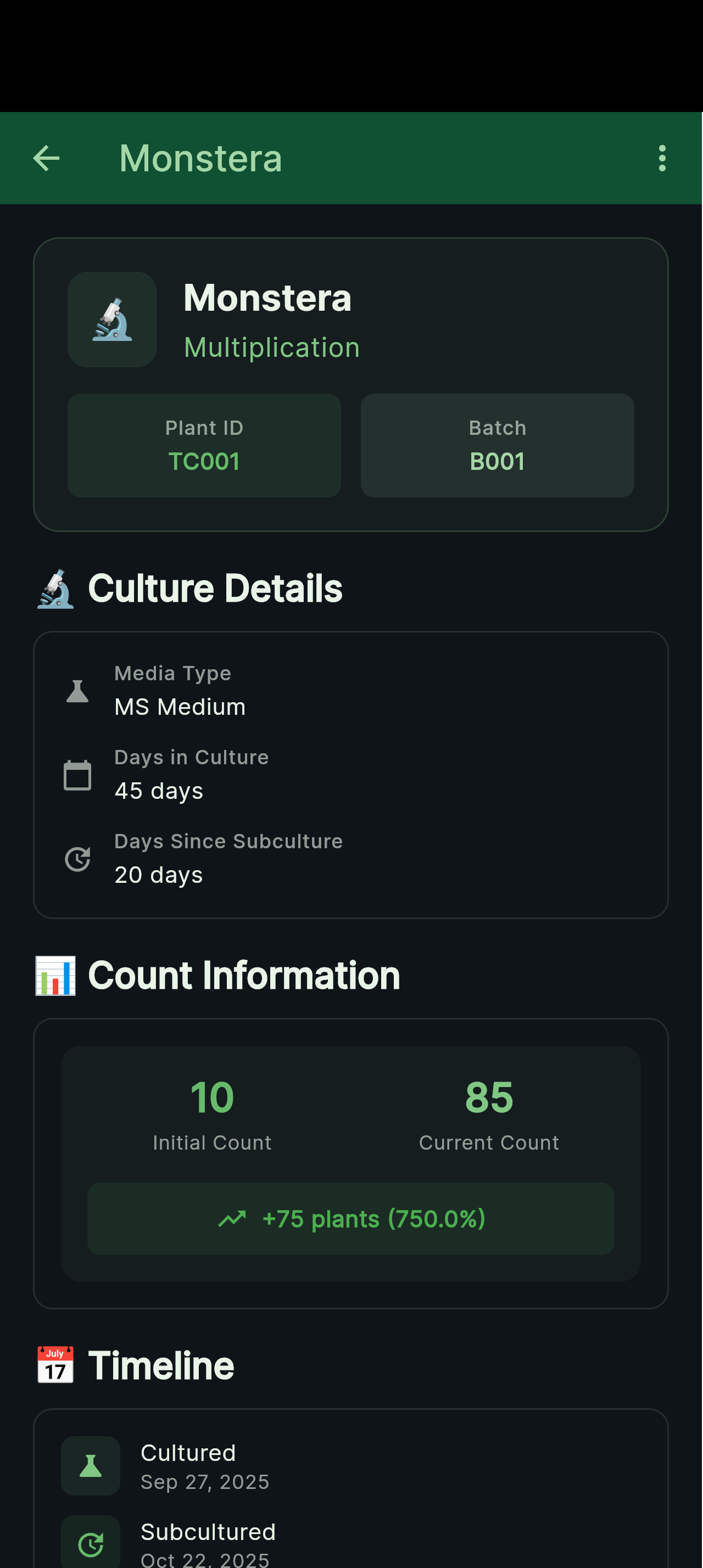
Touch-Optimized Interaction: Clean lab input under sterile physical constraints
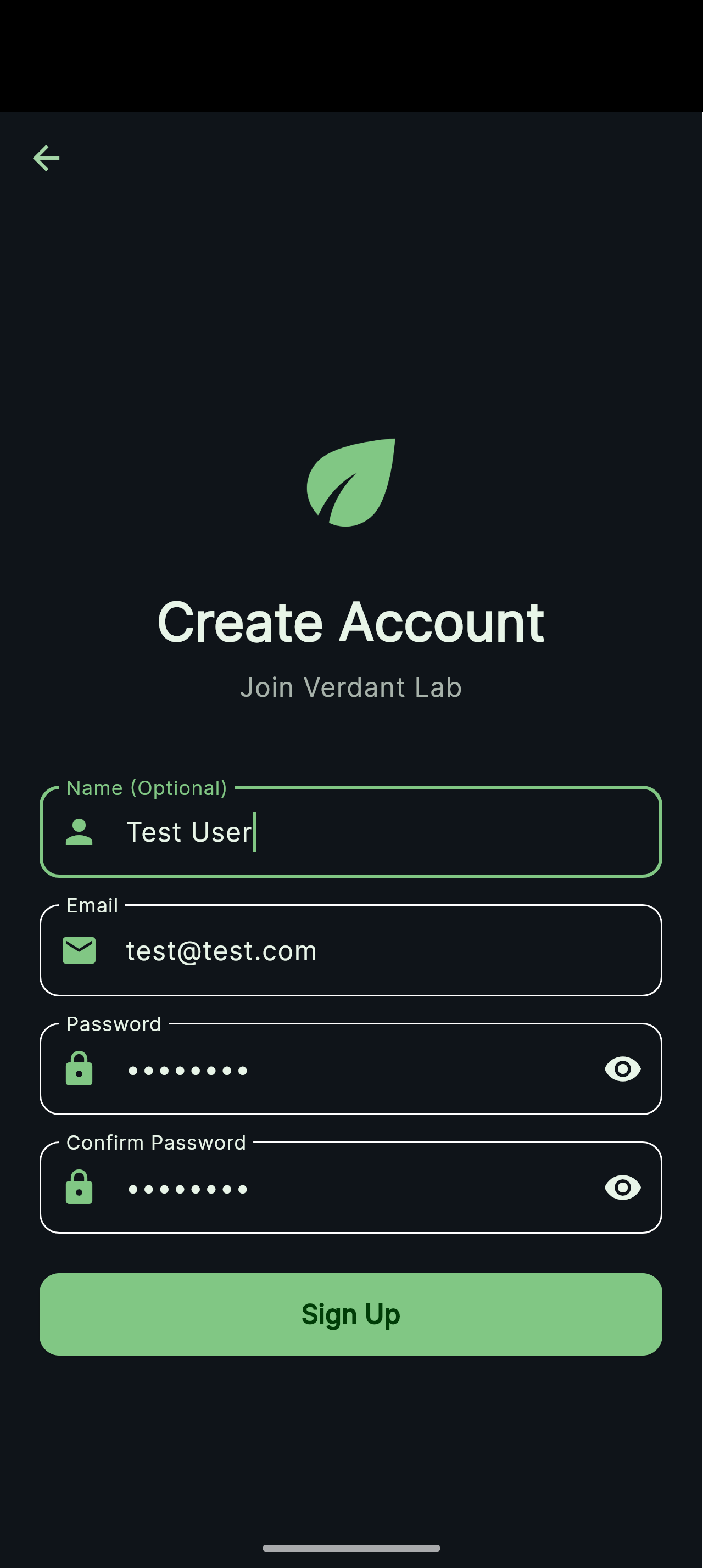
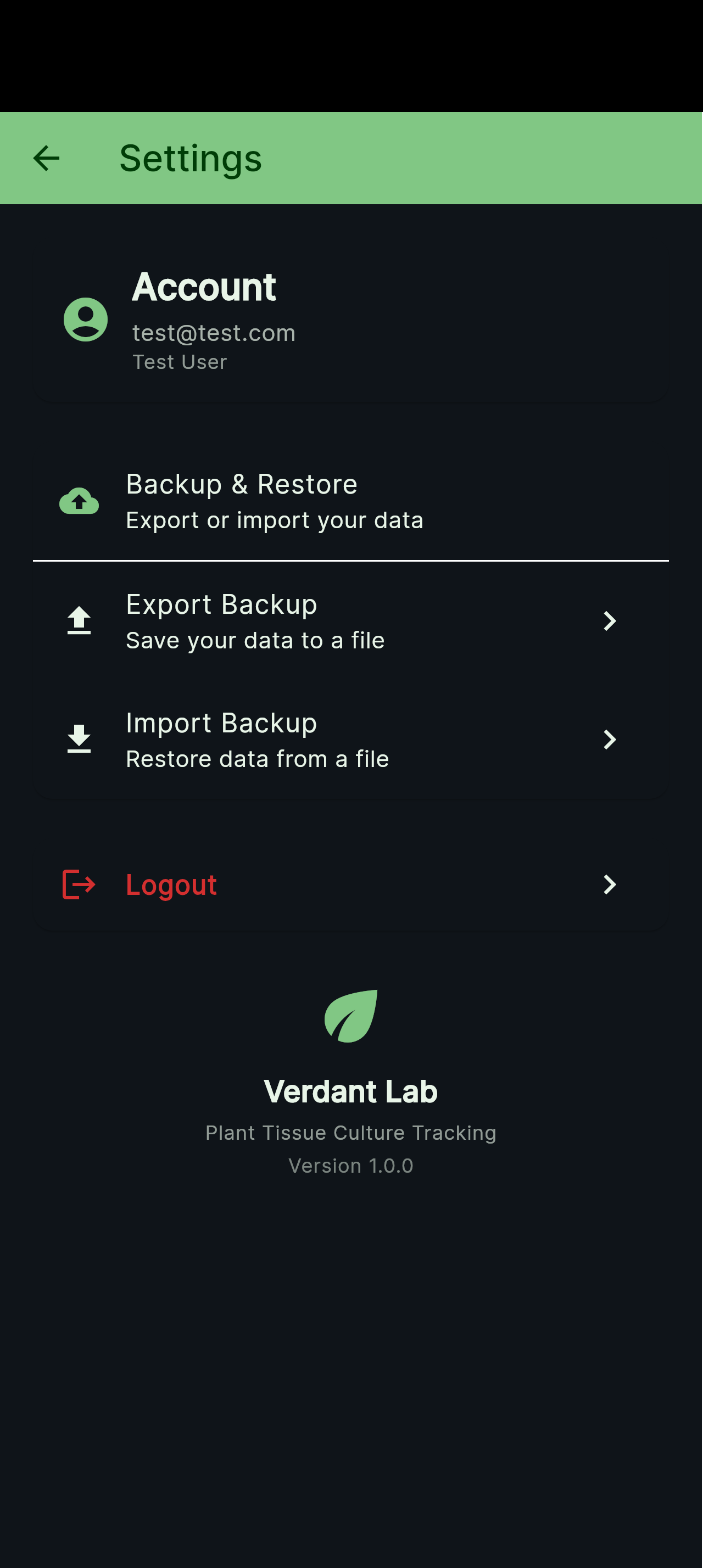
The real work started with the app in hand: making deeply nested lineage trees navigable on a phone screen without losing context, and ensuring medium formulation inputs stayed precise yet fast enough for gloved-hand lab use. Each round surfaced specific gaps — tree visualization collapsing at depth, numeric input precision, contamination logging friction — that I fed back as targeted refinements.
Empirical Field Validation: Alpha testing with active micropropagation labs
Put the alpha in front of three researchers running active propagation work. Their usage immediately validated the hierarchical model and flagged the contamination analytics as the feature that did something paper notebooks structurally couldn't — surface correlations between media, species, and loss rates across cultures.
72-Hour Rapid Delivery Impact
Three days from PRD to functional alpha.
Verdant Lab shipped to closed testing within a single working week. Three researchers validated the approach immediately, and the contamination analytics feature revealed patterns invisible in paper notebooks — correlations between specific media, source species, and contamination rates. More importantly, it proved the PRD-first, AI-assisted workflow scales cleanly across domains: define the shape, scaffold from proven architecture, iterate on-device, ship.
PRD to functional alpha
Recursive lineage depth
LIMS access for independents
Design System Extensibility Retrospective
The architecture was the product.
Printory took two months to build. HydroMate adapted from it in three days. Verdant Lab did the same. The real lesson wasn't about speed — it was that designing for extensibility from the first app turned each subsequent one into a domain-definition exercise rather than an engineering project. The method itself became the thing worth refining.