The Setup
A self-service platform for the world's largest restaurant chains.
Lead UX on Aloha Menu — a next-generation menu management system that replaced a vendor-dependent legacy tool. Shipped to General Availability with 94 enterprise customers committed at launch.
Turned a retention liability into a launch-day growth story.
Aloha Menu's previous incarnation was the product customers cited when they considered leaving. The redesign reframed it as the reason enterprise chains signed on, replacing a defensive narrative with one the sales team could lead with.
Collapsed a multi-day vendor loop into a self-serve workflow.
Every menu change used to start with a support ticket and end with a manual import. Self-service configuration removed the round trip entirely, letting operators ship updates inside their own working hours instead of the vendor's queue.
The Landscape
A decade of vendor dependency, days of delay per change.
Enterprise restaurant customers were paralyzed by vendor dependency. They couldn't independently create or maintain sales items, combos, or promotions — every change required submitting a request for manual import, resulting in days-long delays and mounting frustration.
As competitors introduced self-service platforms, the legacy system became a clear retention liability. The product needed to move from vendor-managed to customer-operated — without losing the enterprise complexity that made it work in the first place.
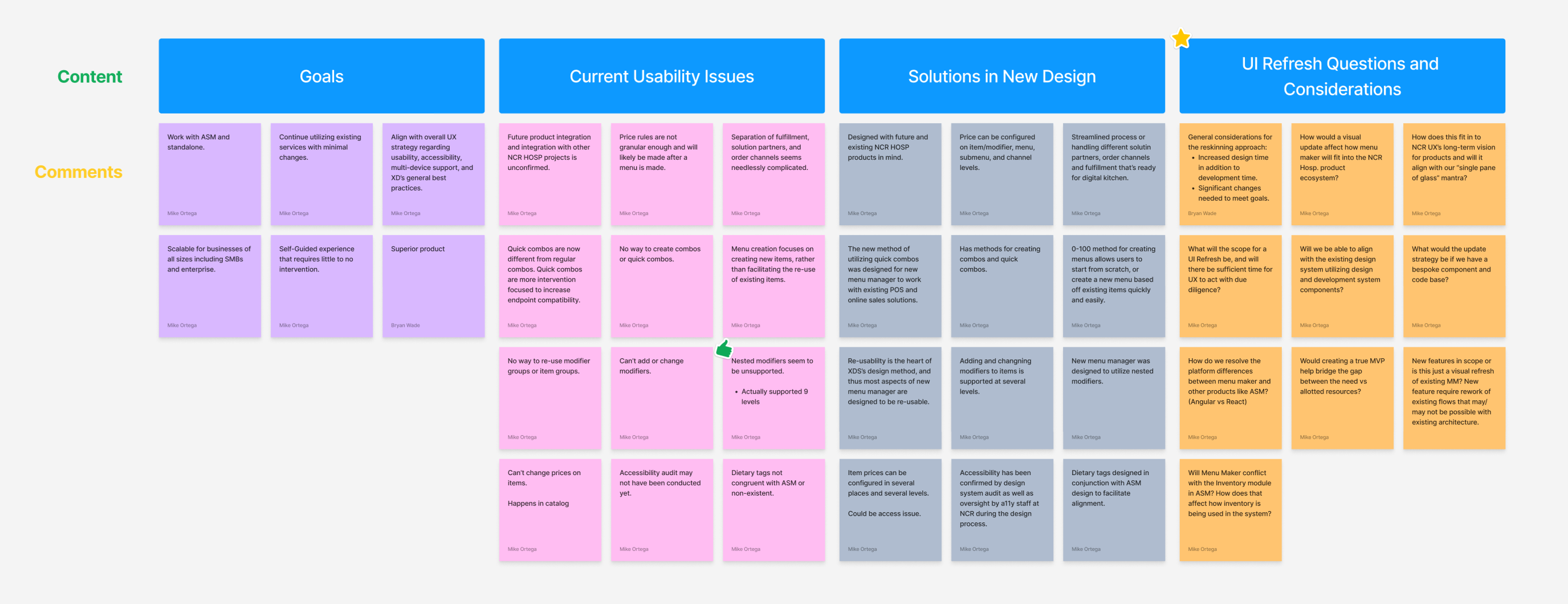
Discovery-phase planning: goals, risks, and feature mapping.
The Mission
Replace the legacy tool with something operators could actually run themselves.
Build a self-service platform that handled enterprise pricing complexity — multi-channel scheduling, rule conflicts, promotional pairings — without requiring vendor hand-holding. Success would be measured by customer commitments at General Availability.
The Moves
Four bets, ordered by risk.
Discovery & risk mapping
Started with rigorous alignment and discovery sessions to outline customer requirements, evaluate legacy limitations, and pressure-test feature scope. Risk mapping surfaced enterprise pricing as the critical-path problem — and the place a vendor-built tool was most likely to fail customers.
A sales item creation flow operators could trust
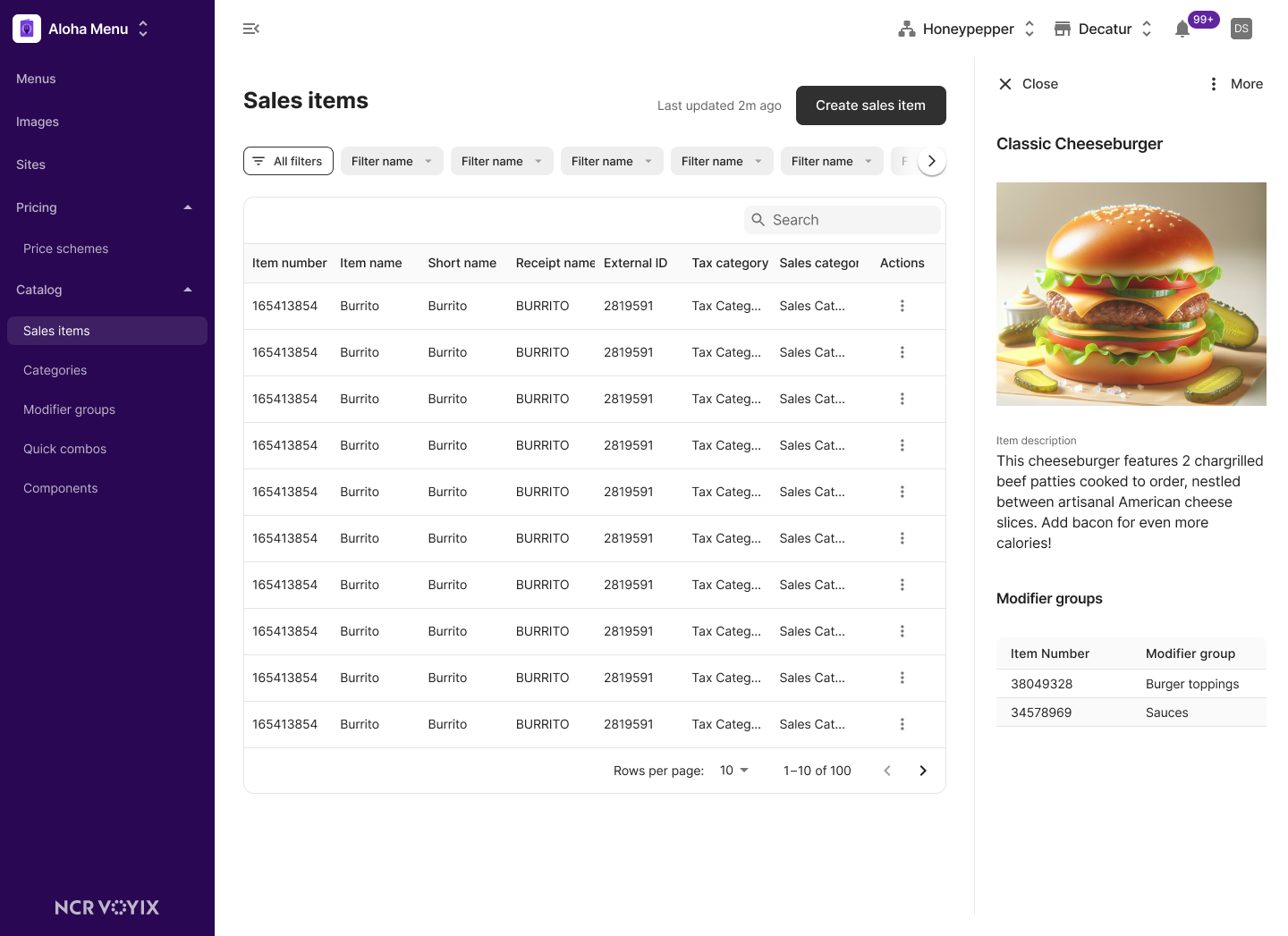
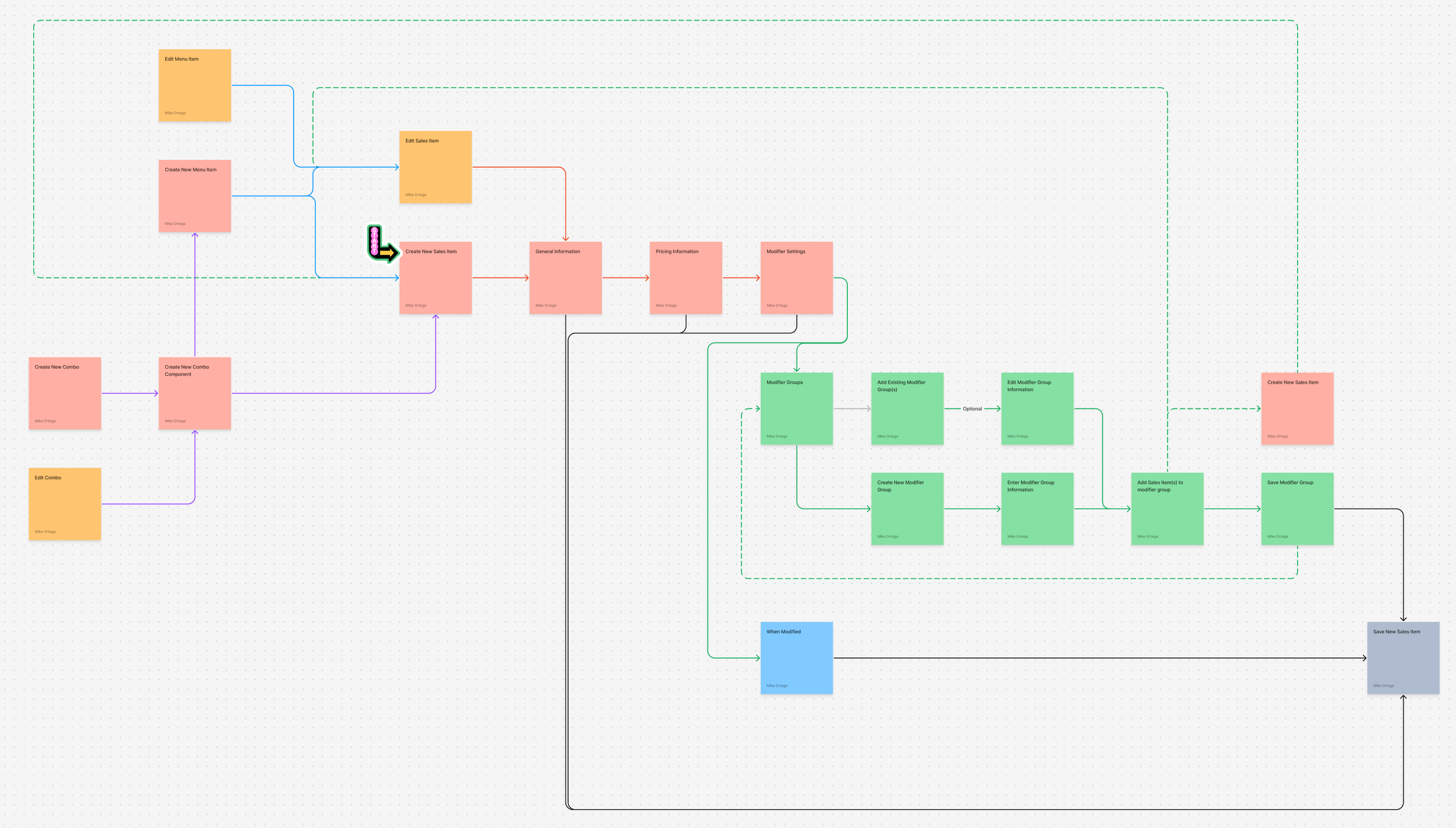
Broke a sprawling configuration screen into a clean, step-by-step flow. Each step answered one question about how restaurant operators actually think about menu items, with prototype iterations that exposed assumptions before they shipped.
Multi-step pricing rules that managed their own conflicts
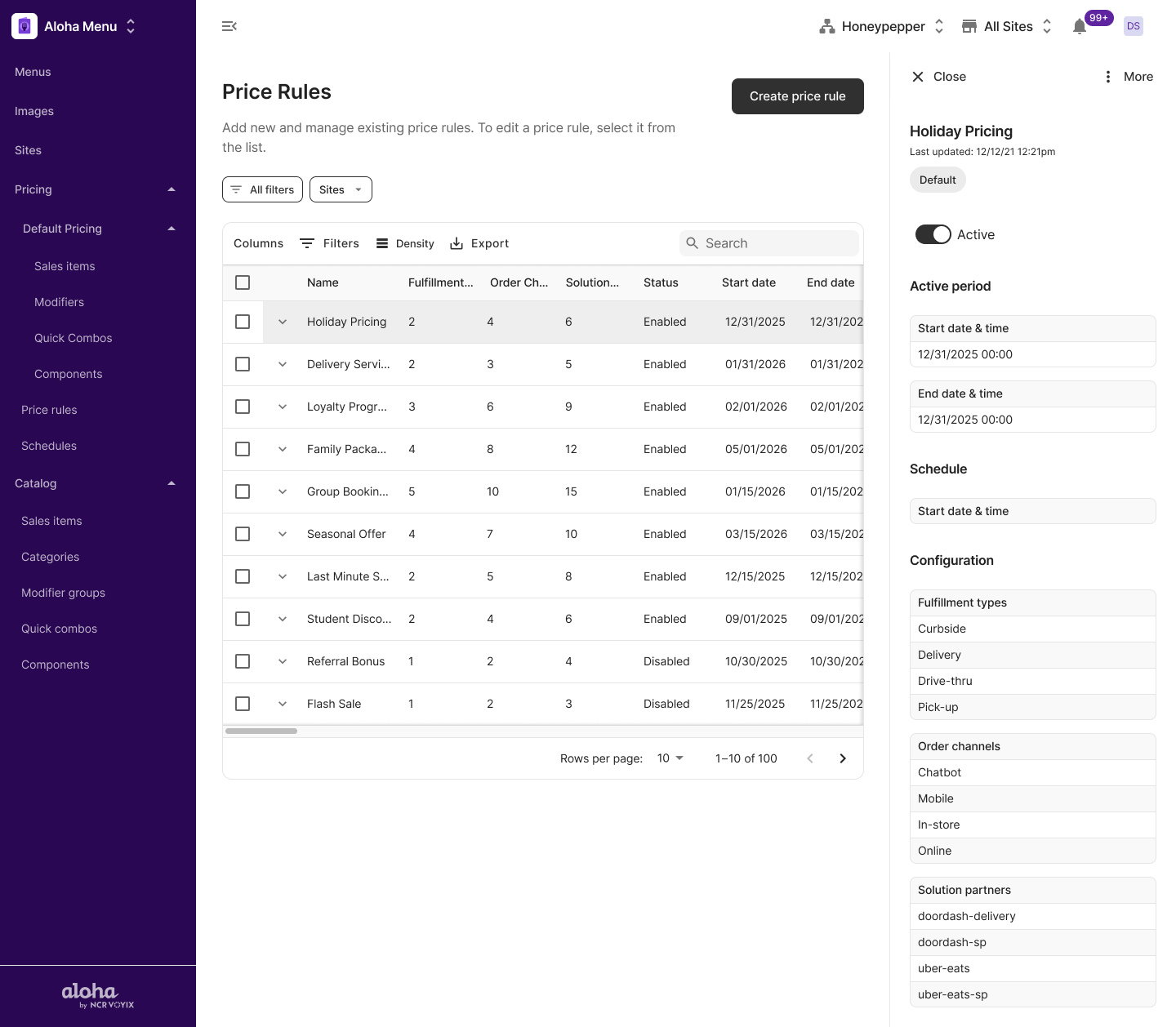
Enterprise price rules require channel-specific scheduling, third-party coordination, and conflict resolution between competing rules. Rather than hide the complexity, structured it: bulk base-pricing changes, clear scheduling, and an interface that actively managed rule priority across all channels.
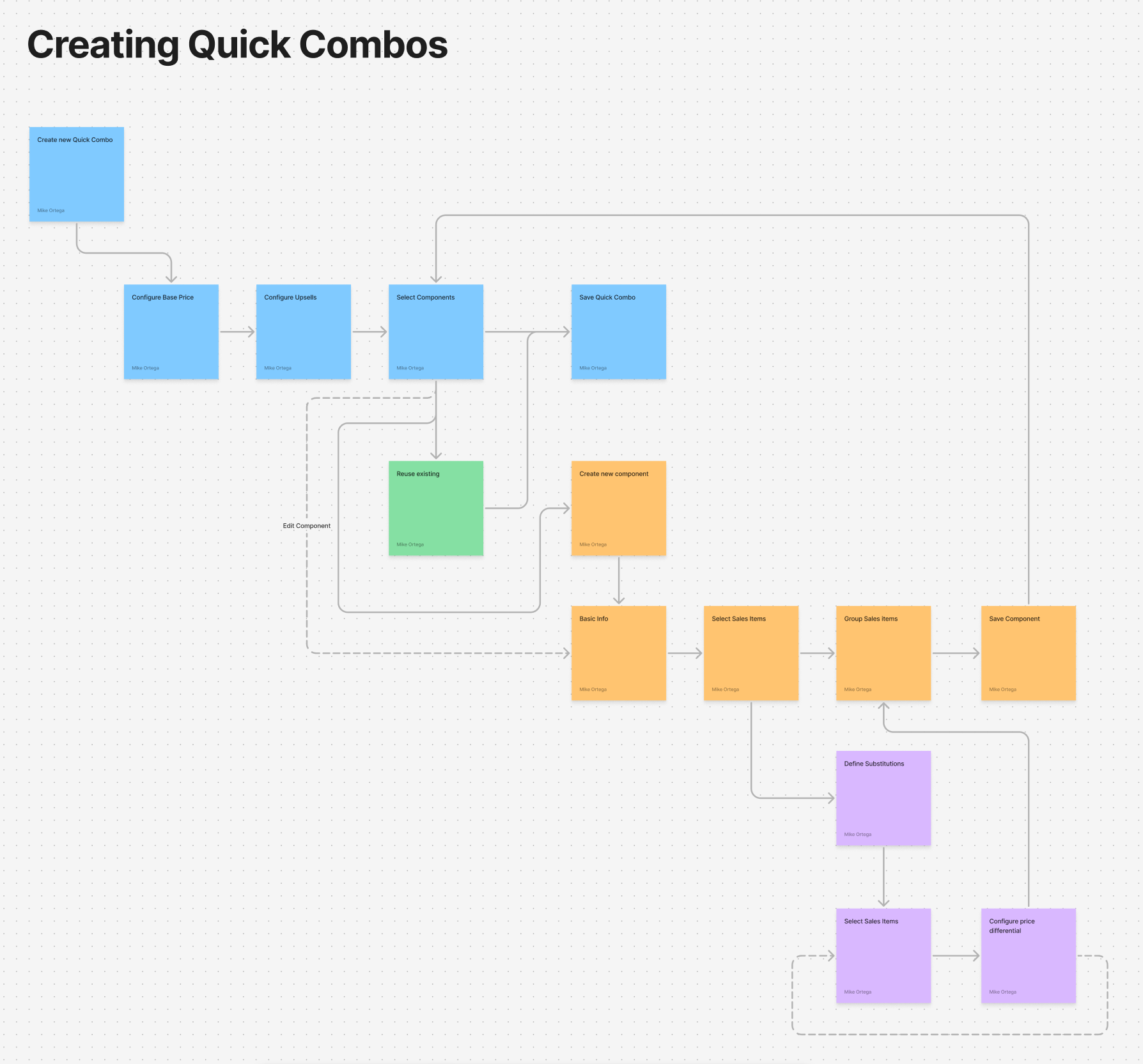
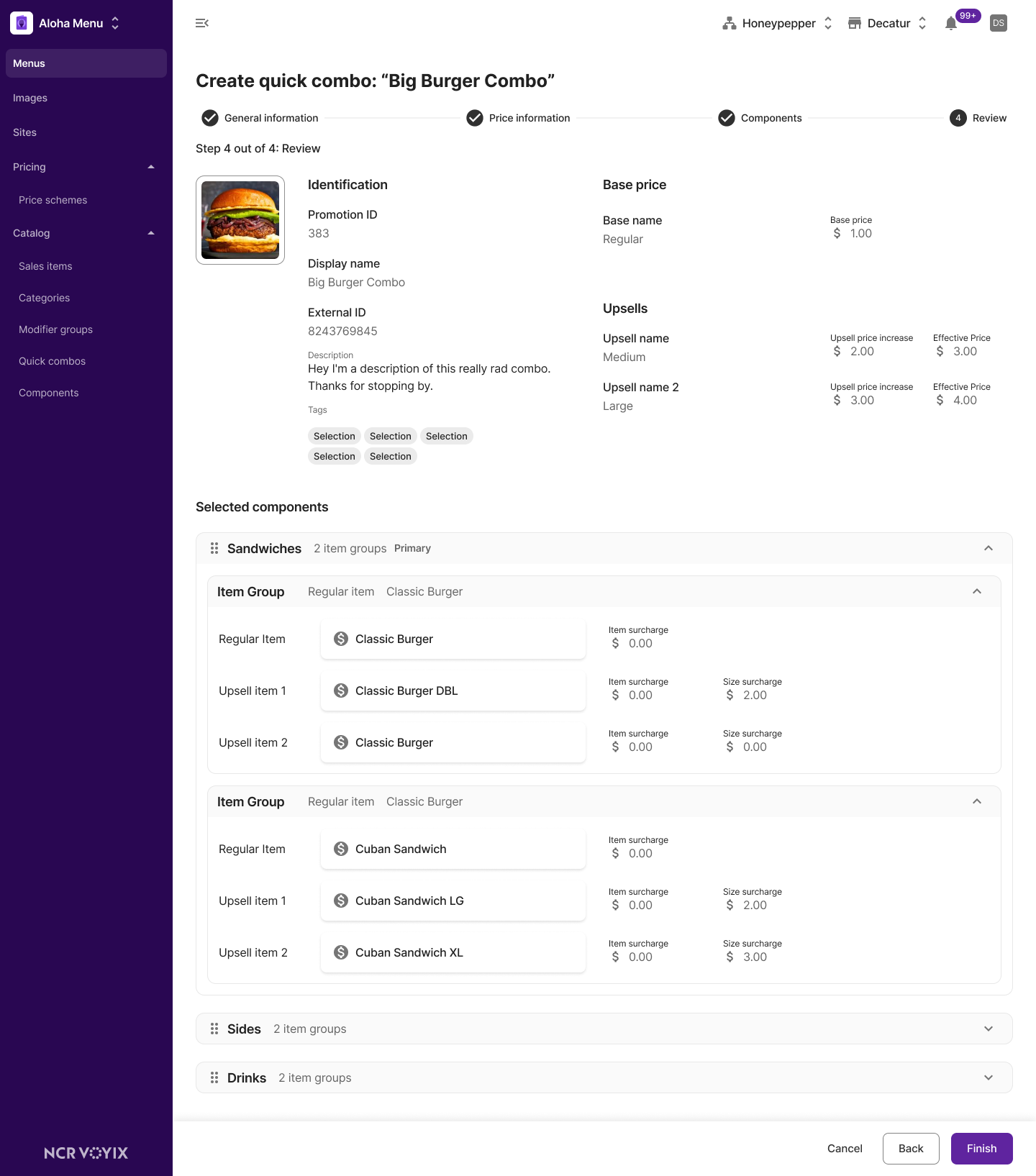
Quick Combos: from boolean expressions to a visual builder
The legacy Quick Combos tool was built on boolean expressions — unusable without expert vendor assistance. Replaced it with a simple, web-based interface that let customers launch promotional pairings on their own schedule. This became the feature that ultimately drove adoption.
The Payoff
94 enterprise customers committed at launch.
Aloha Menu shipped to General Availability with 94 enterprise customers signed on — confirming relief from a decade-long pain point. The platform eliminated the vendor-import bottleneck, cut menu-change cycle time from days to minutes, and removed the support overhead that had been quietly draining the business.
Customers secured at GA
Menu change cycle time
Vendor support overhead
Looking Back
The complexity wasn't the enemy — hiding it was.
The biggest lesson: enterprise users don't need their workflows simplified, they need them structured. Every previous attempt at this product had tried to flatten the complexity of menu management; Aloha Menu won by giving that complexity a shape operators could navigate on their own.